








Uganda is pushing for a shift from prolonged humanitarian assistance to sustainable self-reliance among refugees and the communities hosting them, as the country seeks to help vulnerable households build livelihoods and withstand economic shocks.
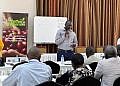
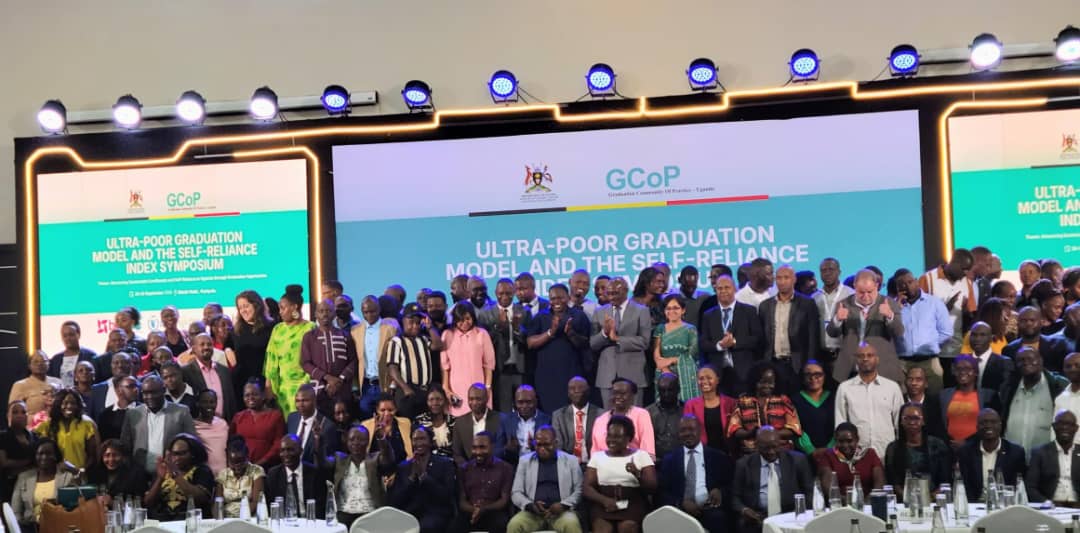
The call was made at the National Symposium on the Ultra-Poor Graduation Model and the Self-Reliance Index at Mestil Hotel running from Tuesday, September 29 to Wednesday, September 30, under the theme “Advancing Sustainable Livelihoods and Self-Reliance in Uganda: Leveraging the Graduation Approaches.”
The symposium, hosted by the Ministry of Gender, Labour and Social Development in partnership with the Graduation Community of Practice (GCoP) Uganda, has brought together government, development partners, researchers and implementing organisations to discuss ways of strengthening livelihoods among refugees and host communities.
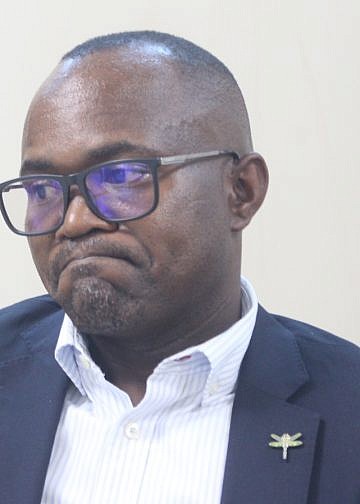
Dr Lawrence Egulu, Commissioner for Employment Services Ministry of Gender Labour and Social Development, said the growing refugee population and reductions in humanitarian funding make it necessary to equip refugees with opportunities to become economically independent.
“That’s why we are saying we need to graduate from humanitarian assistance in terms of plans. In other words, how do we do more with less, but also give refugees the dignity that they deserve in terms of being able to take care of themselves,” Egulu said.
Uganda hosts more than two million refugees, according to figures cited by Egulu, and the commissioner said the country continues to welcome refugees while seeking approaches that promote independence and resilience.
He said Uganda’s refugee policy, which allows refugees access to land, education, health services and employment, provides an opportunity for them to participate in the economy and become part of host communities.
“Here, we allow you to work. So if you are like one of us in our community, you become part and parcel of us,” Egulu said.
Egulu, however, stressed that self-reliance should not mean withdrawing support from refugees.
“They’re not abandoning you, but we are saying you can do it yourself. But we need to give you that opportunity, those tools that will lead you on the road,” he said.
He said the approach must also benefit host communities to ensure that the presence of refugees does not create perceptions of unequal access to opportunities and services.
“We are not only limiting ourselves to refugees, we are covering the host community as well,” Egulu said.
According to Egulu, the Self-Reliance Index provides a framework for tracking progress in areas including economic opportunities, food security and nutrition, health, education, shelter, water and sanitation, and social cohesion.
He said economic opportunities are particularly critical because they enable households to generate income through employment, businesses, skills, entrepreneurship and access to finance.
“You have a job, you have a business, you have a skill, you have entrepreneurship, access to finance. You should be able to do things yourself, with your hands, with your brain,” he said.
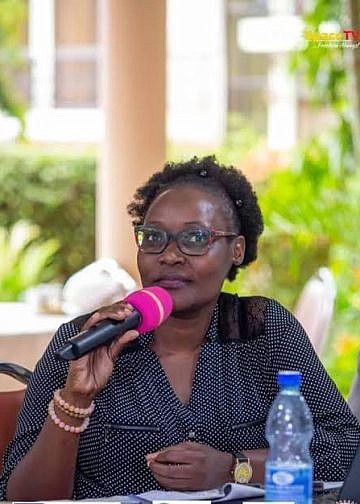
Mithun Nazneen, Chairperson of GCoP and Deputy Country Director at BRAC Uganda, said Uganda has gained important experience implementing graduation approaches that can be strengthened and scaled up.
“These experiences provide an important foundation to collective learning and for strengthening approaches that can contribute to Uganda’s national development goals,” Nazneen said.
She said the Self-Reliance Index is important because it measures household progress beyond income, taking into account the multiple factors that determine whether families can achieve lasting independence.
“The integration of the self-reliance index further strengthens our ability to understand household progress beyond income alone, to consider the multiple dimensions that contribute to sustainable self-reliance,” she said.
Nazneen said BRAC will continue working with government, researchers, development partners and other stakeholders to develop approaches that enable vulnerable households to build productive assets, strengthen livelihoods and manage shocks.
“BRAC remains committed to working alongside the Government of Uganda and the Graduation Community of Practice and partners to advance evidence-based, inclusive and scalable approaches to enable vulnerable households to build productive assets, strengthen their livelihoods, manage shocks and achieve lasting improvement,” she said.
The two-day symposium is expected to generate practical recommendations on how graduation approaches can be integrated into Uganda’s broader development and social protection agenda, with particular emphasis on ensuring that both refugees and their host communities can move towards sustainable livelihoods and self-reliance.