










Uganda, Kenya and Tanzania are seeking stronger regional cooperation in responding to climate change, with officials and development partners calling for the three countries to pool knowledge, experiences and resources to help communities cope with climate shocks.
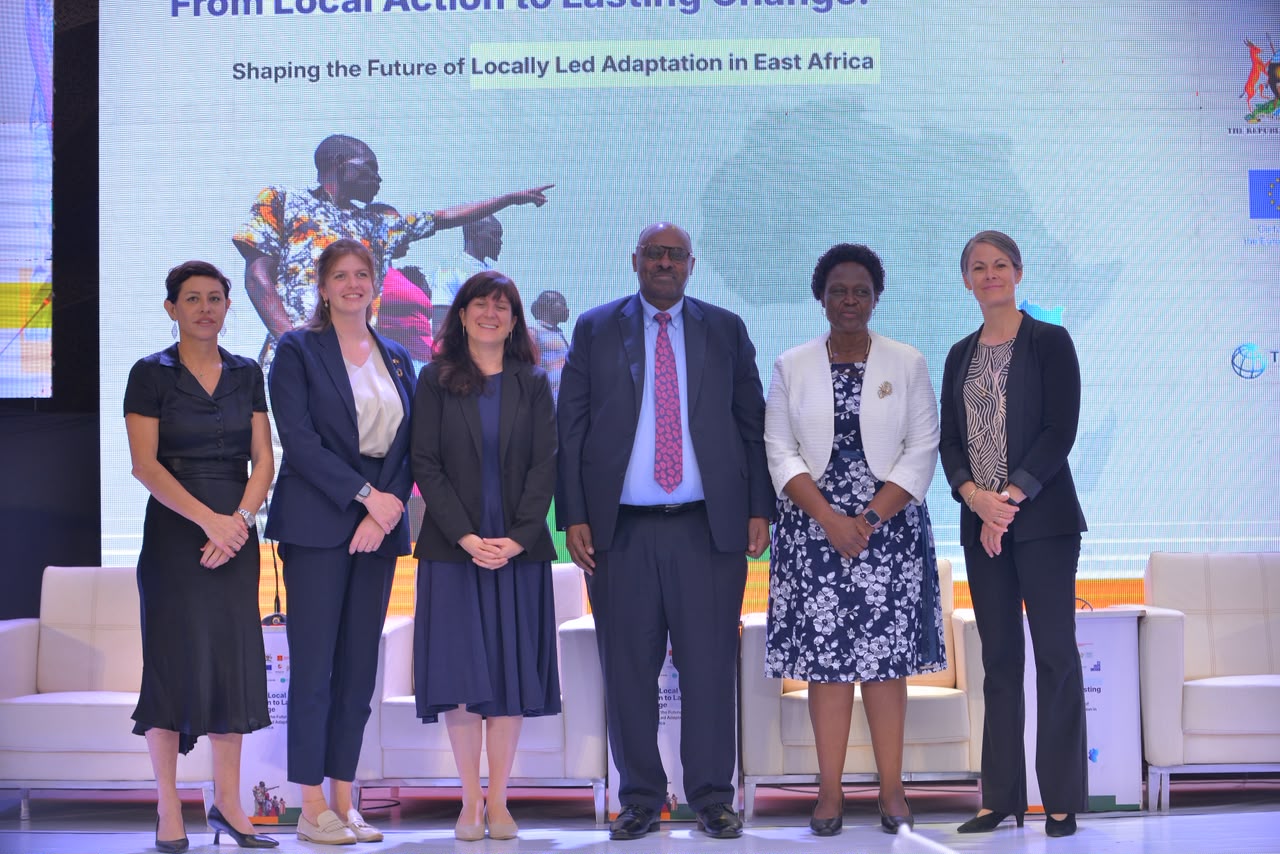
The call was made during a two-day regional workshop in Kampala on locally led adaptation, where representatives from the three countries are sharing experiences on how communities can identify, finance and implement solutions to climate risks.
Permanent Secretary in the Ministry of Local Government Ben Kumumanya said climate change was a shared regional challenge that required countries to work together rather than develop responses in isolation.
“What affects Uganda, what affects Kenya, affects Tanzania,” Kumumanya said.
He said the meeting is intended to help the countries compare their experiences and develop strategies that can be applied across borders.
“We are sharing with our colleagues from Kenya, our colleagues from Tanzania, and see how they have dealt with these issues, and we also adapt together and have the right strategy,” he said.
Kumumanya said the collaboration would also help countries respond to differences in climate conditions within and beyond their borders.
He cited Uganda’s own experience, saying some parts of the country were experiencing dry conditions while others had received enough rainfall to become green.
“Yesterday, I was in Masindi. I found it green. But if you go to Ntungamo, it is still very dry,” he said.
State Minister for Water and Environment Beatrice Anywar Atim said the regional exchange should result in practical solutions that can be adapted to the needs of individual communities.
Anywar said Uganda needed to learn from what Kenya and Tanzania were doing while also allowing the two countries to benefit from Uganda’s experience.
“So I’m very happy to be in this workshop that we could also want to learn what happens in Tanzania, what happens in Kenya, and how do we really come together and have a solution?” she said.
She said the approach reflects the broader spirit of East African cooperation.
“What can you borrow from your colleagues? What are they doing different from us? What are we doing different from them? I think that is the spirit of East Africa,” Anywar said.
Anywar also argued that regional cooperation should not be limited to governments, saying communities must be involved in determining the adaptation measures that work for them.
“It is the same people who can tell us what their priorities are. How do they want to implement it? It is them who are affected, who are the biggest stakeholders,” she said.
Danish Ambassador to Uganda Signe Winding Albjerg said the interconnected nature of the region made cooperation on climate resilience particularly important.
She noted that Uganda, Kenya and Tanzania share water bodies, borders, infrastructure, trade and investment, meaning climate-related challenges in one country can have implications for neighbouring countries.
“The resilience of one community or resilience of one country really depends on the resilience and experience of the neighboring communities,” Albjerg said.
She urged participants to use the meeting to share both successful approaches and mistakes so that countries can learn from one another.
“It should really turn into a very honest, helpful dialogue on how all of the lessons, the hard lessons, each of the programmes, each of the districts can turn into an assistance in ensuring that your colleagues, your neighbors, don’t make the same mistakes,” she said.
Albjerg said the lessons generated from the region should also be taken to the global climate policy level, including forthcoming international climate discussions.
World Bank Senior Social Development Specialist Serena Cavicchi said the regional exchange provides an opportunity for countries to replicate approaches that have already generated lessons elsewhere.
“Knowledge is one of our most transferable assets,” Cavicchi said.
She cited Kenya’s Financing Locally Led Climate Action programme and Tanzania’s Scaling Up Locally Led Climate Action programme as examples of initiatives that could generate lessons for other countries.
Cavicchi said Kenya’s experience had helped inform Tanzania’s approach, demonstrating the value of countries learning from one another instead of developing climate responses independently.
She said locally led adaptation also recognises the importance of knowledge held by communities that is often overlooked by programmes designed at national or international level.
“Local actors are often more aware of the nuanced context in which they operate, and traditionally, local knowledge has been accumulated over generations,” she said.
Justine Audrain, Regional Programmes Manager at the United Nations Capital Development Fund (UNCDF), said the workshop was intended to strengthen partnerships and facilitate the exchange of practical experiences.
“The intent is to strengthen collaborations and partnerships, and also offer a platform for cross fertilization and share good practices,” Audrain said.
She said locally led adaptation required continuous learning because climate risks and community priorities differ from one location to another.
Audrain also said the quality of climate financing was as important as the amount of money committed.
“Lasting change does not only depend on the volume of climate finance, but also its quality very much, and how effectively that finance reaches local governments and communities on the ground,” she said.
The representative of the Government of Ireland said cooperation was necessary because no single country or institution had all the answers to the region’s climate challenges.
“We learn best when we learn together,” the representative said.
The representative said Uganda’s experience with the LIFE-AR initiative and LoCAL mechanism offered lessons that could be shared with other countries seeking to strengthen locally led adaptation.
The workshop, hosted by the Government of Uganda with support from the Royal Danish Embassy in Uganda and UNCDF, brings together government representatives, local authorities, development partners, civil society, researchers and financial institutions from Uganda, Kenya and Tanzania.
The participants are examining how local climate risks influence planning and budgets, how communities can shape investments and how governments can track results and strengthen accountability.
The meeting is expected to produce recommendations on financing and implementing locally led adaptation, with lessons from the three countries intended to inform policy discussions and strengthen regional cooperation on climate resilience.