










Government has declared war on rogue labour recruitment agencies, illegal job brokers and human traffickers, warning that individuals and companies exploiting Ugandans seeking employment abroad will face intensified investigations and appropriate legal action.
The crackdown follows revelations of widespread challenges in the external employment industry, including unresolved complaints involving migrant workers, human trafficking cases and disputes over recruitment fees.
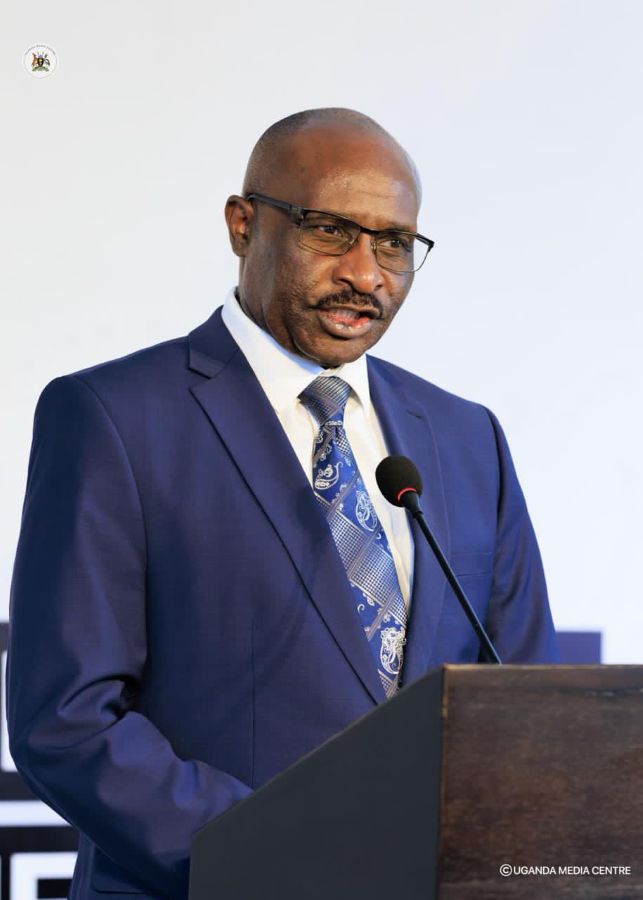
Minister of State for Labour, Employment and Industrial Relations, Simon Mulongo, said Government had commenced a three-week Joint Inter-Agency Screening and Vetting Exercise targeting External Labour Recruitment Agencies and Pre-Departure Orientation and Training Institutions to restore order and accountability in the sector.
The exercise, which began on November 16, 2026, is intended to identify non-compliant operators, strengthen regulatory oversight and ensure that Ugandans travelling abroad for employment are protected from exploitation.
Addressing journalists and stakeholders, Mulongo said government would no longer tolerate recruitment practices that expose vulnerable jobseekers to financial loss, human trafficking, abuse and abandonment in foreign countries.
“Government unequivocally condemns human trafficking, fraudulent recruitment and the exploitation of vulnerable people. We cannot allow unscrupulous individuals and companies to turn the unemployment challenges facing our young people into an opportunity to defraud them, take away their savings and expose them to dangerous working conditions abroad,” Mulongo said.
He warned that all individuals and companies conducting external recruitment without the required licences must immediately cease their unlawful operations.
“Let there be no ambiguity. Uganda welcomes legitimate employment businesses, but it will not tolerate human trafficking, fraudulent recruitment or criminal exploitation. Those who have turned labour recruitment into a business of deception, abuse and exploitation must understand that Government is determined to pursue accountability,” he added.
Government’s renewed crackdown comes against the backdrop of worrying figures presented during recent parliamentary scrutiny of the external employment sector.
According to Mulongo, of the 1,012 reported complaints involving migrant workers, only 172 had been resolved, representing approximately 17 per cent, leaving 840 unresolved.
Of the 101 reported human trafficking cases, only one had been recorded as concluded, while just 32 of 133 complaints concerning refunds had been settled.
The minister described the figures as unacceptable, noting that behind every unresolved complaint are individuals and families who invested their savings in the hope of improving their livelihoods through overseas employment.
“These figures are unacceptable because they represent real people whose lives, families and financial futures have been affected. Many Ugandans leave this country with the hope of securing decent employment, supporting their families and building a better future. It is therefore our responsibility to ensure that their aspirations are not turned into nightmares through fraudulent recruitment and exploitation,” he said.
Mulongo pledged to strengthen complaint management, improve coordination with Uganda’s diplomatic missions abroad and establish clearer institutional accountability.
He said particular attention would be given to cases involving physical abuse, unlawful confinement, unpaid wages, serious illness, death and abandonment.
“No Ugandan worker should be reduced to an unresolved file while those responsible continue conducting business without accountability. We must ensure that complaints are investigated, victims receive appropriate assistance and those found responsible are dealt with in accordance with the law,” he said.
172 recruitment agencies face screening
As part of the regulatory intervention, government is targeting an industry comprising 172 licensed recruitment agencies, 54 pending applications for new licences or renewals and 27 pre-departure training institutions, according to the Ministry’s November 2026 administrative records.
The three-week exercise will assess recruitment companies on ownership structures, financial capacity, management systems, verification of foreign employers, recruitment practices and worker welfare arrangements.
Mulongo said the objective was to professionalise the industry rather than frustrate legitimate businesses that have invested in creating employment opportunities for Ugandans.
He warned, however, that recruitment companies must demonstrate integrity and take responsibility for workers throughout the recruitment and deployment process.
“We recognise the legitimate investments, employment opportunities and economic contributions of responsible recruitment businesses. However, the industry must be organised around financial capacity, professional competence, integrity and worker protection. A company cannot simply recruit a Ugandan, collect its lawful fees and abandon its responsibilities once that worker leaves the country,” he said.
He added that companies unable or unwilling to meet the required legal and regulatory standards would be expected to undertake corrective action or face appropriate regulatory consequences.
The Ministry intends to facilitate the prompt resumption of operations by compliant agencies once the screening exercise is completed.
Government will intensify collaboration with the Ministry of Internal Affairs, Uganda Police Force, immigration authorities, INTERPOL and intelligence agencies to investigate and dismantle human trafficking networks.
The crackdown will extend to airports, border crossings and other entry and exit points, where authorities intend to strengthen scrutiny to prevent trafficking and illegal recruitment.
Mulongo also warned that public officials or private intermediaries found colluding with trafficking networks would face appropriate legal consequences.
“Any established collusion involving public officials or private intermediaries will attract appropriate legal consequences. The fight against human trafficking cannot succeed if individuals entrusted with protecting citizens become part of the criminal networks exploiting them,” he said.
Government will also work with the Ministry of ICT and National Guidance, the Uganda Communications Commission and relevant digital platforms to address fraudulent job advertisements and deceptive online recruitment.
The Ministry further plans to regularly publish updated lists of licensed recruitment companies and accredited training institutions to help jobseekers verify the legitimacy of employment opportunities before committing their money or personal documents.
Mulongo said Uganda would strengthen cooperation with destination countries to pursue foreign individuals and organised networks involved in trafficking and exploiting Ugandan workers.
Within the country, Government will also intensify action against trafficking involving children and vulnerable adults, including those exploited through forced labour and organised street begging.
Beyond pursuing rogue recruitment agencies, the Ministry is seeking to strengthen protection mechanisms for Ugandans employed overseas.
The proposed interventions include improved insurance and financial protection arrangements covering illness, workplace injuries, disability, death, emergency medical treatment, compensation and repatriation.
Recruitment companies will be required to arrange or verify appropriate protection within the applicable legal framework, while foreign employers will remain responsible for fulfilling their own contractual and legal obligations.
Mulongo said Government would also strengthen mechanisms for wage recovery, financial guarantees and the resolution of employment-related complaints.
He emphasised that protecting Ugandan workers abroad must be treated as a legal and institutional obligation rather than a favour extended by recruitment companies.
“Consider a Ugandan worker injured while operating machinery abroad. Access to medical assistance, compensation and communication with the worker’s family must not depend on the goodwill of an intermediary. A worker who suffers an injury or becomes seriously ill must be able to access the protection provided for under the applicable laws and employment arrangements,” he said.
“Worker protection is a legal and institutional responsibility, not an act of charity. Recruitment agencies and foreign employers must understand that their obligations do not end when a worker boards an aircraft to leave Uganda.”
Government is also considering the phased deployment of Labour Attachés to seven strategic destinations as part of efforts to strengthen diplomatic support for Ugandans working abroad.
Mulongo said the Ministry, working with the Ministry of Foreign Affairs, was developing proposals for the deployment, subject to the necessary approvals and availability of resources.
The proposed Labour Attachés are expected to strengthen the monitoring of migrant workers, improve responses to complaints and facilitate engagement with foreign employers and authorities.
Government will also review bilateral labour arrangements and pursue stronger commitments on wages, occupational safety, employer accountability and dispute resolution.
“Diplomatic friendship must translate into practical benefits for our citizens. We value our international partnerships, but the dignity, safety and legitimate interests of Ugandans are not negotiable. Our engagement with destination countries must produce practical safeguards and enforceable commitments for the people whose labour contributes to their economies,” Mulongo said.
Uganda will additionally pursue employment opportunities in Europe, Asia, Africa and other markets, particularly for qualified technicians, graduates and professionals.
Government’s intervention will also cover the 27 pre-departure training institutions, which have a reported combined capacity of 5,074 training places.
The Ministry intends to evaluate the institutions against the occupational requirements of destination countries and strengthen collaboration with the Ministry of Education and Sports, the national Technical and Vocational Education and Training (TVET) system, the National Curriculum Development Centre, the Uganda National Examinations Board, where relevant, and the Directorate of Industrial Training.
Priority training areas include caregiving, hospitality, construction, electrical installation, welding, manufacturing, agriculture, healthcare, engineering and digital technologies.
The existing minimum requirement of 14 days of pre-departure orientation will remain in force, while additional occupational training will depend on the skills required and the candidate’s existing competence.
Mulongo said Uganda must move away from an approach that prioritises certificates of attendance towards practical training and demonstrable skills that meet international employment standards.
“We must move beyond certificates of attendance towards demonstrable skills and internationally relevant qualifications. Our workers must be prepared for the realities of modern workplaces, understand their rights and responsibilities, and possess the competencies required to perform their jobs safely and professionally,” he said.
Mulongo said the reforms would also ensure that external employment contributes to Uganda’s broader economic transformation agenda under the Fourth National Development Plan and the Tenfold Growth Strategy.
The minister said Ugandans returning from overseas employment should be encouraged and supported to invest, establish businesses and transfer acquired knowledge and technology to local industries.
“A Ugandan technician who acquires expertise in industrial automation, or a healthcare professional trained in advanced medical technologies, should be able to bring those competencies back and contribute meaningfully to our economy. External employment must generate value beyond the immediate wages earned abroad. It should contribute through remittances, savings, professional development, investment and technology transfer,” he said.
He maintained that government was not opposed to the external employment industry but wanted to make it safer, more accountable and more beneficial to the country.
“Our success will not be measured merely by the number of Ugandans employed abroad, but by the quality of their employment, the protection they receive, the skills they acquire and their contribution to national prosperity,” Mulongo said.
The three-week screening exercise is expected to provide a basis for strengthening oversight of the industry and facilitating the resumption of operations by recruitment companies that meet the required standards.