










Uganda’s insurance industry has been challenged to expand its customer base beyond existing policyholders, with experts warning that rising premium collections alone will not be sufficient to support the country’s ambition of growing the economy tenfold to US$500 billion by 2040.
Dr Ibrahim Kasirye, Director of Research at the Economic Research Centre, said the industry risks mistaking growth in premium income for meaningful market expansion, particularly when millions of Ugandans, farmers and businesses remain without insurance cover.
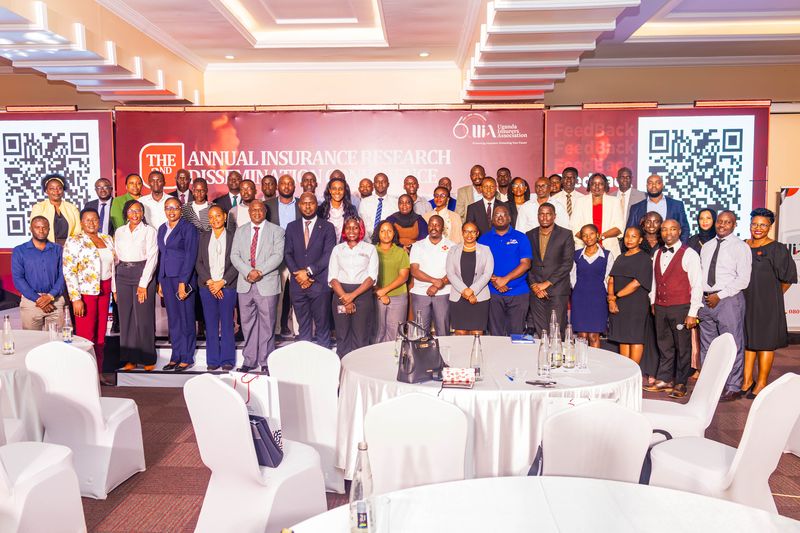
Speaking at the Uganda Insurers Association (UIA) conference on the future of the insurance industry, Kasirye said that although gross written premiums had crossed the Shs2 trillion mark, insurance penetration remained low at 0.95 per cent of Gross Domestic Product (GDP) by the end of 2025.
He argued that the industry could not achieve the scale required to support Uganda’s economic transformation by relying on customers who already hold insurance policies.
“No industry grows like that by selling a little more to the customer it already has. The growth has to come from people and firms who hold no policy today. If we are serious about the tenfold growth strategy, then insurers must begin looking beyond their existing customers and deliberately develop products for the millions of Ugandans who remain uninsured,” Kasirye said.
He noted that Uganda’s insurance penetration had increased marginally from 0.5 per cent in 2005 to 0.95 per cent in 2025, despite sustained growth in premium collections, pointing to a persistent gap between industry earnings and the actual number of people accessing insurance services.
Kasirye warned that this imbalance could undermine the sector’s ability to support the financing needs of a US$500 billion economy, particularly through long-term savings, investment and risk protection.
He said life insurance companies and pension funds should play a bigger role in mobilising long-term savings, while insurers must extend agricultural protection to farmers whose livelihoods remain vulnerable to climate shocks.
“How much of the industry’s growth is coming from households choosing to buy insurance for the first time, and how much is simply attached to bank loans or employer-sponsored schemes? We may be growing premiums faster than we are growing the market, and that is a fundamental problem,” he said.
The research director pointed to the limited reach of agricultural insurance as another constraint to Uganda’s economic ambitions. He said slightly more than 100,000 farmers benefited from agricultural insurance in 2025, against an estimated national farming population of 3.5 million.
He argued that inadequate insurance coverage makes it difficult for farmers to access financing and for agro-processing businesses to secure reliable supplies of agricultural produce.
“A bank will struggle to lend to an uninsured farmer, while a factory cannot confidently plan around an uninsured supply of agricultural produce. If agro-industrialisation is one of the anchors of the tenfold strategy, then protecting the agricultural value chain must become a priority,” Kasirye said.
He also challenged insurers to address public mistrust, citing findings from a Uganda Insurance Association public perception study indicating that nearly 70 per cent of respondents perceived insurance premiums as money lost, while a similar proportion expressed frustration over delays in claims settlement.
Bernard Obel, Director of Supervision at the Insurance Regulatory Authority (IRA), acknowledged that despite the industry’s financial growth, insurance penetration remained low, leaving significant sections of the population exposed to financial risks.
Obel said only 27 per cent of vehicles on Ugandan roads were insured, highlighting the substantial untapped market.
“Research can tell us where the gaps are, but it cannot close them. That is our job. We need to connect research, industry insights and action if we are to shape the future of insurance in Uganda,” Obel said.
He urged insurers to move beyond traditional distribution channels and establish partnerships with banks, telecommunications companies, SACCOs, microfinance institutions and community-based organisations to reach underserved populations.
Meanwhile, Jonan Kisakye, Chief Executive Officer of the Uganda Insurers Association, identified motor, individual life, microinsurance and agricultural insurance as key growth opportunities.
He also called for expansion in fire and engineering insurance to take advantage of emerging investments and infrastructure development.
The industry has also been urged to translate research findings into measurable reforms, improve claims settlement and develop affordable products that respond to the needs and income patterns of ordinary Ugandans.
Kasirye called on the association to introduce an annual implementation scorecard to track progress on research recommendations, arguing that future industry conferences should demonstrate measurable improvements in customer uptake, policy renewals and claims settlement.
He said the real measure of success should be an increase in the number of Ugandans accessing reliable insurance protection, rather than celebrating premium growth alone.