



President Museveni has called on Christians to embrace the values of hard work and self-reliance as a core part of their faith, urging them to reject teachings that promote idleness or dependence.
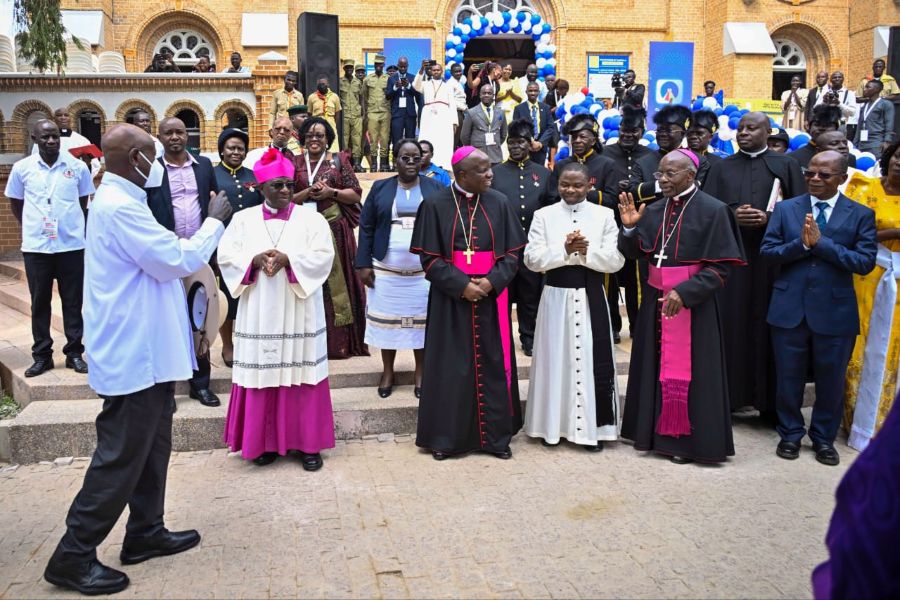
The President made the remarks on Sunday at the centenary celebrations of St. Mary’s Cathedral Lubaga, which marked 100 years of faith and service since its consecration in 1925.
In his address, Museveni congratulated the Catholic community in the Kampala Archdiocese and across Uganda for reaching the historic milestone, describing the Cathedral as a symbol of enduring faith and a pillar of moral guidance.
“I congratulate the Catholic community in Kampala Archdiocese and across Uganda. When Christianity came, it added value to our heritage. We Africans already believed in God, but Christianity strengthened ideas like resurrection and forgiveness,” Museveni said.
However, the President cautioned against what he described as a misinterpretation of scripture that discourages productivity, referencing the Biblical verse about birds that “neither sow nor reap.”
“I disagree with the teaching that compares us to birds that neither sow nor reap,” Museveni said, adding that true Christianity promotes diligence and self-sufficiency.
He encouraged believers to instead draw inspiration from the Parable of the Talents and St. Paul’s message that “whoever does not work should not eat,” urging Christians to take responsibility for their livelihoods and the nation’s development.
“My advice is to follow the parable of the talents and St. Paul’s message ‘whoever does not work should not eat.’ Work hard, get out of poverty, and support your families, the Church, and the State. That is true Christianity,” he said.
Museveni commended the Catholic Church for its contribution to Uganda’s social and moral development through education, health, and community service.
He said the Church had played a vital role in shaping responsible citizens and promoting peace and unity.
The thanksgiving mass, animated by Archbishop Paul Ssemogerere, was attended by several dignitaries, including members of the Uganda Episcopal Conference led by Bishop Zziwa, Katikkirp Charles Peter Mayiga, Anglican Bishop Stephen Kazimba Mugalu, government officials, cultural leaders, and political figures.