










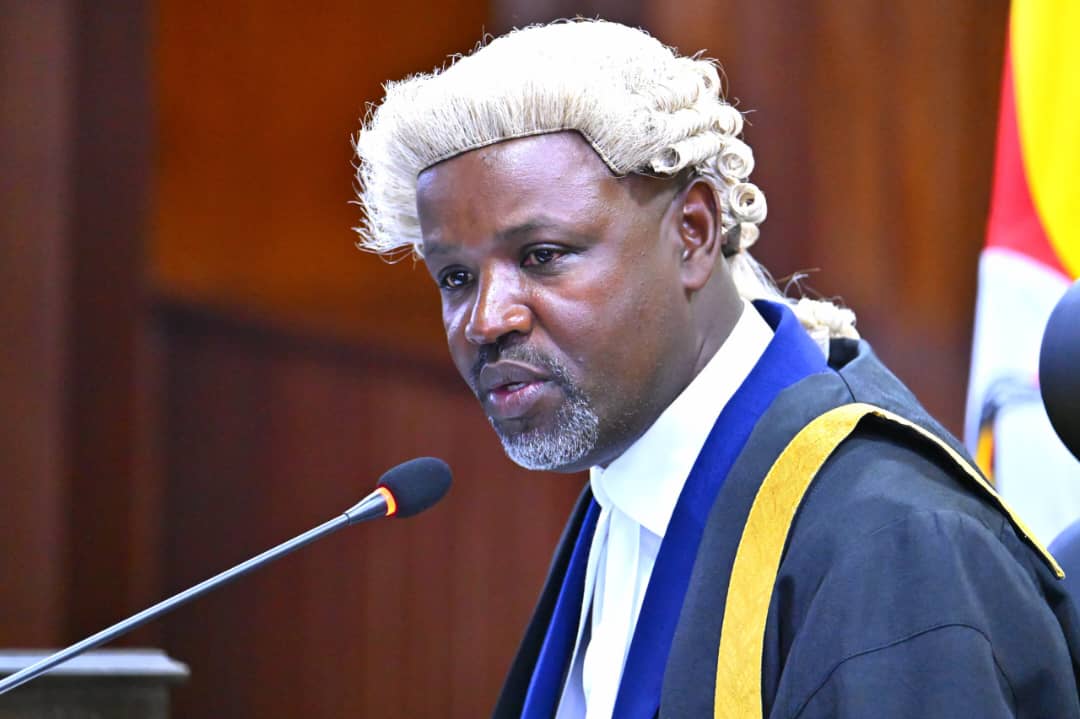
Parliamentary committees that fail to fulfil their reporting obligations risk losing funding, while their leaders could be barred from holding future committee leadership positions, Deputy Speaker Thomas Tayebwa has warned.
Tayebwa said Parliament would no longer continue allocating public funds to committees that receive and utilise money but fail to demonstrate their work through the required reports.
He issued the warning during Tuesday afternoon’s plenary sitting while addressing concerns about the performance of specialised standing committees, several of which he said had failed to meet their reporting obligations.
Tayebwa singled out the Committee on Climate Change, which he said had not presented a single report to the House throughout the 11th Parliament, despite receiving and utilising parliamentary funds.
He also cited the Committees on Equal Opportunities, HIV/AIDS and Related Matters, Human Rights, and Science and Technology as among those whose performance would come under scrutiny.
Under Parliament’s Rules of Procedure, specialised committees are required to present reports to the House at least twice a year.
Tayebwa said the committees were established to ensure that critical policy areas receive sustained parliamentary attention and that legislators remain informed about developments and challenges in their respective sectors.
However, he warned that failure to meet reporting requirements could have direct financial and political consequences for the affected committees.
“This is therefore to require committees to conform to the reporting requirements and justify their existence,” Tayebwa said.
He added that Parliament’s leadership would review resource allocations to committees based on their performance, warning that those that failed to carry out their duties should not expect continued financial support.
“If your committee is not working, there is no reason for giving you money,” he said.
Tayebwa further warned that committee chairpersons and other leaders who repeatedly failed to deliver on their responsibilities could be denied future leadership opportunities.
He said Parliament’s leadership would engage political party whips and ask them to reconsider nominating legislators who had previously led underperforming committees for leadership positions.
“We will talk to whips and request that, please, this one is not suitable to be a leader,” he said.
The warning puts the affected committees on notice that failure to account for their work could jeopardise both their parliamentary funding and their leaders’ prospects of securing future leadership positions.
Tayebwa said the proposed measures were intended to strengthen accountability within Parliament and ensure that public resources allocated to committees translate into tangible parliamentary work.