









President Yoweri Museveni has urged foreign investors to tap into Uganda’s tourism potential by developing world-class resorts, hotels and lodges on the country’s islands, along the River Nile and near national parks.
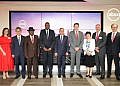
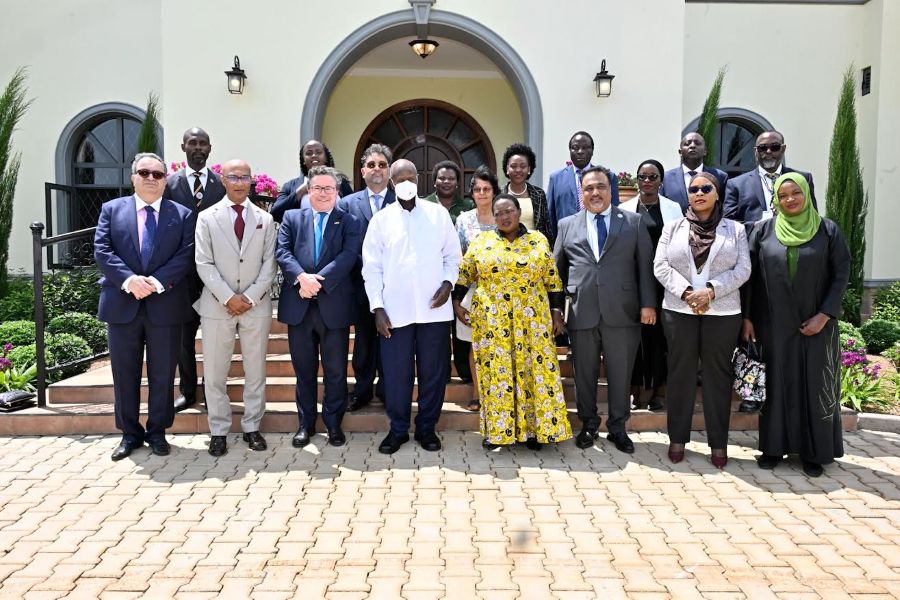
Museveni made the call on Friday while meeting a delegation of investors led by Ibrahim Ayoub, Group Chief Executive Officer of the UK-based International Tourism Investment Corporation Limited, at his Kisozi Farm in Gomba District.
The investors expressed interest in establishing tourism facilities in Uganda, including resorts, hotels and other supporting infrastructure.
Prime Minister Robinah Nabbanja, who attended the meeting, said Ayoub had previously visited Uganda and returned to advance investment discussions and formalise arrangements with relevant government ministries.
“Mr. Ibrahim is already in dialogue with three international hotel groups to come and build hotels here in Uganda,” Nabbanja said.
Museveni welcomed the proposed investment, citing Uganda’s favourable climate, natural attractions and security as key advantages that could make the country a competitive international tourism destination.
He said tourism was among the sectors with significant potential to support Uganda’s economic transformation, alongside commercial agriculture, manufacturing and industry, services, and information and communication technology (ICT).
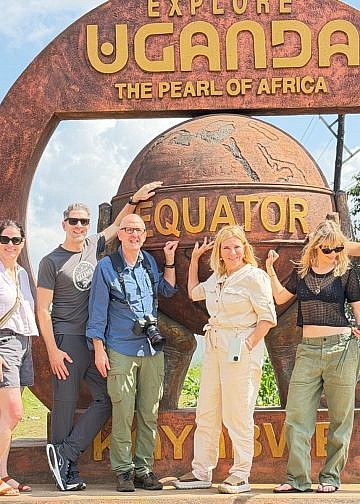
The President highlighted Uganda’s geographical location along the Equator and its altitude, which he said contribute to a relatively mild climate throughout the year.
He also pointed to the country’s national parks, forest reserves, mountains, lakes and rivers as attractions that could support a wide range of tourism investments.
Museveni specifically directed Nabbanja to identify suitable islands on Lake Victoria where the investors could establish a tourism resort.
He said the Ssese Islands in Kalangala District comprise approximately 82 islands, excluding those in Buvuma and Koome, which fall within Buvuma and Mukono districts, respectively.
The President encouraged the investors to consider less-developed islands, explaining that different investors could establish facilities on separate portions of the same island.
“We shall have to identify one of the islands. You may not be the only one there. There will be other people, but you can have a portion of the island where you develop a resort,” Museveni said.
When informed that the proposed resort would require approximately 100 acres, Museveni expressed confidence that the Government could identify suitable land.
He also suggested exploring investment opportunities on islands in Buvuma and Mukono, noting that tourism development around the western shores of Lake Victoria, particularly in Kalangala, was already relatively established.
The President further directed Nabbanja to identify suitable locations along the River Nile, saying several stretches of the river remained underutilised despite existing tourism facilities around the Source of the Nile and other established destinations.
Museveni also encouraged the investors to consider establishing lodges near national parks, describing such projects as relatively easier to undertake.
He emphasised that improved infrastructure, security and effective tourism promotion would be essential to attracting more international visitors and unlocking Uganda’s tourism potential.
Ayoub, who said he originally comes from Mauritius, described the proposed investment as an example of African countries supporting one another through intra-African investment and tourism.
He also conveyed greetings from Dr Taleb Rifai, the former Secretary-General of the United Nations World Tourism Organization, now known as UN Tourism.
Ayoub said Rifai had asked him to convey his appreciation to Museveni, recalling their meeting in 2013 when he served as head of the global tourism body.
The meeting also provided an opportunity for investors in Uganda’s mining sector to present plans for expanding their operations.
Hefin Rees, chairman of trustees at Spotlight on Africa Investments, said the company had partnered with local businesspeople to invest in two gold mines, located in Kassanda and Busia districts.
He said the company intended to expand its operations through 30 additional gold mining investments over the next five years, with an emphasis on value addition.
“We have plans for another 30 gold mine investments over the next five years to add value,” Rees said.
He also disclosed plans to establish a gold refinery capable of producing 999.9-purity gold bullion, saying the investment would support the development of Uganda’s gold industry.
According to Rees, the company was working towards establishing its first large-scale processing plant in Kassanda District. He invited Museveni to visit the facility in February 2027.
The company’s investment interests also include 30 small-scale mining licence joint ventures and five exploration licences. Three of the proposed exploration licences would be located in Karamoja, with the others in Mubende and Busia districts.
Rees said the company intended to work with artisanal miners and employ local people as part of its investment strategy.
He further announced plans to introduce a gold traceability system to monitor minerals from extraction through processing to their eventual sale.
“We’re also starting a track-and-trace system in Uganda so we can track using the data from the mine right to the processing plant, right to the eventual sale of the gold,” he said.
He said the system would improve transparency and accountability across Uganda’s gold value chain.
During the meeting, Museveni also emphasised the need for affordable electricity to support industrialisation and attract long-term investment.
He warned that high electricity and transport costs could undermine the competitiveness of local industries and discourage investors seeking countries with lower production costs.
“What we need is cheap power to support industry,” he said.
Museveni explained that the Government’s economic strategy focuses on wealth creation through commercial production, manufacturing and other productive activities that generate employment, raise household incomes and expand the tax base.
He said businesses were expected to create jobs, provide income-earning opportunities and pay taxes, which would support the delivery of social services, including education.
Meanwhile, Nabbanja briefed the President on the investment plans of Amea Power, a United Arab Emirates-based energy company that has established a 20-megawatt power plant in Arua.
She said the company was seeking an opportunity to commission the facility and had expressed interest in expanding its investments in Uganda, including in the Karamoja sub-region.
The meeting was attended by the Minister of Trade, Industry and Cooperatives, Sanjay Tanna; the Minister of State for Investment and Privatisation, Amina Mukalazi; and other government officials.
The proposed investments in tourism, mining and energy reflect the Government’s efforts to attract foreign capital, promote value addition, create employment and accelerate Uganda’s economic transformation.