











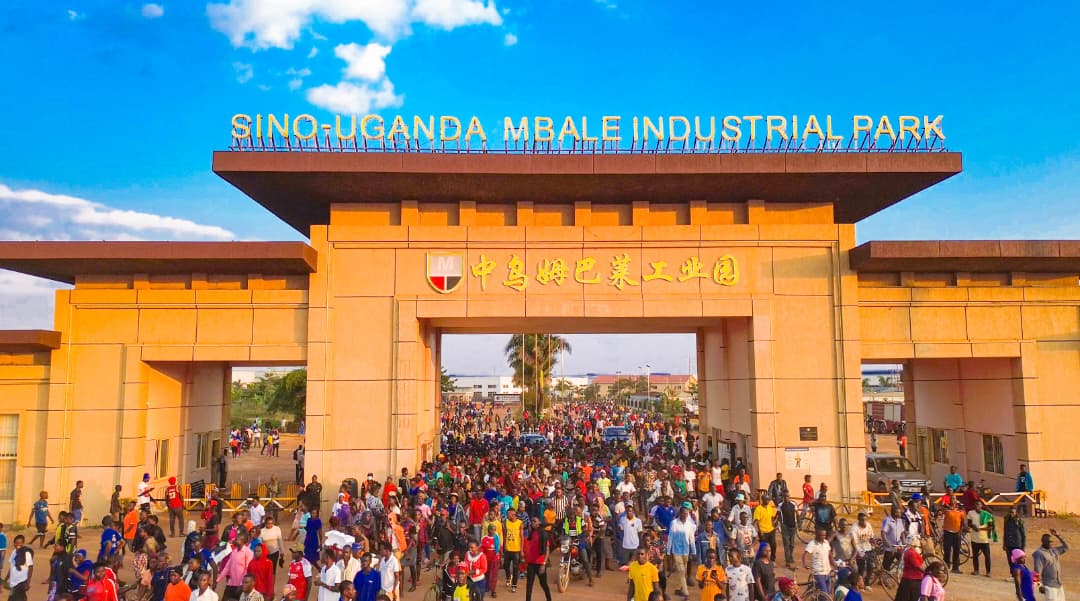
As Uganda celebrates 64 years of independence, the Sino-Uganda Mbale Industrial Park is emerging as an example of the country’s efforts to reduce reliance on imported goods, expand local manufacturing and create employment through industrialisation.
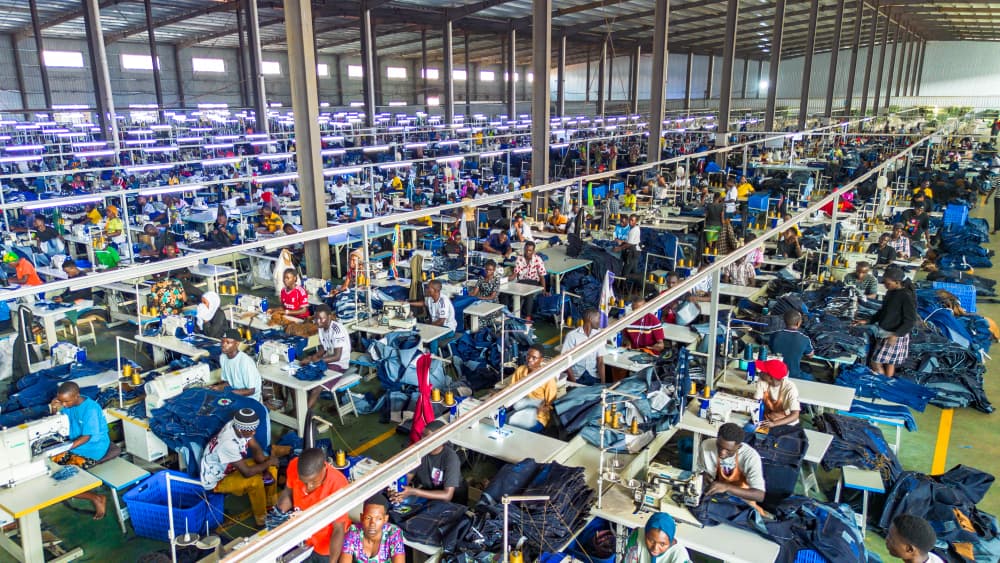
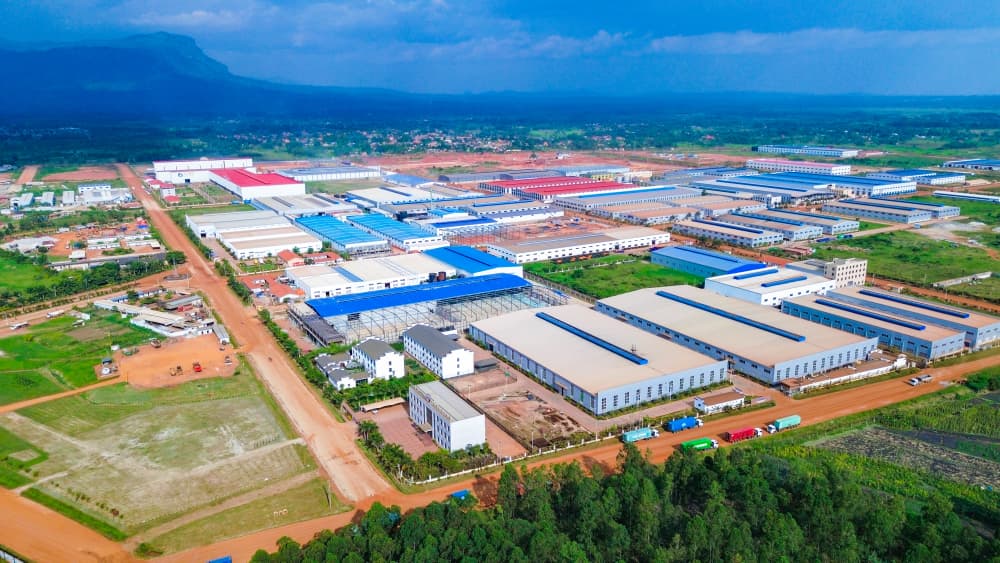
Since its launch in 2018, the industrial park has attracted 90 industries, 70 of which are operational, according to its administrators. The facility employs more than 15,000 people and manufactures over 250 types of products that were previously imported.
The products range from household appliances and clothing to various industrial goods, bringing some manufacturing closer to consumers while creating opportunities for local businesses and workers.
For traders in Mbale, the growth of local manufacturing has helped shorten supply chains, reduce the time spent sourcing merchandise and, in some cases, lower operating costs.
Qulthum Nanyonga, sales manager at the TCL Black Air showroom in Mbale, said businesses previously relied heavily on imported appliances, a process that involved significant costs and delays.
“Before the coming of the industrial park, importing appliances was costly in terms of money and time. They would wait for about a month or two to get our products imported into the country,” Nanyonga said.
She said purchasing products from manufacturers within Uganda had helped traders reduce some import-related expenses and offer more affordable prices to customers.
“They do quality products, and since we no longer incur import money, we sell at an affordable price. There’s a big reduction in terms of prices as imported products which were at Shs1 million can now be gotten at Shs500,000,” she said.
The reported price difference illustrates the potential benefits of local production, although actual savings depend on the product, specifications and supplier.
Local production creates opportunities for traders
The expansion of manufacturing has also changed how some small businesses source their stock.
Bukaiya Kizito, a vendor at the Sino Industrial Market, said traders previously travelled to Kampala and the Malaba border to purchase clothing and household appliances that were not readily available locally.
“We used to buy stock from Kampala, sometimes Malaba border because we had no local products like clothes, especially jeans, and home appliances,” she said.
Kizito said traders could now purchase some merchandise directly from factories within the industrial park and display it for sale at the market established nearby.
She added that the availability of locally manufactured goods had created opportunities to offer customers more competitive prices.
“Things are affordable and this gives us a chance to also sell at lower price to our customers,” Kizito said.
The experiences of local traders highlight how domestic manufacturing can support small businesses by improving access to suppliers and reducing the logistical challenges associated with sourcing products from distant markets.
Industrial park builds local skills
Laurent Zhang, administrator of Sino-Uganda Mbale Industrial Park, said replacing imported finished products with locally manufactured alternatives was among the major changes since the facility opened.
“Before the park coming to Uganda, lots of products we used in Uganda were imported. But since the opening of this park, lots of products right now are produced in Uganda. It is as what we have said, buy Uganda and build Uganda,” Zhang said.
He added that the park was contributing to workforce development by training Ugandans to operate industrial machinery.
According to Zhang, many employees joined the factories without prior experience in operating industrial equipment but received between one and three months of training while earning full salaries.
He said the training had equipped many workers with practical skills that could support their long-term employment prospects.
Zhang added that some former employees had used their earnings and experience to establish businesses outside the industrial park.
“Some of them after working here get some cash and get some funds because of the salary they got, then they now move outside to start their own business,” he said.
The development points to the potential for industrial employment to generate benefits beyond factory wages by helping workers acquire transferable skills and capital for entrepreneurship.
Next phase targets locally sourced raw materials
Despite the growth in domestic manufacturing, Zhang said many factories at the park still depend on imported raw materials from countries including China, the United States and Egypt.
He said the next phase of development would focus on encouraging investors to source more inputs locally, including cotton and iron ore.
“But gradually we are organizing lots of investors to start use raw materials from Uganda such as cotton,” Zhang said.
He added that investors were exploring opportunities to use Uganda’s iron ore in the production of steel and related products, potentially supplying markets across East Africa.
Zhang cited Tembo Paper as an example of local value addition, saying the factory uses Ugandan eucalyptus to manufacture tissue products.
“Right now inside the park we have one factory, they are 100% use Uganda eucalyptus to make tissues. This called Tembo Paper and it is also a giant investment inside the park,” he said.
Increasing the use of domestic raw materials could help strengthen links between manufacturing and local agriculture, mining and forestry. It could also create opportunities for Ugandan suppliers to participate more extensively in industrial supply chains.
However, expanding local sourcing will depend on the availability, quality and cost competitiveness of raw materials, as well as the capacity of domestic suppliers to meet factory demand.
Minister for Local Government Balaam Barugahara said industrial parks were an important part of Uganda’s efforts to move from political independence towards greater economic self-reliance.
“As we celebrate 64 years of Uganda’s independence, I would like to thank the president for his strategic decision to invest in industrial parks, which are a very important part of translating political independence into economic independence,” Barugahara said.
He argued that Uganda’s continued dependence on imported products showed that the country still had considerable work to do to strengthen domestic production.
“The celebration of 64 years is political independence, but what we have not yet achieved is economic independence,” he said.
Barugahara identified import substitution, job creation and value addition as key benefits of industrialisation.
He cited the production of tiles at industrial parks in Kapeeka and Namanve as an example of efforts to manufacture goods locally that were previously imported.
The minister also emphasised the importance of processing agricultural commodities before exporting them, saying Uganda could retain more value by developing domestic industries around its raw materials.
“Instead of exporting raw materials like coffee, cotton, and agricultural produce, we are now adding value,” Barugahara said.
He used coffee from the Bugisu region to illustrate the potential earnings from processing agricultural products, comparing the price of raw coffee with that of finished coffee sold in overseas markets.
Barugahara said expanding local processing could allow Uganda to capture a greater share of the value generated from its agricultural output, while supporting employment and business growth.
The precise value retained by domestic producers, however, depends on processing costs, product quality, market access and the prices secured at each stage of the supply chain.
Mbale park targets 20,000 jobs
Zhang said employment at Mbale Industrial Park was expected to increase as additional factories became operational.
He reiterated that the facility had attracted 90 industries, 70 of which were operating, with more than 15,000 people employed.
The park is targeting 20,000 jobs in the near future as more investors establish production facilities, he said.
Zhang added that new investments could include garment manufacturers and other companies expected to generate substantial employment.
He also outlined plans for a proposed industrial park in Kayunga, which he said would cover approximately 1,200 acres and could create more than 100,000 job opportunities.
The proposed development would represent a significant expansion of the industrial park model, although the projected employment figure remains an estimate rather than a confirmed number of jobs created.
At 64 years since independence, the growth of Mbale Industrial Park highlights one of the country’s central economic challenges: reducing dependence on imported finished goods while increasing domestic production, value addition and exports.
For traders, the benefits include access to some locally manufactured products and potentially shorter supply chains. For workers, industrial employment offers opportunities to earn incomes and acquire technical skills. For manufacturers, the next challenge is to strengthen local supply chains and expand the range of goods produced competitively in Uganda.
The park’s experience also illustrates that economic self-reliance requires more than assembling factories. It depends on productive jobs, reliable infrastructure, skilled workers, competitive manufacturing costs and stronger connections between industries and Ugandan suppliers.
As the country marks its 64th Independence anniversary, industrialisation remains a key part of the debate over how political freedom can translate into greater economic resilience and prosperity.
For Mbale, the ambition is to build on existing manufacturing capacity, attract more investment and ensure that an increasing share of the goods Ugandans consume can be produced locally.