









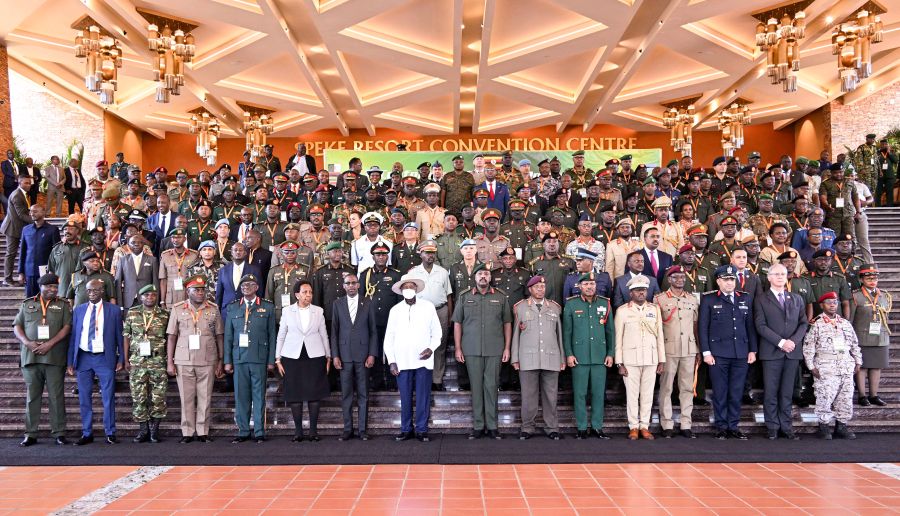
President Museveni has called on African countries to strengthen their economies, promote political cohesion and deepen regional integration, saying these are essential to achieving lasting national and continental security.
Museveni, who is also Commander-in-Chief of the Uganda People’s Defence Forces (UPDF), said African countries cannot effectively respond to emerging security threats without addressing the underlying economic, political and geopolitical factors that shape their stability and defence capabilities.
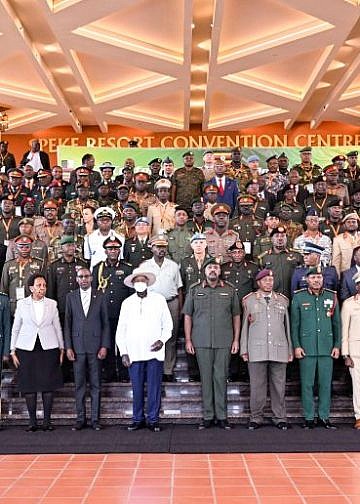
He made the remarks while closing the inaugural Conference of African Defence Chiefs on Military Operations Other Than War at Speke Resort Munyonyo in Kampala.
The four-day conference, which began on October 5, was hosted by Gen. Muhoozi Kainerugaba, Chief of Defence Forces and Senior Presidential Advisor for Special Operations. It was held under the theme, “Strengthening Adaptive Noncombatant Military Response to Emerging Complex Security Threats in Africa.”
Addressing defence chiefs, intelligence officials and military commanders, Museveni challenged African strategists to examine the relationship between economic strength, political unity and national security.
“Can you have a strong army and a strong and safe country without a strong economy? Can you have a strong defence force and a strong and safe country without cohesive politics?” he asked, adding that countries must also consider the strategic implications of their geographical locations, particularly when they are landlocked.
He argued that military strength alone cannot guarantee national security if a country lacks a productive economy, political cohesion and an effective regional strategy.
Museveni said a strong economy is a fundamental requirement for national security, emphasising the importance of wealth creation through the production of goods and services.
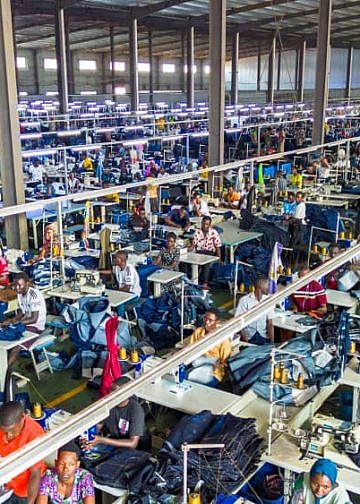
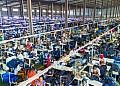
He identified commercial agriculture, manufacturing and artisanship, services, and information and communications technology (ICT) as key sectors Uganda should develop to generate wealth.
However, the President said increased production must be accompanied by access to reliable markets capable of absorbing goods and services.
He explained that communities producing similar goods may have limited capacity to purchase from one another, making access to markets beyond local boundaries essential for sustainable economic growth.
According to Museveni, patriotism and regional integration can help address this challenge by encouraging citizens to support domestic producers while opening opportunities for trade across communities and national borders.
He said this economic reasoning underpins patriotism, which he identified as one of the founding ideological principles of the National Resistance Army (NRA), the UPDF and the National Resistance Movement (NRM).
“Love Uganda. Why? It is because, among many other reasons, you need Uganda for your prosperity,” Museveni said.
The President said Uganda’s expanding production of sugar, milk, maize and industrial goods had demonstrated the limitations of relying exclusively on the domestic market.
He argued that access to larger regional and continental markets is necessary to sustain production, increase business opportunities and strengthen economic resilience.
Museveni traced the Pan-African movement to the establishment of the African National Congress (ANC) in South Africa in 1912, saying African unity should be viewed not only as a political aspiration but also as an economic necessity.
He advocated stronger regional markets, the Continental Free Trade Area and, where feasible, political federations to support trade and cooperation among African countries.
Museveni said a common African market would provide producers with a broader customer base and greater opportunities to expand their businesses.
He also questioned the logic of political divisions based on tribal or religious identity when economic prosperity depends on customers and markets beyond one’s immediate community.
“If my tribemates are not able to support my prosperity by buying my goods and services, why do I not treasure the other Ugandans that buy my products?” he asked.
The President further linked economic integration to collective security, arguing that closer political cooperation among East African countries could strengthen their ability to address shared threats.
He cited the proposed East African Political Federation as a framework that could deepen economic integration and support joint defence arrangements.
Museveni said a regional federal army could potentially enhance collective defence capabilities across land, sea, air and space, areas in which individual countries may face financial, geographical or technological limitations.
“Uganda alone, even when it is a developed country, may not be able to play such a role. We do not even have access to the sea. Our brothers that are near the ocean may also have their own limitations. Together we can do the task more easily,” he said.
Museveni said African countries must establish clear economic philosophies and strategies, particularly regarding who should create wealth and how governments should support that process.
He identified the private sector as the principal driver of wealth creation in Uganda, while assigning government responsibility for providing infrastructure, security and an enabling environment for businesses.
Using a biblical analogy from the Book of John, the President contrasted the responsibilities of an owner and a hired shepherd to illustrate his argument that people with a direct stake in an enterprise have a strong incentive to protect and sustain it.
He said countries that make sound decisions about wealth creation, political cohesion and strategic positioning would be better placed to achieve long-term stability, while poor choices could contribute to instability and disorder.
Museveni also highlighted the role of the UPDF and other defence institutions in activities beyond conventional warfare.
He said the military contributes to national development through infrastructure projects, including roads, railways and stadia, as well as agricultural production, manufacturing and selected public health initiatives.
He added that the UPDF undertakes construction of military barracks and maintains operational readiness through training during peacetime.
The President argued that the cost and quality of some military construction projects should encourage civilian contractors to improve efficiency and standards.
He also welcomed the participating delegations to Uganda and called on investors to explore opportunities across Africa, particularly by supporting local production and purchasing African-made goods.
The conference brought together defence chiefs from 18 countries, alongside commanders and representatives of several international peace support missions.
These included the African Union Support and Stabilization Mission in Somalia (AUSSOM), the United Nations Organization Stabilization Mission in the Democratic Republic of the Congo (MONUSCO), the United Nations Interim Security Force for Abyei (UNISFA) and the United Nations Mission in South Sudan (UNMISS).
Participants examined emerging security challenges, including cybersecurity, artificial intelligence, drone technology, peace support operations, climate change, disaster management, pandemics, border security and the protection of critical infrastructure.
The discussions focused on the need for African defence institutions to adapt their capabilities and strengthen cooperation in response to threats that extend beyond conventional military conflict.
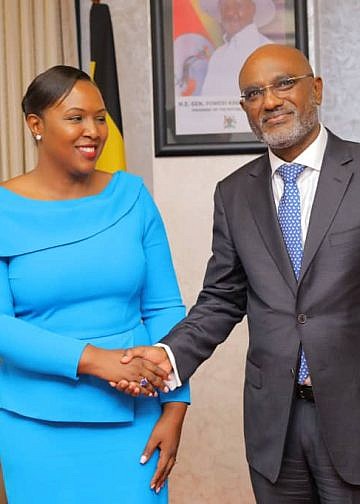
Minister of Defence and Veteran Affairs Kiryowa Kiwanuka said Uganda was honoured to host the conference at a time when the continent faces increasingly complex security challenges.
He commended Gen. Muhoozi Kainerugaba for championing a theme that broadens the scope of military preparedness beyond conventional warfare to include cyber threats and other non-traditional security risks.
Kiwanuka said the conference provided an opportunity to strengthen cooperation, information sharing and preparedness among African defence forces.
He described the theme, “Strengthening Adaptive Noncombatant Military Response to Emerging Complex Security Threats in Africa,” as timely given the changing security environment across the continent.
The conference concluded with calls for greater collaboration among African countries, stronger economic foundations and more adaptive defence institutions to address shared security challenges.