








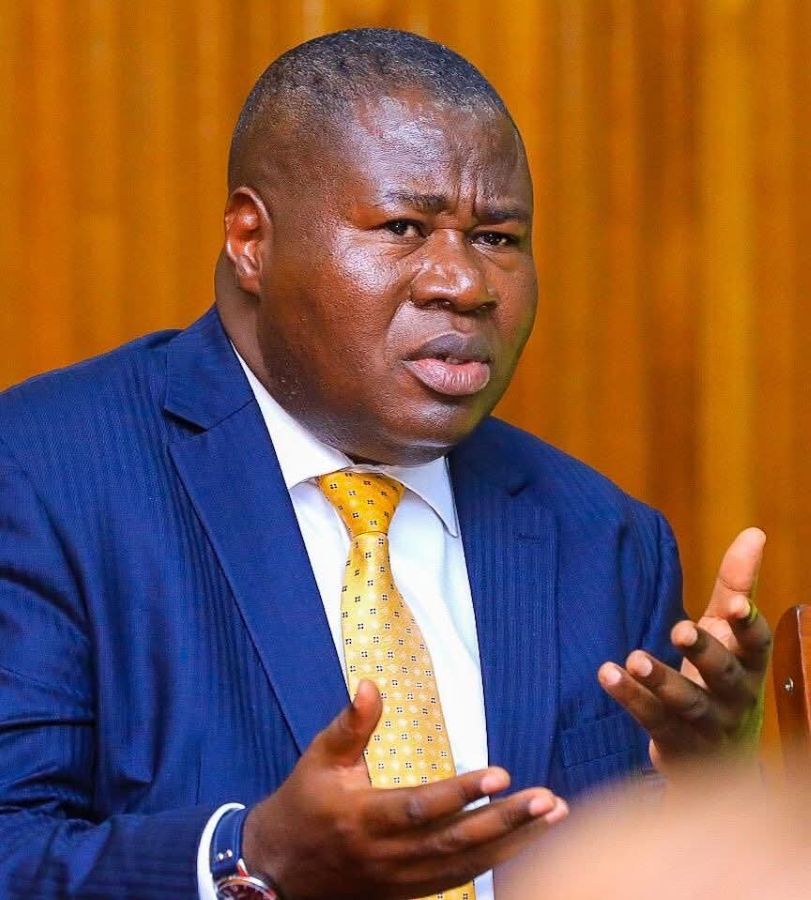
The newly elected Speaker of the 12th Parliament, Jacob Oboth-Oboth, has pledged to lead a corruption-free Parliament during his tenure.
Delivering his maiden speech at Kololo Independence Grounds on Monday, Oboth-Oboth called on legislators to embrace integrity, accountability and transparency in the execution of their duties.
“Honourable colleagues, I pledge a corruption-free Parliament under my leadership. We will cultivate a culture of absolute integrity and zero tolerance for corruption, anchored on President Yoweri Kaguta Museveni’s clarion call for a corruption-free Parliament in the next five years,” Oboth-Oboth said.
The Speaker stressed that accountability must begin within Parliament if other government institutions are expected to uphold transparency and proper use of public resources.
“We cannot condemn misuse of government resources in other agencies while failing to uphold accountability within Parliament itself. That will not work,” he added.
Oboth-Oboth also unveiled seven pillars that will guide his leadership of Parliament, including promoting research-based debate, strengthening result-oriented budgeting, enhancing oversight, and fostering open engagement with the media.
“Our committees should be adequately facilitated to monitor, intercept and protect public resources in real time to ensure every effort contributes to national growth,” he said.
He further appealed to Members of Parliament to work collectively in the interest of the country, promising fairness, humility and impartiality in presiding over the House.
“The Speaker’s chair is not a throne; it is a position of service. Let us serve the Parliament of the Republic of Uganda with humility, modesty and dignity,” Oboth-Oboth noted.
Oboth-Oboth’s anti-corruption pledge comes at a time when Parliament has faced growing public scrutiny over allegations of misuse of public funds, accountability concerns and disputes over expenditure.
In recent years, sections of the public and civil society organizations have raised concerns regarding parliamentary budget allocations, service awards, travel expenditures and allegations of irregular payments involving some legislators and parliamentary officials.
Parliament has also faced criticism over transparency in procurement processes and accountability for supplementary budgets, issues that have occasionally sparked heated national debate.
President Museveni has on several occasions called for stronger accountability mechanisms within public institutions, including Parliament, arguing that corruption undermines service delivery and public trust in government.
The previous speaker, Anita Among is curently being investigated over corruption and illicit enrichment , especially during her time as speaker of the 12th parliament.
Political analysts say Oboth-Oboth’s remarks signal an attempt to restore public confidence in Parliament and strengthen institutional credibility at a time when accountability remains a major governance concern.