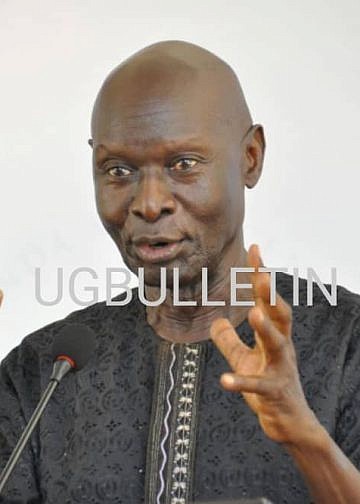





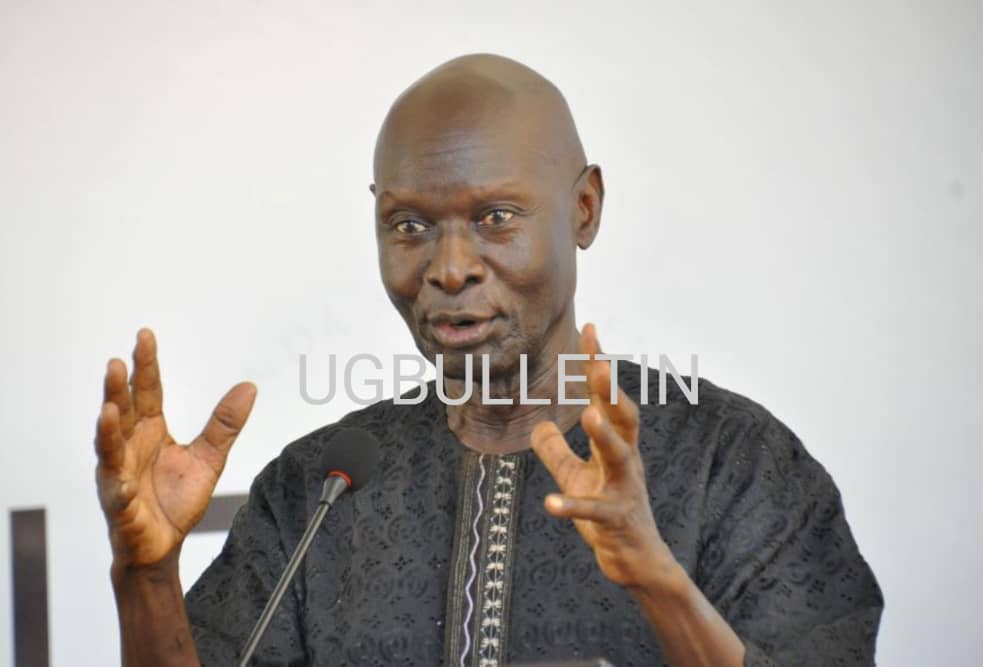
Uganda’s candidate for the position of United Nations Secretary-General, Olara Otunnu, has mounted a strong defence of his candidature, arguing that his decades of service within the UN system and in international diplomacy place him among the most qualified contenders for the organisation’s top office.
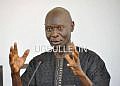
Addressing journalists at the Uganda Media Centre on Tuesday, Otunnu said his extensive experience across the UN’s principal organs, peace and security architecture, and human rights institutions gives him a distinct advantage in the race to succeed the current Secretary-General.
“There are very few people who have had as deep and as broad an experience of working at the United Nations, around the United Nations, and on issues of the United Nations as myself,” Otunnu said.
The veteran diplomat cited his previous roles as Uganda’s Ambassador to the United Nations, his work in the Security Council and the General Assembly, and his tenure as Chairperson of the Commission on Human Rights.
“I served as Uganda’s ambassador. I was in the Security Council, the General Assembly, and I was chair of the Commission on Human Rights, among many other major bodies. I participated in global negotiations, including discussions on the new economic order and the new security order. I was involved in most of those discussions. I have also served in most of the key international commissions over the years, which have been wrestling with issues of peace and security, development, and human rights. I have been a member of most of those commissions,” he said.
Otunnu also highlighted his leadership of the International Peace Academy—now the International Peace Institute—which works closely with the United Nations on conflict prevention, peacebuilding and international security policy.
He further pointed to his tenure as the UN Under-Secretary-General and Special Representative for Children and Armed Conflict, describing it as one of the defining chapters of his international career.
During that period, he said, he successfully pushed for the protection of children and civilians to become a substantive issue on the UN Security Council’s peace and security agenda, helping establish mechanisms that continue to shape international humanitarian policy.
“In terms of background and experience, my experience is very rich and diverse. Most of the issues that need to be tackled, I have a good understanding of. I have worked with member states in various capacities through the Security Council, General Assembly, Commission on Human Rights, and other platforms,” Otunnu said.
His bid comes as the United Nations faces mounting geopolitical tensions, protracted conflicts, climate challenges and growing pressure to reform multilateral institutions, placing a premium on consensus-building and diplomatic experience among candidates seeking the organisation’s top job.
Uganda’s record
While emphasising that the contest is about individual leadership rather than national representation, Otunnu argued that Uganda’s longstanding contribution to international peace and humanitarian efforts reflects positively on his candidature.
He cited Uganda’s decades-long open-door refugee policy, which has made it one of the world’s largest refugee-hosting countries, as evidence of the country’s commitment to international solidarity.
“Historically, Uganda has played a role that is second to none in receiving people in distress from neighbouring countries and hosting refugees. Many of us went to school with students from South Sudan, Congo, Rwanda, and other neighbouring countries because Uganda has always been hospitable. This has not changed. The world should remember Uganda for this historic contribution,” he said.
Otunnu also pointed to Uganda’s role in regional peace and security, particularly its participation in peace support operations across Africa.
“In the last decade or so, Uganda has also been at the forefront of contributing to peace and security, especially in our region of Africa. In Somalia, South Sudan, the Democratic Republic of Congo, across the region, and through peacekeeping missions further afield, Uganda has played a significant role.”
“Uganda has been boxing above its weight. It is not a massive country, but it has played a very active role relative to its size. I believe the international community should recognise that Olara Otunnu comes from a country that has been engaged, active, and responsible as a member of the international community.”
Otunnu is among seven candidates contesting to become the next UN Secretary-General, with the successful nominee expected to emerge following consultations and voting by the UN Security Council before formal appointment by the 193-member UN General Assembly.