









Uganda has moved closer to its long-awaited first oil as the East African Crude Oil Pipeline (EACOP) reaches 92 per cent completion and enters a critical phase of testing and commissioning.
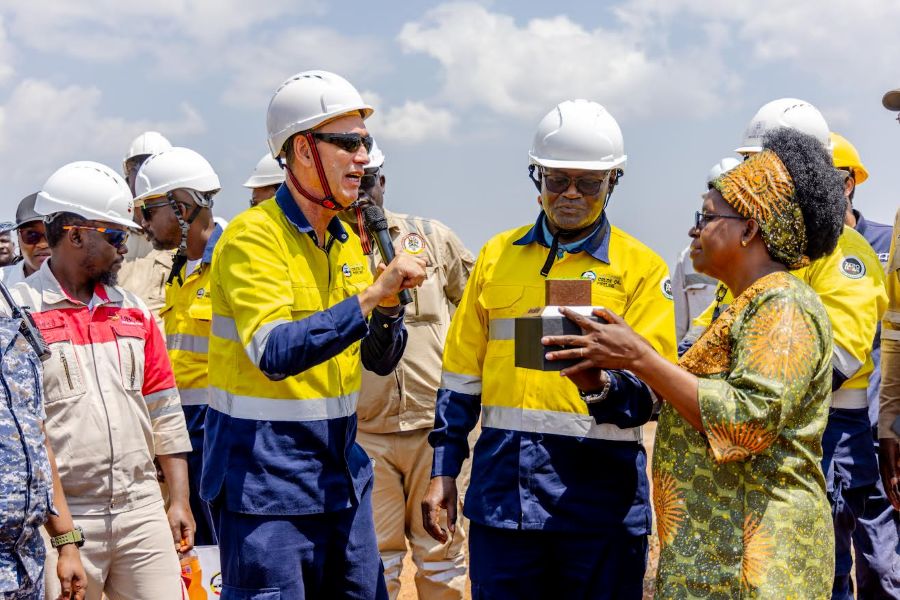
The development was highlighted on Tuesday when the Minister of Energy and Mineral Development, Dr Monica Musenero, toured Pump Station One at Kabaale in Hoima District to assess progress on the pipeline and preparations for its eventual operation.
Pump Station One marks kilometre zero of the 1,443-kilometre heated crude oil pipeline, which will transport crude from Uganda’s Kingfisher and Tilenga oil fields to the Tanzanian coast for export.
Of the total pipeline length, 296 kilometres will run through Uganda, while 1,147 kilometres will cross Tanzania before reaching the Chongoleani Marine Storage Terminal near the Port of Tanga.
EACOP Deputy Managing Director John Bosco Habumugisha said the project has reached 92 per cent completion, with the focus now shifting increasingly towards operational readiness.
“The EACOP project has now reached 92% completion, bringing us closer to operational readiness as Uganda prepares for first oil,” Habumugisha said.
He said commissioning and testing activities are already underway alongside completion of the remaining construction works.
“We have entered a very important phase of the project where commissioning and testing activities are taking place alongside the completion of the remaining construction works,” he said.
“Our focus is increasingly shifting towards ensuring that the critical systems are ready to safely receive and transport Uganda’s crude oil.”
Habumugisha said the remaining works include activities that are important to the completion of the wider project but are not necessarily required before the pipeline can begin receiving crude.
“It is important to note that some of the activities required to achieve 100% completion of the wider project, including administrative facilities, restoration works and drainage infrastructure, are not necessarily critical to the pipeline’s ability to begin receiving crude oil,” he said.
The project is now concentrating on testing key systems, including the facilities at Pump Station One, fibre-optic infrastructure and the pipeline’s heating system.
“Our attention is now increasingly focused on testing the key operational systems, including the facilities at Pump Station One, the fibre-optic infrastructure and the pipeline heating system,” Habumugisha said.
The EACOP is designed as a heated pipeline to allow Uganda’s crude oil to be transported safely and efficiently over the long distance to the Tanzanian coast.
“The heating system is a critical component of EACOP. It will enable us to transport Uganda’s crude safely and efficiently through the pipeline from Hoima to the Tanzanian coast,” Habumugisha said.
Once production begins, crude from the Kingfisher and Tilenga fields will enter the pipeline system in Hoima before being transported through Uganda and Tanzania to the Chongoleani Marine Storage Terminal.
“The crude oil from the Kingfisher and Tilenga fields will enter the EACOP system here in Hoima and be transported through Uganda and Tanzania to the Chongoleani Marine Storage Terminal near the Port of Tanga. From there, the crude will be stored before being loaded for export to international markets,” Habumugisha said.
During the visit, Musenero described EACOP and Uganda’s wider oil and gas projects as an opportunity to drive economic, technological and social transformation.
“I am happy to visit one of the projects that is set to positively impact millions of Ugandans and generations to come in terms of social, technological and economic transformation,” she said.
“We believe that EACOP, together with the other oil-related projects, is a blessing to our country and will spur significant growth and innovation.”
The minister also addressed concerns surrounding fossil fuel development, noting that Uganda’s oil production is emerging amid global efforts to reduce carbon emissions.
“Our oil is coming at a time when there are global campaigns against oil,” Musenero said.
She argued that continued global dependence on petroleum products, including fuel used by aircraft, vehicles and industries, demonstrates the continuing demand for oil.
“There is no country that has stopped using petroleum products. Every day, planes are flying, vehicles are on the roads and industries across the world continue to rely on petroleum. We must therefore ask ourselves why EACOP is being singled out,” she said.
Musenero said Uganda remains committed to developing its oil resources responsibly while pursuing a transition towards cleaner energy.
“Uganda contributes very minimally to global emissions, yet we are deliberately working towards producing a carbon-neutral barrel,” she said.
“Our objective is to harness the value from our oil resources responsibly so that we can also invest in greener forms of energy and transition together with the rest of the world.”
The minister also called for the oil and gas sector to generate opportunities beyond crude production by stimulating local industries and value chains.
“We must transform the oil and gas sector beyond the production of oil itself. The sector should stimulate the growth of other industries and value chains that can create opportunities for educated Ugandans to access meaningful, salaried employment, earn a living and contribute to the country’s economic and social transformation,” she said.
With EACOP now at 92 per cent completion and critical testing and commissioning activities underway, attention is increasingly turning to operational readiness as Uganda prepares to begin commercial oil production and export.