






Buganda Kingdom has welcomed government’s decision to begin compensating it for properties confiscated during the 1966 attack on the kingdom, including land currently occupied by Makindye Military Barracks, the Court Martial, King Fahad Plaza and the Lubigi Sewage Treatment Plant.
The compensation also covers Muteesa House in London, which was confiscated and subsequently sold by the government.
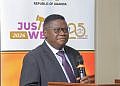
In a statement issued on Sunday, November 22, 2026, Israel Kazibwe Kitooke, the kingdom’s minister of Information and Spokesperson, said the compensation followed negotiations between the government and the kingdom after years of legal disputes over properties taken during the 1966 political crisis.
Kazibwe explained that the government continued occupying and utilising the properties even after the restoration of kingdoms in 1993, despite Buganda holding legal titles to them. This prompted the Kingdom to pursue legal action to reclaim its assets.
“Negotiations subsequently commenced, and the government, in an effort to foster harmony and correct this historical injustice, agreed to pay for the confiscated properties,” Kazibwe said.
He noted that the compensation amounts to billions of shillings and welcomed the government’s decision to begin fulfilling its financial obligations to the Kingdom.
“We are happy that the government has started honouring its obligation to restore the Kingdom’s properties through compensation,” he said.
According to Kazibwe, the money received so far has helped the Kingdom support its annual budget and finance development programmes, particularly in the health and education sectors.
In the health sector, Buganda has constructed Health Centre IV facilities at Busimbi in Mityana, Mukungwe in Masaka and Buikwe, serving communities in Singo, Buddu and Kyaggwe counties, respectively.
The facilities were named Muteesa II in memory of Muteesa House in London, one of the properties for which the Government compensated the Kingdom.
The Kingdom has also invested in community health camps and blood donation campaigns aimed at improving access to healthcare services and addressing health challenges among its subjects.
In education, the compensation has strengthened the Kabaka Education Fund, which provides bursaries to needy pupils and students in primary and secondary schools.
Kazibwe revealed that more than 20,000 children are currently benefiting from the education support programme, helping them access learning opportunities despite financial challenges.
The Kingdom has also expanded its asset base through the acquisition of alternative pieces of land, including Mutundwe Hill.
Despite welcoming the progress made, the Kingdom says the Government still has an outstanding compensation debt and has called for the remaining payments to be settled.
“We call upon the Government to pay the remaining debt and to pay rent regularly and on time for the installations it has on Kingdom land, so that Buganda can invest more in grassroots projects such as ‘Mwanyi Terimba’, which can uplift people out of poverty,” Kazibwe said.
He added that the Kingdom plans to unveil additional development programmes in its 2027/2028 financial year budget.
The Buganda Kingdom expressed appreciation for the progress made, noting that the compensation is helping it address historical losses while financing programmes intended to improve the welfare and livelihoods of people across the Kingdom.