











Fatumah Kyomuhendo, a resident of Rwamukora Trading Centre in Mwenge Constituency, Kyenjojo District, lost her job in Kampala during the COVID-19 pandemic—a setback that left her life uncertain and forced her to start over.
A trained hospitality professional with a diploma in Catering and Hotel Management, she had envisioned a stable career in the city. But when the restaurant where she worked shut down, those dreams were abruptly cut short.
With no alternative employment in sight despite repeated attempts to find work, she made the difficult decision to return to her village in Mwenge Constituency—uncertain, worried, and with nothing to her name.
“I was working in Kampala, but when COVID-19 came, I lost my job. The restaurant closed, and I tried to look for another job, but it wasn’t easy,” Kyomuhendo recounts. “I returned to the village with nothing apart from my child, who needed support that I didn’t have.”
Back home, life felt even more daunting. As a single mother, the weight of responsibility pressed heavily on her shoulders.
With no income and no clear path forward, survival itself became a daily struggle. Yet, in what she now describes as a turning point, her return to the village placed her where opportunity was quietly taking shape.
“Little did I know that I had come to meet my blessing,” she says. “I found that most of the women had formed a Sacco and were progressing. I was impressed and joined them—and since then, I have never looked back.”
That decision marked the beginning of a remarkable transformation.
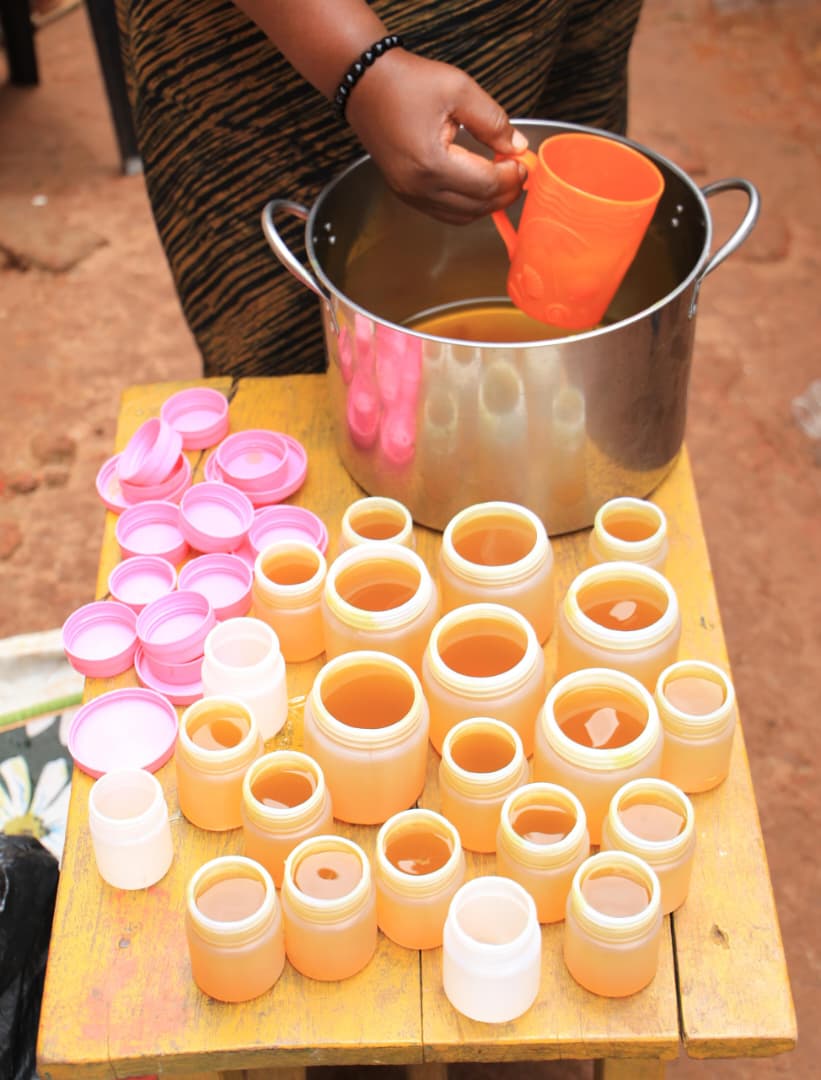
Through the Mwenge Constituency Women Entrepreneurs Emyooga Sacco, Kyomuhendo was introduced to practical, income-generating skills. Among them was jelly making—a craft that would soon become her lifeline. With guidance and support from fellow members, she mastered the skill and turned it into a business.
“The women in the Sacco taught me how to make jelly, and now it is my main source of income,” she explains. “I sell to schools and to people who come to our workplace.”
Her skills were further sharpened during an exchange visit to Kabarole District, organized by the Microfinance Support Centre. There, she learned from Joan Byahumugisha of Kyakaigo Restaurant Sacco, one of the region’s most successful Emyooga beneficiaries.
“I learned how to improve my jelly-making skills during an exchange visit to Kabarole, where Joan Byahumugisha taught us how they are made,” she says.
Today, Kyomuhendo’s life tells a completely different story. She is no longer struggling to survive but is steadily building a future.
The income from her jelly business has enabled her to fully support her child while also allowing her to diversify into goat rearing—an additional source of income.
“I am now able to support my only child with ease, and I have also ventured into rearing goats, which is earning me income,” she says.
Her journey has also come full circle in another powerful way—she is now a trainer. Using the knowledge she acquired through the Sacco and exchange programs, Kyomuhendo is empowering other women in her community with the same skills that transformed her life.
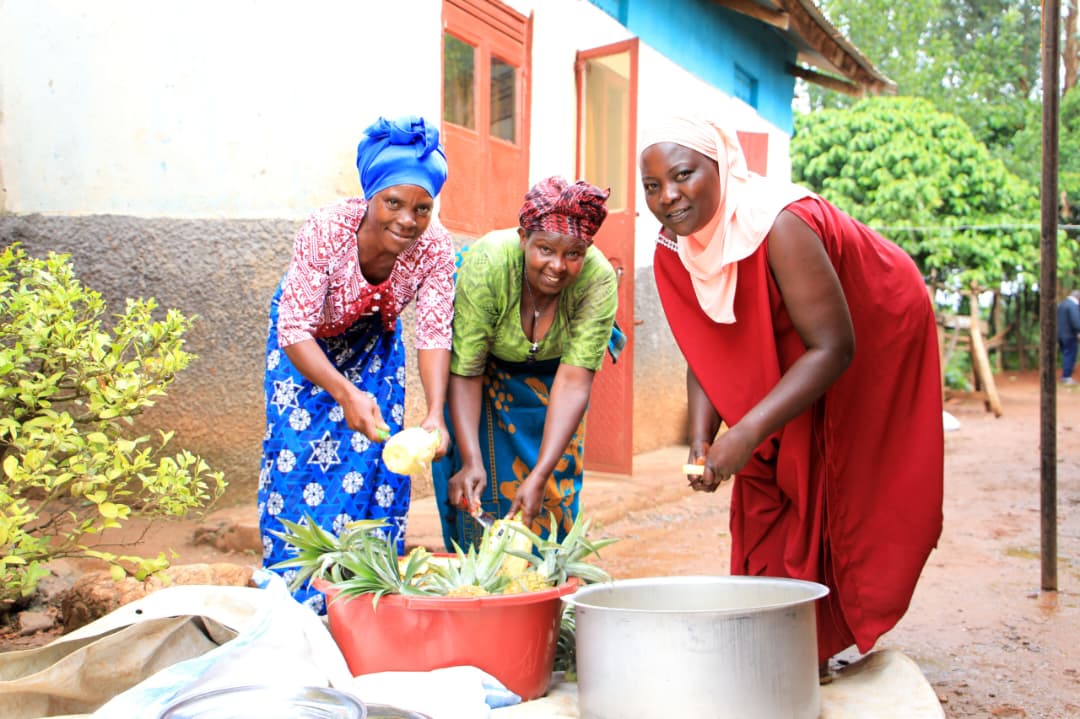
Her confidence and expertise were recently showcased when leaders from the Ankole sub-region visited Kyenjojo District for an exchange learning tour. At the Mwenge Sacco, Kyomuhendo was among the members who demonstrated the jelly-making process, guiding visitors step by step.
The exchange visits, facilitated by the Microfinance Support Centre, are designed to expose beneficiaries to new ideas and successful models across regions.
By taking participants beyond their familiar environments, the program encourages knowledge sharing and innovation—an approach that has significantly improved livelihoods.
Meanwhile, the Mwenge Constituency Women Entrepreneurs Emyooga Sacco continues to grow as a hub of transformation.
Founded in 2021 under the leadership of chairperson Jennifer Basemera, the Sacco began with seed capital of Shs30 million from the Microfinance Support Centre, enabling members to start ventures such as wine making, soap production, and crafts.
The Sacco received additional seed capital of Shs20 million in 2024 and another Shs20 million in 2025, enabling members to expand into other enterprises, including poultry farming.
Today, the Sacco boasts a share capital of Shs71 million. It has disbursed loans totaling Shs516 million, with Shs308 million already repaid, leaving an active loan portfolio of Shs316 million.
The Sacco is now setting its sights on becoming a training hub to mentor hundreds of youths within the constituency and beyond. However, its leaders say this ambition can only be fully realized with increased funding support from the Microfinance Support Centre.
The Sacco Secretary, Judith Atwongeire, commended the Microfinance Support Centre for its continued support, noting that it has significantly improved the welfare of members.