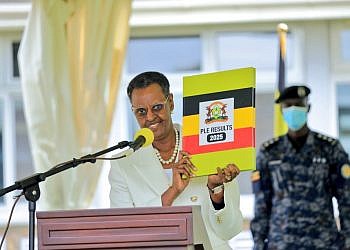











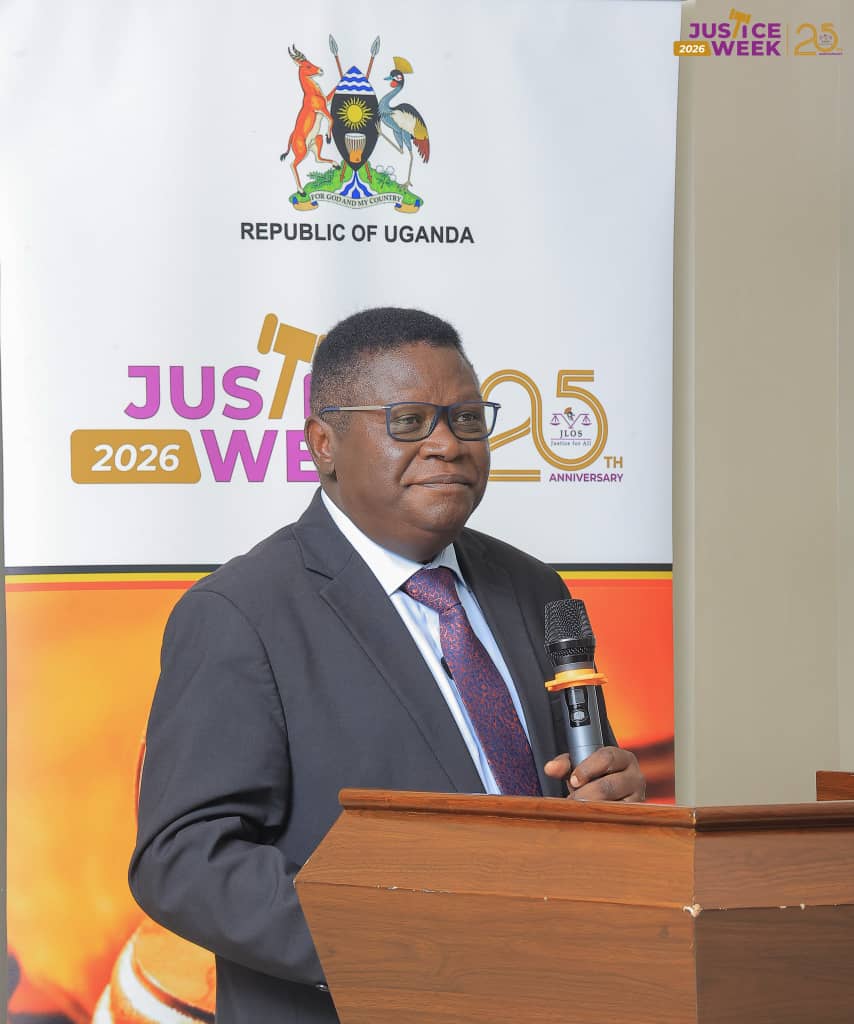
Justice and Constitutional Affairs Minister Norbert Mao has proposed the establishment of a specialised prison for people charged with corruption-related offences, saying the facility would send a strong message about the Government’s commitment to fighting corruption.
Mao said the proposed facility would specifically accommodate suspects facing corruption charges, arguing that a dedicated institution could reinforce the country’s efforts to combat the vice.
“Maybe we need a separate prison for corruption cases. We really need a proper prison where everybody who is taken there is a member of that club. I have suggested that and I hope it will be considered. I’ve suggested it quietly. Today I’m suggesting it loudly,” Mao said.
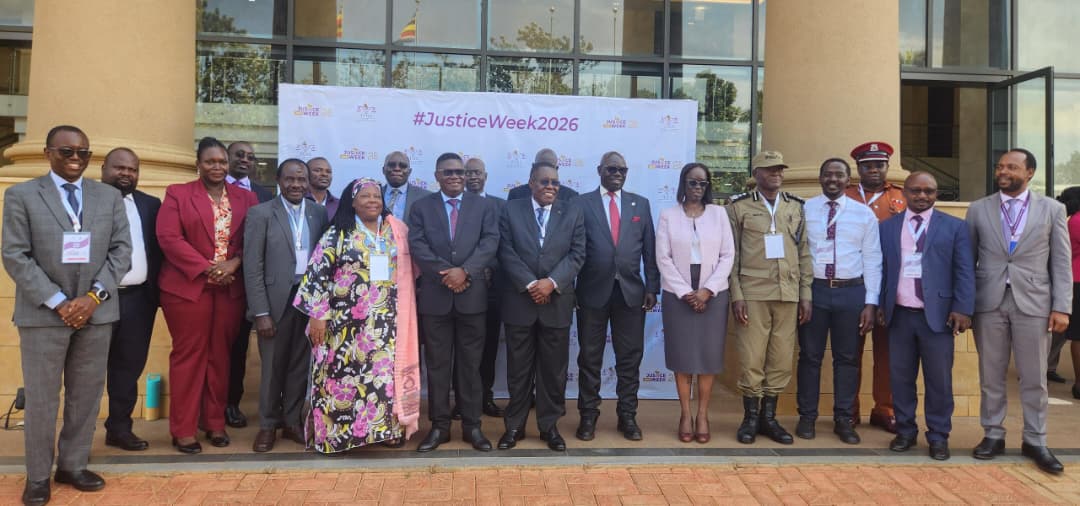
He made the proposal on Monday, November 23, 2026, while officially opening the Annual Justice Week and National Justice Forum at the Justice, Law and Order Sector (JLOS) Towers in Kampala.
The event was held under the theme, “Strengthening Community Justice Dialogue: Leveraging Community Justice Mechanisms for a People-Centred Justice Approach.”
Mao said a specialised prison would send a strong warning to individuals contemplating the theft of public funds. He added that he hoped Cabinet, Parliament and other political leaders would consider the proposal.
He cited Guatemala’s specialised prison arrangements for gang members as an example, arguing that concerns about offenders influencing one another in specialised facilities should not prevent Uganda from exploring the idea.
Calls for stronger community justice systems
Beyond the proposal for a specialised prison, Mao called for greater investment in community-based justice mechanisms to make justice more accessible, affordable and responsive to ordinary Ugandans.
He argued that many disputes could be resolved through community structures rather than prolonged court battles, which often involve expensive legal representation, repeated adjournments and procedures that ordinary citizens struggle to understand.
“Justice must be local. We have the Local Council Courts Act 2006. The LC1 courts are the best courts. Everybody who knows about a matter comes and gives reliable witness. And it’s very difficult to suppress the truth. And they speak in a language everybody understands,” Mao said.
He contrasted community-based dispute resolution with formal court proceedings, where litigants sometimes struggle to understand legal arguments and procedural developments.
“But in these courts here, the lawyer goes and speaks in a very low tone addressing the judge. Then the table is a bang. Then the lawyer says tugende, let’s go. What sort of justice is that honestly? So you go home and say, what happened in court? Bagwangeza ayo. They have extended the case. And each time the lawyer is coming, you must pay,” he said.
Mao said the Government wanted to promote justice systems that allow communities to resolve disputes through dialogue, reconciliation and collective participation rather than relying entirely on adversarial court proceedings.
He identified five legal and policy frameworks that should guide the strengthening of community justice. These include the Local Council Courts Act of 2006, the National Transitional Justice Policy of 2019, the National Alternative Dispute Resolution Policy of 2025, guidelines on the use of informal justice systems being developed by the Uganda Law Reform Commission, and the Judiciary’s Alternative Justice Systems currently being piloted in the Acholi and Lango sub-regions.
He described traditional community dispute resolution as a process in which both parties are given an opportunity to present their cases before community members, who collectively contribute to finding an acceptable solution.
“In our cultures we can tell a liar. But in the courts you have preliminary objections, you have this, you have that, injunctions, you have interlocutory interim applications. So, so many things that simply confuse the people. Even something which is so straightforward,” he said.
Under the traditional approach he described, an elder or community leader listens to both parties before inviting community members to contribute their views and collectively arrive at a decision.
The presiding elder would then ask, “Have I spoken your mind?” Mao explained, saying the approach helps ensure that both the parties and the wider community feel involved in the outcome.
He also defended the traditional practice of parties presenting symbolic gifts to community judges, explaining that the contributions were eventually shared among participants rather than retained as personal rewards.
The minister further called for justice sector institutions to take their services closer to communities through village-based justice dialogues, where citizens could report misconduct by law enforcement officers and other justice officials.
He also reiterated the Government’s intention to support Local Government Minister Balaam Barugahara’s anti-corruption operations through the deployment of justice sector personnel to ensure that suspects are processed in accordance with established legal procedures.
“We are also coming. Now, in order to support what the Minister of Local Government is doing and to stop the appearance of arbitrariness, now that we have regulations for mobile courts, we are going to ensure that wherever he is, because we are losing trillions through these local government corruption networks,” Mao said.
He explained that the proposed arrangements would involve police officers recording statements, the Office of the Director of Public Prosecutions (ODPP) sanctioning charges, magistrates hearing cases and prison officers handling suspects ordered to be remanded.
Mao said the arrangement would address concerns that some anti-corruption operations appear arbitrary while ensuring that suspects are subjected to recognised legal processes.
Mao also advocated for greater use of community service as an alternative to imprisonment, particularly for minor offenders who could contribute positively to their communities instead of being detained at public expense.
“Why should we take you to prison if you can do community service? It is really not necessary,” he said.
He cited the example of his uncle, who served as a parish chief and would identify community projects, such as digging pit latrines, and assign offenders to undertake the work as an alternative to imprisonment.
The minister also shared his personal experience with alternative dispute resolution, revealing that he benefited from mediation during his divorce proceedings in 2017.
He said a mediator helped him and his former partner reach agreements on matters concerning their children and shared property.
“Having a third party is important because a third party gives you a sense of perspective that you may not be looking at,” he said.
Mao urged justice sector institutions to strengthen the relationship between formal courts and community-based mechanisms, emphasising that the latter should complement rather than replace the formal justice system.
“When we talk about informal practice, it must align with the Constitution, human rights, equality and non-discrimination. We are committing that this is not a competing justice system. But this is complementary,” he said.
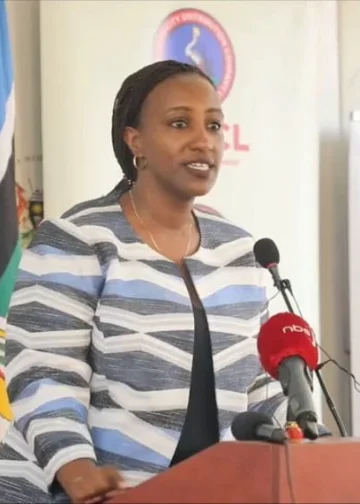
Meanwhile, Rachel Odoi-Musoke, Senior Technical Adviser for the Governance and Security Programme, formerly the Justice, Law and Order Sector (JLOS), said the formal justice system alone could not address all the justice needs of Ugandans.
She noted that many communities continue to rely on local council courts, cultural and religious institutions, traditional leaders, elders and other locally recognised structures to resolve disputes and maintain social harmony.
“These mechanisms are often the first point of contact for individuals and families seeking justice. Their accessibility, familiarity and emphasis on dialogue, reconciliation and restoration make them important partners in the administration of justice,” Odoi-Musoke said.
She said the justice sector had made progress through initiatives such as mobile courts, mobile legal aid clinics, community service, victim participation in sentencing and alternative dispute resolution.
However, she noted that more needed to be done to establish practical arrangements for coordination, referrals, accountability and collaboration between formal and community-based justice actors.
Odoi-Musoke said the National Justice Forum was intended to develop a common understanding of community justice, agree on coordination mechanisms, clarify the responsibilities of different justice actors and share experiences from Uganda and the wider region.
She also emphasised the need to ensure that community justice mechanisms operate within the country’s constitutional and human rights framework, particularly in protecting women, children and other vulnerable groups.
She revealed that the sector was working with the Uganda Law Reform Commission to develop guidelines on the use of informal justice mechanisms in the administration of justice.
Odoi-Musoke also questioned the continued use of the term “informal justice”, arguing that it could wrongly suggest that community-based mechanisms operate outside the recognised justice system.
“Informal justice suggests that it is something outside of the other justice mechanisms. And I think as we discussed, those are some of the issues that we want to come to a common understanding and a common agreement about,” she said.
She said the National Justice Week, running from November 23 to December 4, 2026, would provide an opportunity for justice institutions to showcase their work, learn from partners and develop practical recommendations for improving access to justice.
The dialogue is expected to contribute to the finalisation and adoption of guidelines on the use of informal justice systems and establish stronger links between formal courts and community-based justice mechanisms.