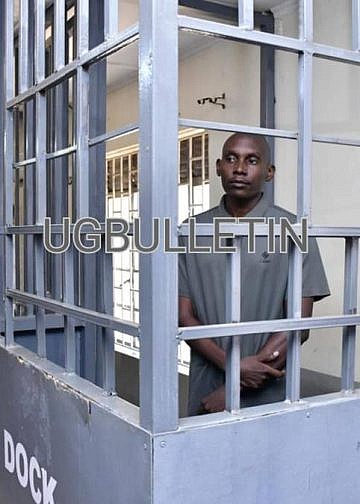










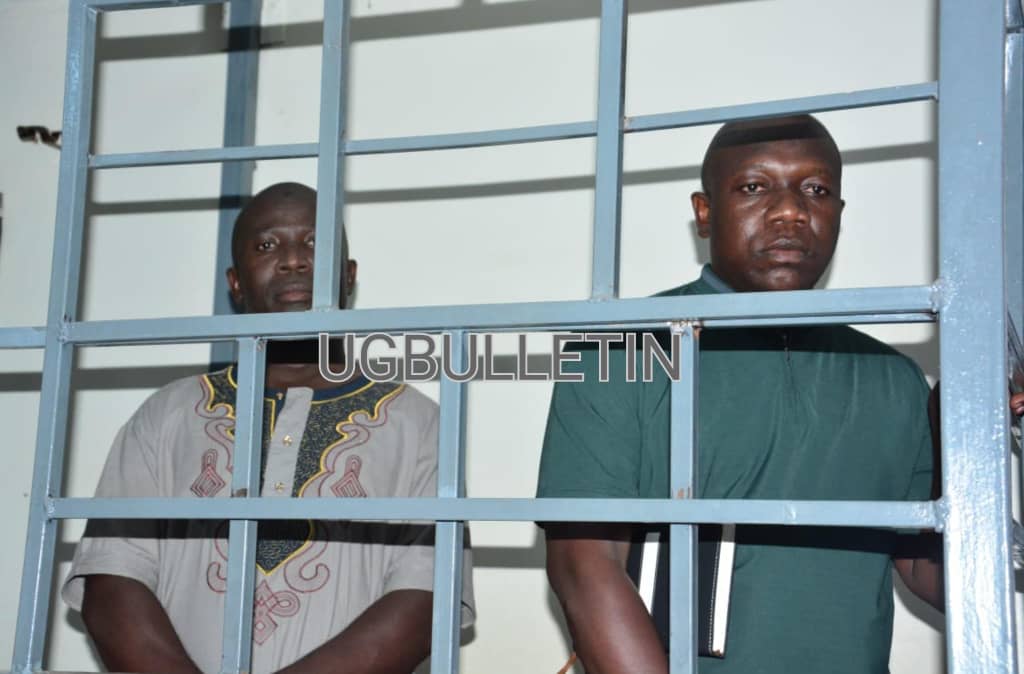
The General Court Martial in Makindye on Wednesday sentenced two army informers, Adil Walusansa and Hamza Lyavala to death after finding that their deliberate participation in two deadly staged suicide bombings.
The two bomings killed Sumaya Byaruhanga and Azatu Sawiya.
In a detailed sentencing decision delivered by army court chairman Brig Richard Tukacungurwa, the military court said the exceptional gravity, planning and execution of the operations placed the offences among the rarest of the rare cases deserving the ultimate penalty.
The two convicts had pleaded guilty to the murder charges, while their co-accused, Lt Col Ephraim Byaruhanga, denied the charges.
Despite the guilty pleas, the court ruled that admitting responsibility did not automatically entitle the convicts to leniency, particularly given the circumstances surrounding the deaths of the two women.
“This court is satisfied that the mitigating factors of the convicts being first-time offenders and having pleaded guilty are outweighed by the severity of these crimes,” Brig Tukacungurwa stated.
The chairman explained that although a guilty plea ordinarily attracts a substantial reduction in sentence as an expression of remorse, it cannot serve as an automatic shield against the ultimate punishment where the crimes committed are exceptionally serious.
“While a plea of guilty would demand a substantial reduction in the sentence as an expression of remorse, it is straightforward that a guilty plea does not operate as an automatic shield against the ultimate penalty of law when the crime committed is uniquely severe,” he ruled.
In explaining the aggravating circumstances, Brig Tukacungurwa detailed the roles played by Walusansa and Lyavala in the operations that resulted in the deaths of Byaruhanga and Sawiya.
The first victim, Sumaya Byaruhanga, died on June 3, 2025, when a bomb allegedly given to her by the convicts exploded on her body near Munyonyo.
The court found that the convicts knowingly participated in delivering the explosive device and organising the operation that led to her death.
“This court considered the undisputed fact that Adil Walusansa and Hamza Lyavala intentionally and unlawfully delivered the Sumaya Byaruhanga bomb, which was detonated on 30 June 2025, near Munyonyo, resulting in her death,” Brig Tukacungurwa stated.
The second victim, Azatu Sawiya, was killed in a separate operation at Kalerwe Market on June 21, 2025.
According to the court’s findings, Walusansa took Sawiya around the Kalerwe area for reconnaissance before handing her one of the two bombs he was allegedly carrying.
Lyavala was also found to have been physically present at the scene as the operation was being coordinated.
The court said the two convicts directly participated in the operations involving both women, describing them as fake suicide missions that were deliberately planned and executed.
The chairman further noted that the convicts had participated in activities beyond the actual delivery of the explosives, including planning, transporting the victims, renting houses, purchasing clothes and coordinating with other individuals involved in the operations.
The court considered evidence that Walusansa and Lyavala had served as state informers on Allied Democratic Forces (ADF) operations but found that their participation in the deadly missions demonstrated the seriousness of their conduct.
The defence led by Maj Simon Nsubuga Busagwa had presented several mitigating factors in asking the court to impose proportionate sentences that would allow the convicts an opportunity for rehabilitation and eventual reintegration into society.
Among the factors considered were their status as first-time offenders, their guilty pleas, family responsibilities, cooperation with the court and previous roles in counterterrorism operations.
However, the court held that these circumstances could not outweigh the aggravating features of the murders.
Brig Tukacungurwa emphasised that sentencing was not solely intended to rehabilitate offenders but also to ensure accountability and protect society.
“The purpose of sentencing is not only rehabilitation; it must also serve the aims of retribution, public denunciation and robust deterrence,” he stated.
The court consequently found that the seriousness of the crimes outweighed the potential benefits of imposing lesser sentences.
Court invokes ‘rarest of the rare’ doctrine
In justifying the death penalty, the General Court Martial considered previous Ugandan judicial decisions on discretionary death sentences and the Indian Supreme Court’s decision in Bachan Singh v. State of Punjab (1980).
The Indian decision established the doctrine of the rarest of the rare cases, under which capital punishment should be reserved for exceptionally grave crimes.
The chairman said the court had carefully considered the aggravating and mitigating circumstances, applicable sentencing guidelines and previous decisions before concluding that the two murders fell within this exceptional category.
“In consideration of the undisputed facts of this case, aggravating and mitigating factors, as well as the sentencing principles, guidelines, recent practices and cases, this Court finds that the actions of the convicts placed this case within the category of the rarest of the rare cases,” Brig Tukacungurwa ruled.
He added that the convicts had demonstrated a permanent threat to human society.
“The death sentence is therefore justified to mirror the immense gravity of their actions,” he declared.
The court subsequently sentenced Walusansa and Lyavala to death on the two murder counts.
The chairman informed the convicts of their right to appeal against the sentences if dissatisfied with the court’s decision.