










Eight Ugandan enterprises supported under the Ministry of Science, Technology and Innovation’s Investor and Market Readiness Programme have showcased products developed and strengthened through the initiative, marking progress towards commercialisation, market expansion and attracting investment.
The enterprises unveiled their products on Friday at Fairway Hotel in Kampala following two years of support aimed at strengthening business structures, improving market access and preparing innovators to attract financing.
The first cohort comprised eight enterprises selected for support under the programme, which was launched in 2023. Beneficiaries received business advisory services, marketing support, legal assistance, financial management guidance and networking opportunities.
Joel Bamwise, the programme’s Venture Lead and Director, said the initiative was established after identifying gaps affecting Ugandan innovators who had developed promising products but lacked the business support needed to turn their ideas into sustainable enterprises.
“We identified and selected enterprises to support in the STI ecosystem, science, technology and innovation. What we have been doing for the past two years is to support these enterprises to move and become investor-ready,” Bamwise said.
He said the programme had registered progress, with several beneficiaries developing products, strengthening their businesses, pursuing certification and exploring new market opportunities.
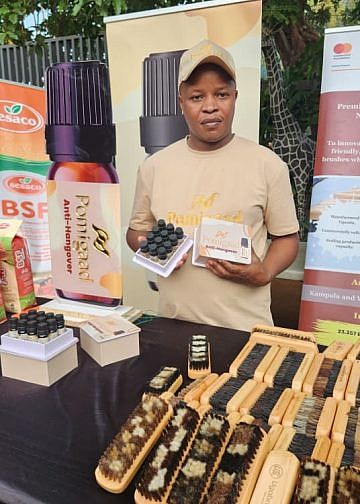
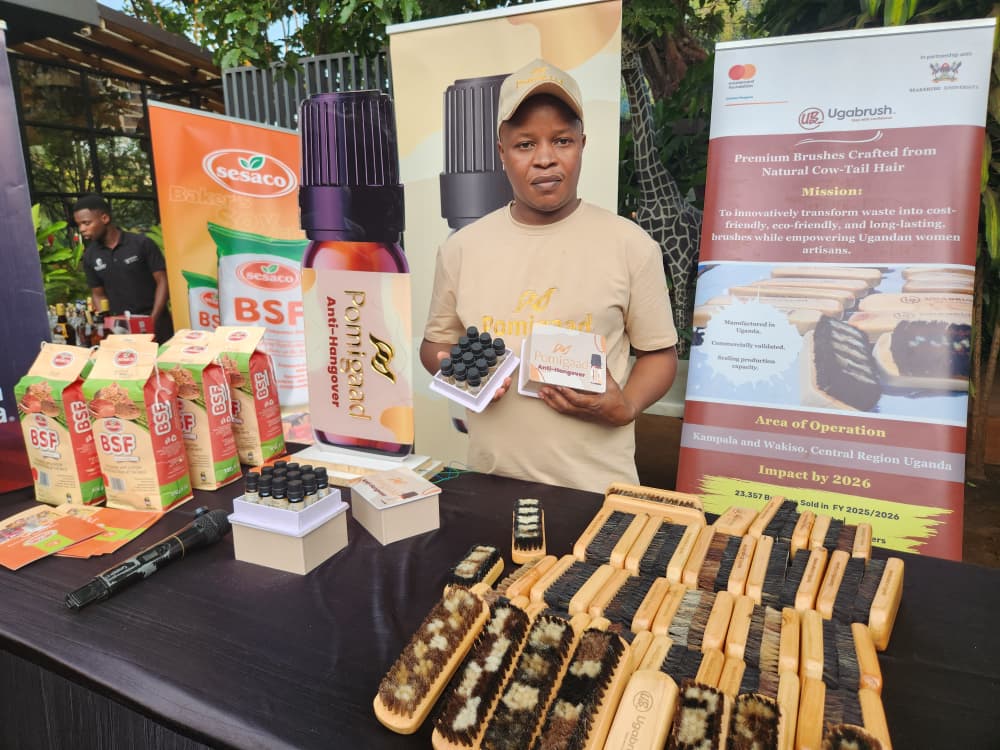
Among the products showcased were UgaBrush, a brush made from cow-tail hair; Baker’s Soya Flour (BSF), developed to improve bakery yields; Pomigaad, a product marketed for hangover prevention; and locally manufactured 3D printers developed by Xunda Robotics.
Bamwise clarified that the programme does not directly provide seed capital but prepares enterprises to secure financing from investors through grants, equity and other funding arrangements.
“We do not give direct seed capital as the Investor and Market Readiness Programme, but we support them to get ready by working with external experts to ensure they successfully patch any gaps they may have and become investment-ready,” he said.
The programme also works with the Uganda National Bureau of Standards (UNBS) and the National Drug Authority (NDA) to help enterprises meet product certification and regulatory requirements, with some of the showcased products already having secured certification.
Bamwise said the initiative was preparing to support approximately 11 enterprises in its next cohort as it continues efforts to strengthen Uganda’s innovation ecosystem.
One of the beneficiaries, Sesako Company Limited, said the programme had enabled it to develop and market Baker’s Soya Flour, a product designed to improve bakery yields, extend product shelf life and increase profitability.
Enock Nsubuga of Sesako said the company, which has operated in agro-processing for more than 30 years, had previously struggled to finance the development and commercialisation of new products.
“Ever since STI got us on board, we’ve managed to come up with a new product called BSF, Baker’s Soya Flour. A product that is being used by bakers, whether you’re making mandazi, bread, chapati, samosas or cakes. It helps you to have more yield, a longer shelf life of your product, more profit and, most importantly, food nutrition in the soya aspect,” Nsubuga said.
He said the company had expanded the product’s market from approximately eight bakeries to more than 20 within a year, with growing uptake among chapati makers and street vendors.
Nsubuga added that BSF had also entered regional markets, with the product reaching Kenya and Tanzania.
Ronnie Kalyango, founder of Hubs4U Ltd and the innovator behind Pomigaad, said the programme had helped transform his business from a small enterprise into a more structured company with the legal and operational systems needed to grow.
“The Investor Readiness Programme has done a wonderful job. We’ve benefited a lot, right from setting up the company structures. It was a small company, but right now it’s a standing company with all legal structures and everything which is needed to be given to a company,” Kalyango said.
He said the programme had also helped innovators bridge the gap between developing ideas and turning them into commercially viable products.
“Most of the innovators, we can invent something, but we cannot know how to turn it into a business. Investor Readiness has helped us to turn from innovation to products, from products to market,” he said.
Pomigaad has received certification from the National Drug Authority and is available through the Made in Uganda platform. The company plans to expand distribution through pharmacies, wellness centres and other outlets.
Meanwhile, Moses Byaruhanga, founder and Venture Lead of Made in Uganda, said the platform was helping local manufacturers overcome market-access barriers by providing shared marketing and distribution infrastructure.
Byaruhanga said the platform had worked with more than 500 manufacturers over the past one and a half years and assembled a portfolio of more than 4,000 Ugandan products.
He said the initiative was helping locally manufactured products access both domestic and international markets, with the platform targeting the Gulf Cooperation Council (GCC) region and China.
The Investor and Market Readiness Programme, supported by the Ministry of Science, Technology and Innovation, is expected to continue over the next five years, with approximately 11 enterprises anticipated to join the next cohort.
The initiative aims to strengthen local enterprises, improve the commercial viability of homegrown innovations, attract investment and expand opportunities for Ugandan products in regional and international markets.