









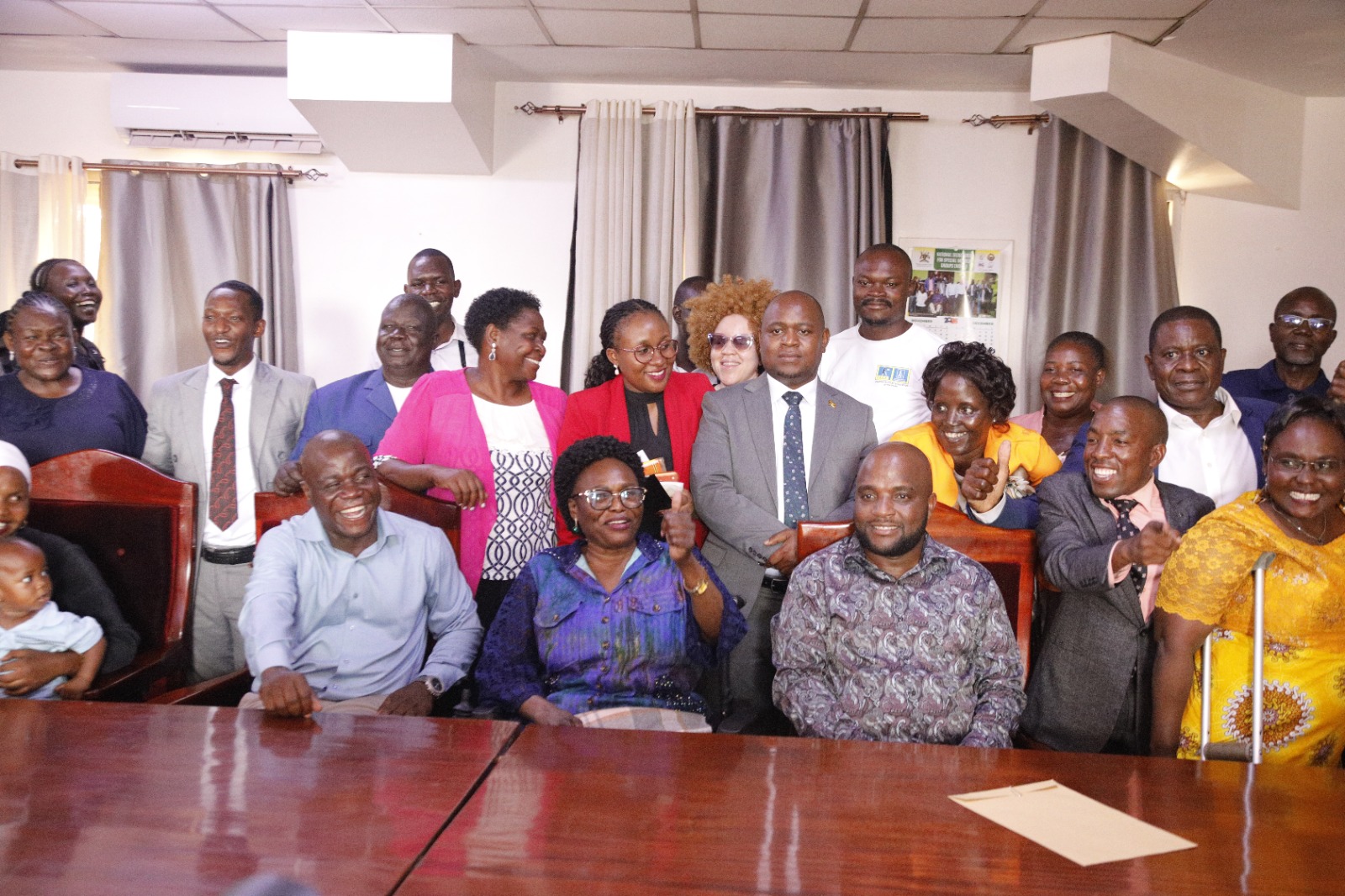
Minister of State for Gender, Labour and Social Development in charge of Disability Affairs, Joyce Acan Okeny, has challenged the newly sworn-in National Council for Persons with Disabilities to intensify lobbying efforts for increased funding, improved services and economic opportunities for persons with disabilities across the country.
Acan said the council should use its position to mobilise resources from development partners, engage the government and push for investments that improve the welfare of persons with disabilities, rather than depending entirely on the Ministry of Gender for financial support.
She made the remarks on Friday during the swearing-in ceremony of the new council members at the Ministry of Gender, Labour and Social Development headquarters in Kampala.
Acan urged members to borrow from the fundraising approaches of non-governmental organisations working with persons with disabilities, saying the council needed to become more vibrant and financially independent.
“I would request that you do exactly what the NGOs for persons with disabilities do. I don’t want to lead a council which is poor. First of all, I don’t want to lead a council which is poor,” she said.
“You are the owners of disability of the whole nation. You have the capacity to go about soliciting money from the donors. Why should you make it dumb? This time, I need the brains that come up with project proposals, so that what comes out of your lobbying helps the disabled down there.”
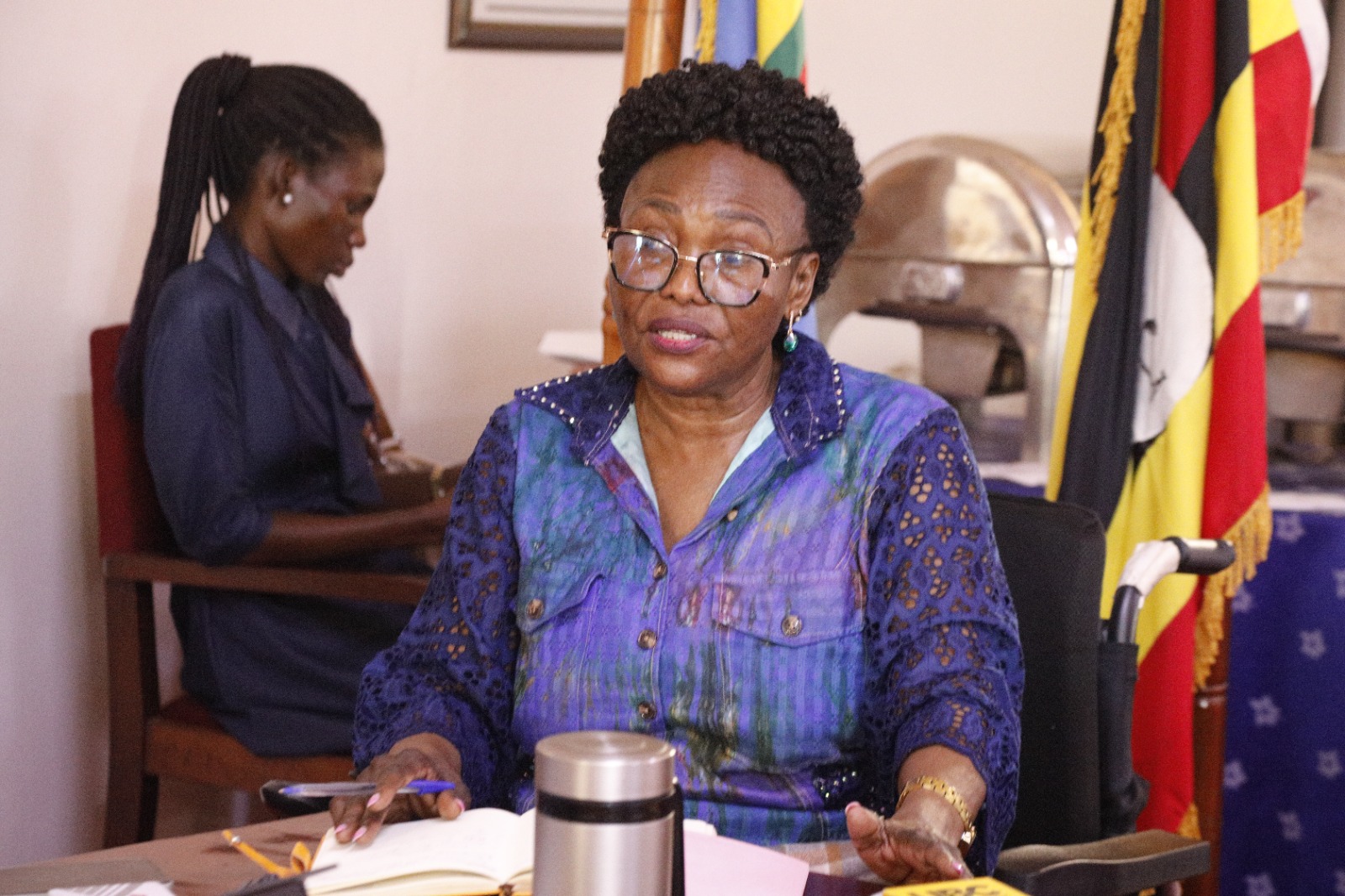
She challenged the council to become “fishermen” by actively identifying funding opportunities and developing project proposals capable of attracting donor support.
“We do not want to only wait for money from the Ministry of Gender. Our ministry is a dry one, and therefore, I want you to be fishermen, go out there, look for money for the council,” Acan said.
The minister also urged the council to lobby for the productive utilisation of government land allocated to disability-related institutions, warning that some properties were at risk of encroachment because they had remained idle.
She cited land in Lira City, Kireka, Lweza and Ruti, saying the council needed to explore investment opportunities while ensuring the properties were protected.
“We don’t want to see it empty and vacant. We want to do something meaningful in that land, so that the land should not be encroached upon. Encroachers are coming because the land is dormant,” she said.
Acan said the council should engage investors through memoranda of understanding that clearly outline their responsibilities and how the properties would be supervised.
She also revealed that the government was working to address concerns surrounding some of the land, including establishing the actual acreage and securing the necessary documentation.
The minister’s appeal comes as the council assumes its mandate under the Persons with Disabilities Act, 2020, which requires it to monitor, report and advise on matters affecting persons with disabilities while ensuring their rights and interests are protected and promoted.
Acan reminded members that their appointment was not merely an opportunity to occupy public offices but a responsibility to represent millions of persons with disabilities.
“Your appointment is therefore not simply an opportunity to hold a position or title. It is a call to leadership, stewardship, representation and public service. It is an opportunity to make a meaningful difference in the lives of persons with disabilities,” she said.
She urged members to serve with integrity, fairness, transparency and accountability, adding that the concerns and aspirations of the people they represent should remain central to their decisions.
“Above all, always remember the people you represent. Their voice, their hopes, concerns and aspirations should remain at the centre of your work,” Acan said.
Osborn Turyasingura, Executive Secretary of the National Secretariat for Special Interest Groups at the Ministry of Gender, also challenged the council to translate disability policies into tangible improvements, particularly in education, healthcare, employment and economic empowerment.
He said persons with disabilities continued to face barriers in accessing public infrastructure, social protection and employment opportunities despite existing laws and government commitments.
“The existence of rules and policies alone is not enough. What matters is how you effectively translate these commitments into practical improvements in people’s lives,” Turyasingura said.
He urged the council to strengthen grassroots representation and ensure that disability concerns were incorporated into national development planning and implementation.
Turyasingura also challenged members to advocate for the inclusion of persons with disabilities in government wealth creation programmes and public procurement opportunities.
“Disability should never be a reason why someone is excluded from participating in Uganda’s economic transformation,” he said.
He disclosed that the council receives less than Shs1 billion in government funding annually despite having a nationwide mandate, urging members to lobby for increased funding and establish strategic partnerships with development partners.
Following the swearing-in, Yona Wasswa was elected chairman of the council, while Eunice Ndyamuhaki was elected deputy chairperson.
Wasswa, who returns for another five-year term, pledged to make the council more visible and strengthen accountability among organisations claiming to represent persons with disabilities.
He said the council would scrutinise NGOs that receive donor funding in the name of persons with disabilities but fail to demonstrate meaningful results.
“There are NGOs that claim to be working with people with disabilities, but there are no results. There are NGOs that claim to be membership organisations, but they only have a general assembly of less than 100 people. And they get billions of money from donors claiming to be working with people with disabilities,” Wasswa said.
He warned that organisations failing to serve their intended beneficiaries could face recommendations for closure.
“In these five years, you have two options. You either go back to the owner of the organisation, or we shall recommend closure. And tell the government that these people here, they are not serving disabled people, but they are just serving their interests,” he said.
Wasswa also pledged to monitor government programmes to establish whether persons with disabilities were benefiting from funds allocated to them.
He said the council would begin by examining disability grants implemented through the Ministry of Gender before extending the assessment to other government programmes, including Emyooga and the Parish Development Model.
“We are going to do a torch. We are going to go and find out are disabled people really benefiting from this grant or not. We are going to begin with our house first,” he said.
Wasswa cited the case of a 23-year-old person with disabilities in his village who had been crawling without access to a wheelchair, saying such experiences demonstrated the gap between government spending and the realities faced by beneficiaries.
He also called for unity within the disability fraternity, pledging to reconcile members who challenged the council appointments in court.
“I, as a chair, am coming for reconciliation. I have much respect to the court. Whatever the court will decide, we shall go by it. But the disability fraternity remains one,” he said.
Wasswa said he intended to meet those who went to court for a discussion, emphasising that the engagement would aim at rebuilding relationships rather than persuading them to withdraw the case.
The main court case challenging the appointments is expected to be determined on December 14, 2026.
The new council brings together representatives from government ministries, organisations of persons with disabilities, employers, NGOs, the country’s four regions, youth and co-opted members.