







President Museveni has responded to a report by The Independent publication regarding Stephen Nuwagaba, accusing journalist Andrew Mwenda of misrepresenting the situation and creating what he described as a false national concern.
The Independent, a publication associated with Mwenda, recently published a report questioning Nuwagaba’s alleged influence within government and security circles. The report highlighted claims that Nuwagaba presents himself as a Brigadier General in the Uganda Peoples’ Defence Forces (UPDF), a Senior Presidential Adviser on Intelligence and Security, and a person with close access to State House.
The publication also contained allegations from unnamed sources that Nuwagaba had used his claimed connections to intimidate public officials, make threats, and gain influence within security institutions. It further questioned claims attributed to him regarding military and intelligence training, including alleged links to foreign security agencies.
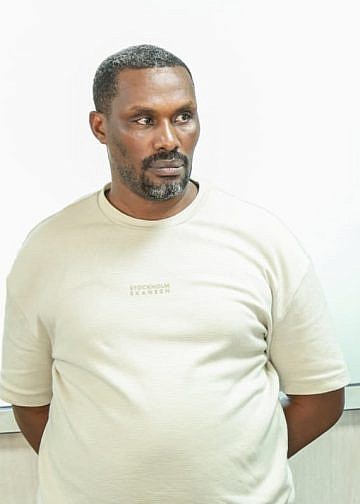
In a lengthy statement, Museveni rejected the portrayal of Nuwagaba as a threat to State House and security agencies, saying the young man came to him as a victim of alleged torture and mistreatment by elements within the security services.
“I want to inform Ugandans that the great journalist Andrew Mwenda is back with his schemes. Having failed to destroy our promising pharmaceutical industry by calling our innovators Magoola and Senfuka con-men and declaring me senile, he has now discovered a new national emergency in Uganda. This is the young man known as Nuwagaba Stephen.”
Museveni said Nuwagaba had approached him after allegedly suffering torture and injuries, adding that he had supported his medical treatment.
“Nuwagaba is a young man in his mid-twenties who came to me as a fugitive, a victim of torture and maiming whom some elements in the security services were trying to silence, including threatening with death.”
The President said he had taken steps to ensure Nuwagaba received medical attention.
“He has actually been a patient on account of torture and maiming and trauma because of the torture for many of the months he has been under my care. I had to send him to the hospitals in Uganda and abroad to save his life.”
Museveni said allegations of torture by security personnel would be investigated, arguing that the issue should not be overshadowed by claims about Nuwagaba’s conduct.
“The terrible thing is that these alleged torturers and maimers were belonging to our security forces. Is this what we and the people of Uganda fought for?”
He accused Mwenda of focusing on Nuwagaba while ignoring what he described as bigger national challenges, including corruption and misconduct by some public officials.
“The reality on the ground is that the main problem of Uganda is not Nuwagaba seizing State House and the Security Forces, but the criminals, including some in the Security Forces and other organs, that have been blocking the flow of information about the criminals.”
Museveni defended the continued use of both formal and informal intelligence sources, saying such systems had played a role during the National Resistance Movement (NRM) struggle and in subsequent security operations.
“It is because the formal structures do not do their work that the informal come up to the President.”
He said while any wrongdoing by Nuwagaba should be addressed, it should not distract from efforts to fight corruption and criminality within government institutions.
“If he has got problems like lying, he will account for those. However, the evil schemes of Mwenda are in always seeking to disorient the focus of the country to trivialities or to covering up crime.”
The exchange has sparked debate about intelligence gathering, accountability within security institutions, and the risks associated with individuals claiming informal access to centres of power.