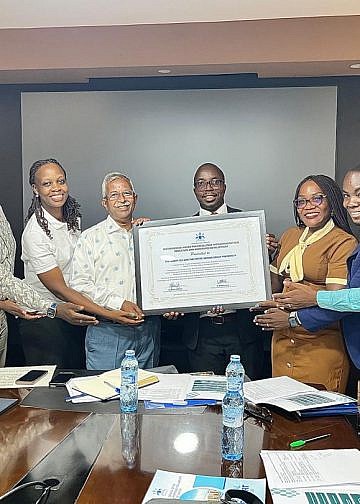











Jinja City officials have visited the Kampala Capital City Authority (KCCA) to learn how improved road design, speed management and traffic control can reduce road crashes and make urban transport safer as traffic volumes continue to rise.
The delegation from Jinja City Council toured KCCA’s road safety facilities, including signalised junctions, pedestrian crossings, street lighting installations and the city’s Traffic Control Centre, to study interventions that could be adapted to Jinja.
The visit was organised under the Bloomberg Cities Ideas Exchange (BCIE) speed management programme, with support from the World Resources Institute (WRI), to promote knowledge-sharing between urban authorities on effective road safety measures.
KCCA Deputy Executive Director Benon Kigenyi said road safety must be integrated into road construction and urban planning to protect pedestrians, cyclists, boda boda riders and motorists.
“We have purposely decided to think about road safety in all our planning,” Kigenyi said, emphasising the need to design roads that accommodate the different categories of people who use them.
Kampala receives approximately 2.5 million people daily, placing considerable pressure on its road network and increasing the need for effective traffic management, infrastructure improvements and enforcement.
KCCA is implementing infrastructure improvements and traffic management measures intended to reduce speeding, improve traffic flow and protect vulnerable road users.
The interventions include constructing pedestrian walkways, installing zebra crossings and street lighting, introducing traffic signals at junctions and incorporating speed management measures into road design. The authority also works with the police on traffic enforcement and measures to address dangerous road use.
Kigenyi said the authority was prioritising safer infrastructure as part of its ongoing road construction programme.
“We are focusing on street lights, and every road that we are constructing has lights and walkways,” he said.
KCCA is also promoting non-motorised transport through facilities for pedestrians and cyclists, while exploring dedicated bus lanes to support public transport.
Changes to parking arrangements along sections of Kampala Road have also been considered as part of efforts to improve the use of available road space and manage traffic movement.
The authority manages approximately 2,104 kilometres of roads, of which about 770 kilometres are paved, and is targeting 1,000 kilometres of paved roads.
Major infrastructure programmes, including the Kampala City Roads Rehabilitation Project and the Greater Kampala Metropolitan Area Urban Development Programme, are supporting improvements to the city’s road network.
Kigenyi emphasised that road safety planning must also take into account the needs of children, older people and persons with disabilities, who face additional risks when streets lack appropriate safety features.
A key stop during the visit was KCCA’s Traffic Control Centre, where the delegation sought to understand how the authority monitors traffic, manages congestion and uses information to inform transport decisions.
Jinja Deputy Mayor Mariam Nalumansi, who represented the mayor, welcomed the exchange, saying the city hoped to draw lessons from Kampala’s experience in addressing speeding, boda boda-related risks and road crashes.
Christine Kayongo, Jinja City’s planner, who represented the Town Clerk, said the benchmarking exercise would help the city prepare for future transport demands before existing challenges become more difficult to manage.
She pointed to the anticipated increase in traffic associated with the resumption of railway services as one reason for strengthening urban transport planning.
Kayongo also highlighted the importance of providing safe facilities for pedestrians and other non-motorised road users as Jinja’s transport needs expand.
“We want to benchmark and share experiences,” she said.
The visit is intended to help Jinja identify practical interventions that can be adapted to its road network, traffic patterns and available resources.
KCCA’s road safety initiatives have received support through Bloomberg Philanthropies and partnerships with organisations such as WRI, which promote evidence-based approaches to urban mobility and safer streets.
Kigenyi commended WRI for facilitating the exchange, noting the importance of cooperation in improving road safety and urban transport management.
Kampala Deputy Lord Mayor Faridah Nakabugo said road safety challenges required collective action from cities, government institutions and other stakeholders.
“No one can solve the problems of the city, especially road safety, alone,” Nakabugo said.
For Jinja, the engagement provides an opportunity to adapt lessons from Kampala’s experience in safer road design, speed management, pedestrian infrastructure and traffic enforcement.
For Kampala, the exchange offers an opportunity to share its experience with other urban authorities as it continues efforts to improve road safety and manage growing transport demands.
The two cities’ engagement highlights the importance of integrating road safety into urban development planning to protect all road users and support safer, more efficient movement within Uganda’s growing cities.