










The World Food Programme (WFP) has warned that climate-related shocks, including the anticipated El Niño conditions between October and December 2026, could threaten progress in the fight against hunger and malnutrition, calling for increased investment in agricultural innovation and early action.
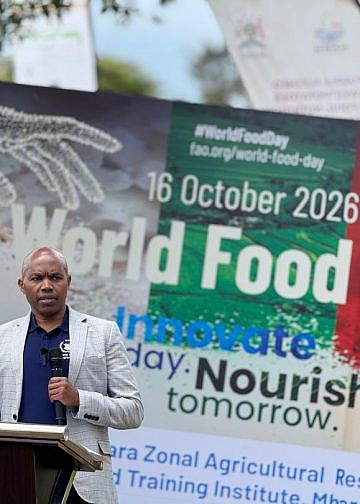
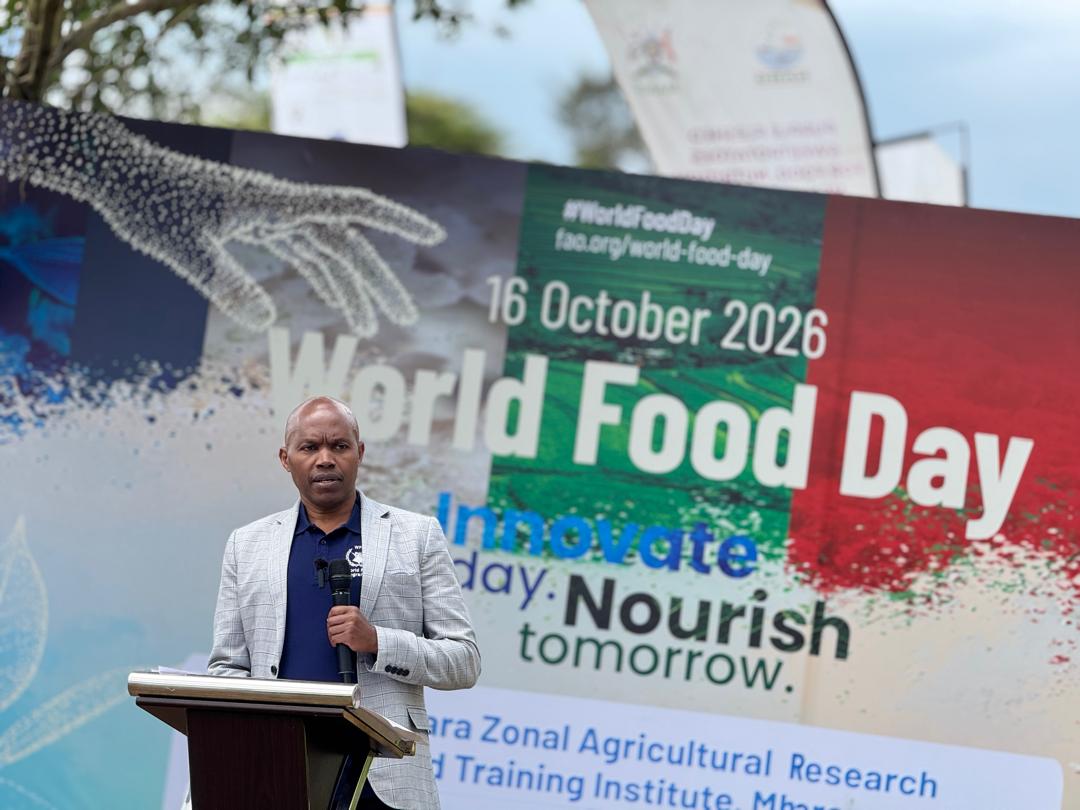
The warning was delivered by Emmanuel Rustinda, WFP Head of the South West Region, who represented the organisation’s Country Director, Wanja Kaaria-Ndoh, during Uganda’s national World Food Day 2026 celebrations held at the Mbarara Zonal Agricultural Research and Development Institute (MBAZARDI).
The four-day event, held under the theme “Innovate Today. Nourish Tomorrow,” brought together more than 3,000 stakeholders to explore the role of science, research and technology in strengthening food security and building resilience in Uganda’s agricultural sector.
Organised by the Government of Uganda through the Ministry of Agriculture, Animal Industry and Fisheries (MAAIF) and the National Agricultural Research Organisation (NARO), the celebrations were supported by development partners, including WFP and the Food and Agriculture Organization of the United Nations (FAO).
Rustinda said the anticipated climate event underscored the urgency of translating agricultural innovation into practical interventions that protect vulnerable communities and safeguard food supplies.
“This year’s commemoration coincides with the global El Niño that is rolling back hard-won gains against hunger and malnutrition. The El Niño is expected between October and December 2026. It makes today’s theme more than a slogan. Innovation now is the difference between holding these gains and losing them,” he said.
He emphasised the importance of combining modern technologies with indigenous knowledge, local crop varieties and practices developed by pastoral communities to address emerging agricultural challenges.
“With Government in the lead, innovation is critical in addressing today’s challenges. As WFP, we are scaling early action through anticipatory action. We have to pair the new with the unknown — indigenous crops, local varieties and the knowledge within the pastoral communities already hold important assets,” Rustinda added.
He reaffirmed WFP’s commitment to Sustainable Development Goal 2, which seeks to end hunger, achieve food security, improve nutrition and promote sustainable agriculture.
Beyond climate risks, Rustinda highlighted post-harvest food losses as another major challenge facing food systems, noting that significant quantities of food are wasted or lost before reaching consumers.
He estimated that between 30 and 40 per cent of food is lost between harvest and market, largely due to inadequate handling and storage.
The losses, he noted, demonstrate the need to complement efforts to increase agricultural production with investments in post-harvest management, storage infrastructure and stronger market systems.
WFP is working to strengthen market linkages among farmers, agro-dealers and private-sector partners to improve market access and support farmers’ livelihoods.
The organisation is also collaborating with the Office of the Prime Minister to support refugees and host communities in producing food on shared land, with the aim of improving food access and strengthening livelihoods.
The Minister of Agriculture, Animal Industry and Fisheries, Frank Tumwebaze, who served as Guest of Honour, called for greater integration of science and research into farming to improve productivity, strengthen food security and protect the environment.
Tumwebaze said agricultural development must balance food production for household consumption, income-generating crops, animal feed requirements and environmental conservation.
“We need to balance between the four pillars of farming — food security farming, income-generating crops, animal feed security crops and environmental security. Research and science come in to balance enablers such as knowledge, tools and innovations,” he said.
He described World Food Day as an important platform for connecting researchers and scientific innovations with farming communities, ensuring that research findings translate into practical solutions for farmers.
The minister also congratulated MBAZARDI on reaching its 100-year milestone, marking a century of agricultural research and development from 1926 to 2026, and thanked partners for supporting the advancement of Uganda’s agricultural sector.
The celebrations at MBAZARDI brought together researchers, farmers, policymakers, development partners and other stakeholders to examine how digital technologies, artificial intelligence, climate-smart farming and locally developed solutions can help build a more resilient agricultural sector.
As climate uncertainties continue to pose risks to food production and rural livelihoods, participants emphasised the importance of combining scientific research, innovation and community knowledge to strengthen food systems and sustain progress towards ending hunger.