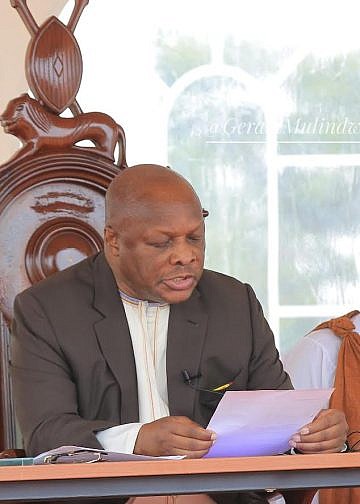










Charles Peter Mayiga is marking 13 years in office since his appointment as Katikkiro of Buganda in 2013 by Kabaka Ronald Muwenda Mutebi II.
He succeeded John Baptist Walusimbi.
His tenure now makes him the longest-serving Katikkiro in Buganda’s modern history.
At the time of his appointment, Mayiga was viewed by some as youthful and relatively unknown.
However, the Kabaka’s slogan, “Omulembe gw’Abavubuka” (The Youth Generation), inspired confidence among young people and signaled a shift toward a more progressive era in the kingdom’s leadership.
Over the years, Mayiga has been credited with revitalising Buganda Kingdom’s administration and strengthening institutional coordination. Upon assuming office, he introduced reforms aimed at streamlining operations from the kingdom’s gates to Bulange, the administrative headquarters of the kingdom.
His leadership strategy was anchored on the five pillars adopted by the Buganda Lukiiko: safeguarding the throne, advocating for federal governance, protecting Buganda’s land and boundaries, promoting economic self-reliance, and fostering unity among Buganda’s people.
Mayiga took office at a time when the kingdom was still recovering from the devastating 2010 fire that destroyed the sacred Kasubi Tombs. Rather than dwelling on the tragedy, he spearheaded efforts to restore the site and revive the kingdom’s pride.
Through the “Ettofaali” campaign, he mobilised subjects and well-wishers to contribute bricks and financial support toward rebuilding the tombs. The initiative attracted widespread support both locally and internationally, as the Katikkiro travelled across Uganda and abroad fundraising for the reconstruction project.
The campaign eventually culminated in the successful restoration of the Kasubi Tombs, which were officially reopened in 2025 while preserving their cultural and spiritual significance.
During his tenure, Buganda Kingdom has also recorded significant financial and infrastructural growth, with the kingdom’s annual budget now estimated at about Shs350 billion.
Among the notable projects completed under his leadership is the once-stalled Masengere Building, which now stands as a symbol of Buganda’s resilience and modernisation.
Mayiga also oversaw the establishment of BBS Terefayina, a television station dedicated to promoting Buganda’s culture, development programmes and news.
He is further credited as the visionary behind the Kabaka Birthday Run, which has grown into one of Africa’s largest charity runs. Funds raised through the initiative have supported programmes in health, education, agriculture and economic empowerment.
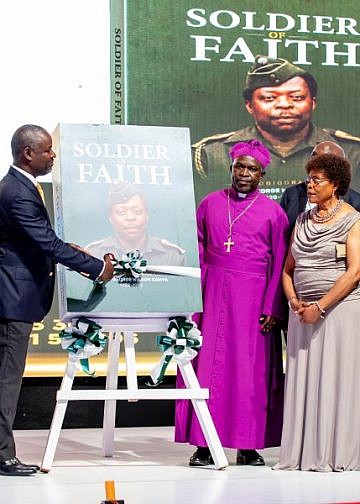
A prolific author, Mayiga has written several books, including King on the Throne and Ettofaali, focusing on leadership, culture and development.
His administration has also overseen the renovation of royal palaces across Buganda’s counties and the establishment of a hospital in Ssingo County to improve healthcare services for kingdom subjects.
In 2025, Buganda Kingdom launched kindergarten schools in several counties as part of efforts to strengthen early childhood education.
Mayiga has particularly been praised for promoting youth involvement in the kingdom’s activities. Observers note that his support for musicians and youth-centred initiatives has helped strengthen the relationship between the monarchy and younger generations.
Despite these achievements, his leadership has faced challenges, including public concern over the Kabaka’s health, which at one point fueled speculation and criticism on social media.
Speaking recently, Mayiga described that period as one of the most difficult moments of his leadership.
“That was probably the biggest challenge. It was a very difficult time, with a lot of speculation and criticism directed at us,” he said.
He added that criticism is an inevitable part of leadership.
“If you are a leader and expect people not to criticise you, then you are not effective. I did not take it personally — it comes with the job,” he noted.
Land disputes and illegal land evictions in Buganda also emerged as a major issue during his tenure. Through the Buganda Land Board, Mayiga introduced the “Kyapa Mu Ngalo” initiative aimed at formalising land ownership, though the programme faced resistance from some members of the public.
Addressing concerns about land management, the Katikkiro has repeatedly dismissed claims that Buganda’s land is being widely grabbed, insisting that the kingdom maintains firm control over its legally owned land.
“The kingdom holds only about five per cent of the registered land in Buganda. It is not true that every piece of land belongs to the kingdom,” he explained.
He added that much of the remaining land is privately owned or managed by government institutions, including property that Buganda continues to demand back.
Mayiga further emphasised that land under the kingdom is professionally managed through the Buganda Land Board.
“We have not lost a single piece of land that we hold as a kingdom to land grabbers. What exists is lawful occupation, especially by government institutions,” he said.