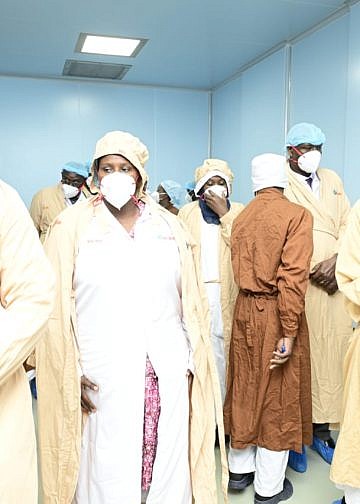











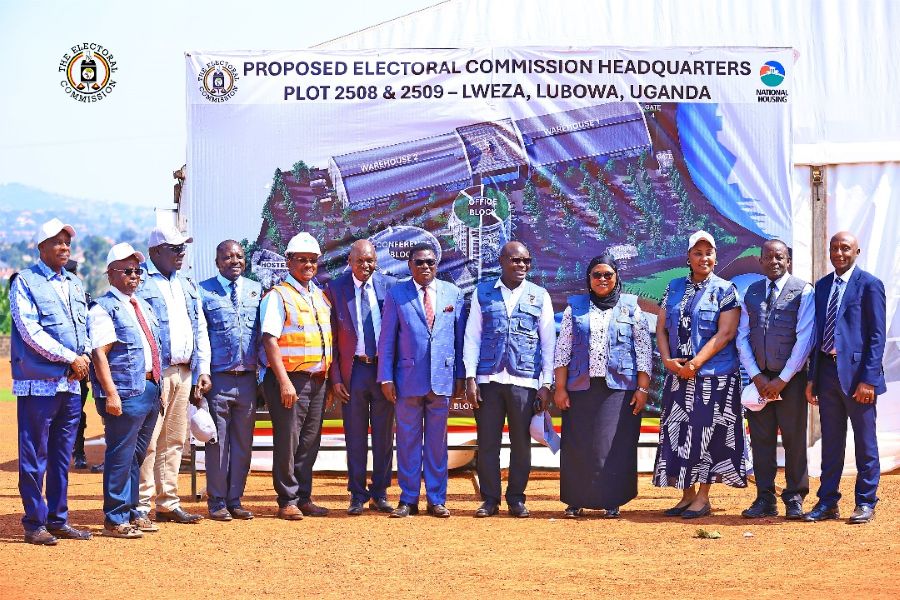
The Electoral Commission has officially broken ground on a state-of-the-art national headquarters in Lubowa-Lweza, Wakiso District a Shs150 billion project that will also serve as the venue for presidential nominations in September 2025.
In a major shift from its long-standing Jinja Road base in Kampala, the Commission is moving to a 10-acre site in Lubowa, a relocation initiated on directive from President Yoweri Museveni.
The new premises are designed to support modern electoral operations and position Uganda for a more efficient and transparent electoral cycle.
Presiding over the groundbreaking ceremony, EC Chairperson Justice Simon Byabakama stressed the strategic significance of the new hub:
“This centre will support critical functions, including ICT improvements and enhanced infrastructure,” he stated.
He also revealed a key milestone: the headquarters will host the 2025 presidential nominations in September, becoming the nerve centre for major electoral activities as the country prepares for the next national vote.
“As the country prepares for elections, there is a need to ensure democratic institutions execute their policies effectively, and this synchronized system will boost our operations,” Byabakama added.
Prime Minister Robinah Nabbanja, the day’s chief guest, said the project was in line with Uganda’s democratic journey.
“As Uganda marks over 30 years of democratic progress, this facility will support various innovations in Uganda and beyond,” she said, assuring full government support to ensure the facility is completed on time.
Minister of Justice and Constitutional Affairs, Norbert Mao, commended the move to Lubowa, noting how President Museveni rejected an earlier proposal to build in a swampy area.
“The President rejected a swampy area initially proposed, leading to the acquisition of this 10-acre piece of land,” Mao remarked, calling on Ugandans to support the Commission’s work.
The new headquarters will also house upgraded ICT infrastructure and biometric technology a sign of the Commission’s intent to modernize and secure electoral operations.
Since the project began in 2022, it has been viewed as a cornerstone in shaping a transparent and credible electoral environment ahead of 2026.