










The Head of the State House Investors Protection Unit (SHIPU), Col. Edith Nakalema, has called on young people to embrace intentional fatherhood as a foundation for building stable families and responsible communities.
Intentional fatherhood, she explained, is the deliberate and conscious approach to raising children based on clear values and long-term goals, rather than reactive or impulsive parenting. It emphasizes strong emotional bonds and structured environments that support a child’s development.
“Many children complain that their parents have abandoned their responsibilities,” Nakalema said.
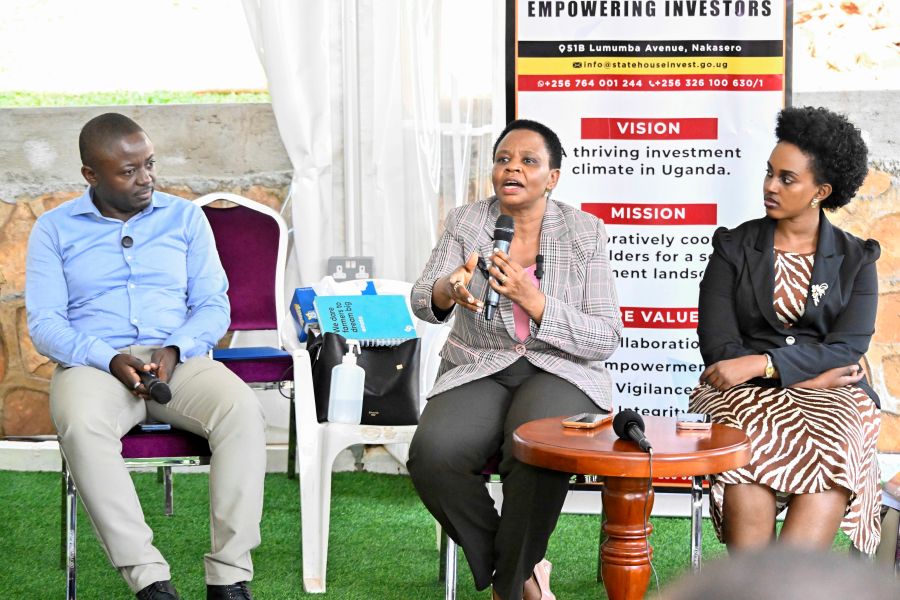
She made the remarks during an interactive session with youth held at the SHIPU offices in Kampala.
Reflecting on her upbringing, Nakalema noted that she was fortunate to grow up with present and caring parents despite their modest background.
“Our father was present in our lives. He prayed for us every day, and that helped me understand what a father’s love means to a child,” she said.
She expressed concern over growing tensions between parents and children, attributing the trend to what she described as “reactive fatherhood.”
“Many children yearn for their parents’ love, especially from their fathers. The absence of fathers is creating resentment within families,” she added.
Nakalema emphasized that a father’s presence is critical to family stability, noting that financial provision alone is not enough.
“Money is not everything in a family. What brings peace and contentment is the presence of a father. I urge young men to provide security and protection to their children,” she said.
She also challenged stereotypes about working women, dismissing claims that successful women disrespect their spouses.
“Despite my rank, I respect my husband because he has been present in our lives. I recognize him as the head of the family,” she said.
Nakalema urged the youth to act as change agents in promoting responsible parenting practices within their communities.
During the session, participants shared personal experiences highlighting the consequences of broken family structures.
Jacob Akuguzibwe, also known as DJ Jacob Omutuzze, recounted his childhood as a street child, which exposed him to numerous hardships, including exploitation.
“I went through many challenges on the streets, but I am grateful my life changed after I got support that enabled me to return to school,” he said, adding that he now supports young single mothers.
He noted that the breakdown in parent-child relationships has contributed to challenges such as drug abuse and early pregnancies among youth.
Participants also called for stronger community engagement and policy interventions to address family breakdown.
Asla Musisi attributed the problem to parental neglect, saying some parents prioritize personal interests over their children’s wellbeing.
“Some parents separate without considering the impact on their children. We are seeing marriages without families,” he said.
Others pointed to weak policies, economic pressures, and social media influence as contributing factors.
Patricia Nakayima said modernisation and unrealistic expectations have strained relationships.
“People copy lifestyles from social media, and when expectations are not met, families break down,” she said.
Uganda National Students Association (UNSA) President Shillah Ainembabazi proposed that discussions on intentional parenting be taken to grassroots communities.
“This will help equip families with the knowledge needed to address challenges affecting them,” she said, sharing her own experience of growing up in a single-parent household.
The meeting was also attended by Dr. Ezra Muhumuza, Executive Director of the Uganda Manufacturers Association, and Rev. Dr. Ben Tumuheirwe.