

























Ugandans are increasingly occupying the majority of jobs on the East African Crude Oil Pipeline (EACOP) project as it moves closer to completion, officials have said.
Speaking at the 11th Oil and Gas Convention held at Speke Resort Munyonyo, EACOP Deputy Managing Director John Bosco Habumugisha said the project is steadily transitioning from expatriate-led roles to locally trained Ugandan professionals.
He noted that the pipeline project currently employs over 4,000 workers, including staff and subcontractors, with a growing share of positions being filled by Ugandans.
“We are already scaling down on expatriates and ensuring that we transfer these jobs to nationals,” Habumugisha said.
He added that capacity building has been central to the project, with Ugandans receiving technical training, internships, and international exposure in countries such as France, Malaysia, and Oman to prepare them for specialised roles.
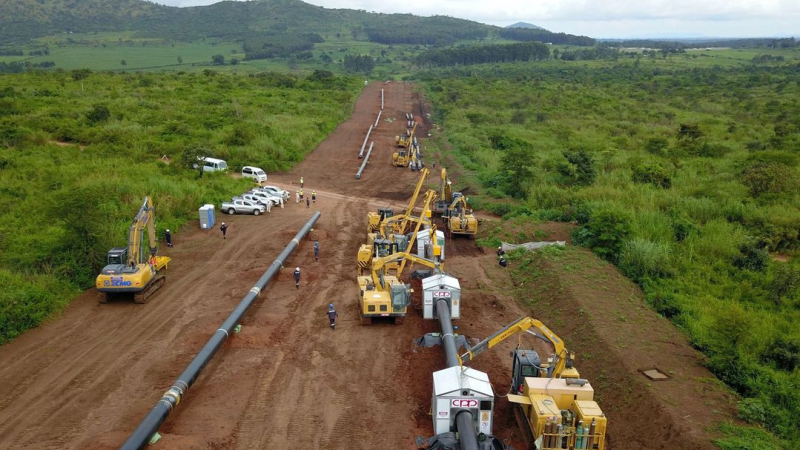
Habumugisha confirmed that the project is now 84% complete, with key components already finished, including the Tilenga feeder line, installation of marine loading arms for crude transfer, and insulation of storage tanks to maintain optimal temperatures.
He said remaining works are focused on completing the piping systems required to transport and process crude oil.
“We made a commitment to deliver the pipeline this year and we will not stop until it is done,” he said.
The East African Crude Oil Pipeline is being developed by East African Crude Oil Pipeline Company to transport crude oil from Uganda’s oil fields in Hoima to the port of Tanga in Tanzania over a distance of 1,443 kilometres.
According to Uganda’s Petroleum Directorate, the project is expected to generate 14,000 direct jobs, 45,000 indirect jobs, and 105,000 induced employment opportunities.
Officials say the localisation of jobs marks a key milestone in Uganda’s oil sector development, ensuring that citizens benefit directly from the multi-billion-dollar infrastructure project.
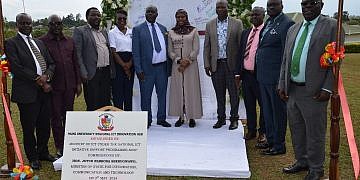
Beyond construction milestones, Habumugisha highlighted ongoing community development programmes along the pipeline corridor. These include the reconstruction of schools, improvement of sanitation facilities, clean water projects, and the development of a sports complex in Masaka.
The project has also introduced environmental programmes such as the “green schools initiative,” which trains learners in tree planting, waste management, and school gardening.
He said the project aims to leave a positive legacy in host communities beyond oil production.
“The project is not only about oil but also about leaving a positive legacy in host communities,” he said.
Habumugisha also credited partnerships with stakeholders, including the Catholic Church and the Bunyoro Kingdom, which has provided 500 acres of land for tree planting. More than 138,000 trees have already been planted under the project’s environmental restoration efforts.
During the same convention, stakeholders launched the National Petroleum Policy 2025, which will guide Uganda’s oil and gas sector as it transitions from infrastructure development to commercial production.
Uganda is expected to begin its first oil production in July, with projected output of over 60,000 barrels per day. Crude oil will be transported through the EACOP pipeline from Kabale, Hoima in Uganda to Tanga, Tanzania.