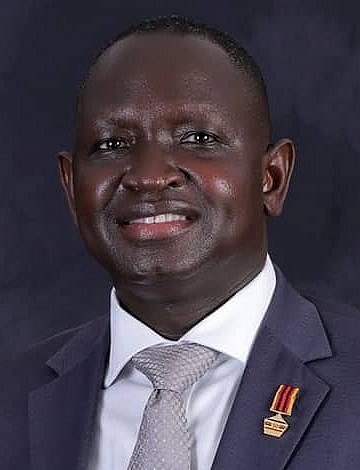









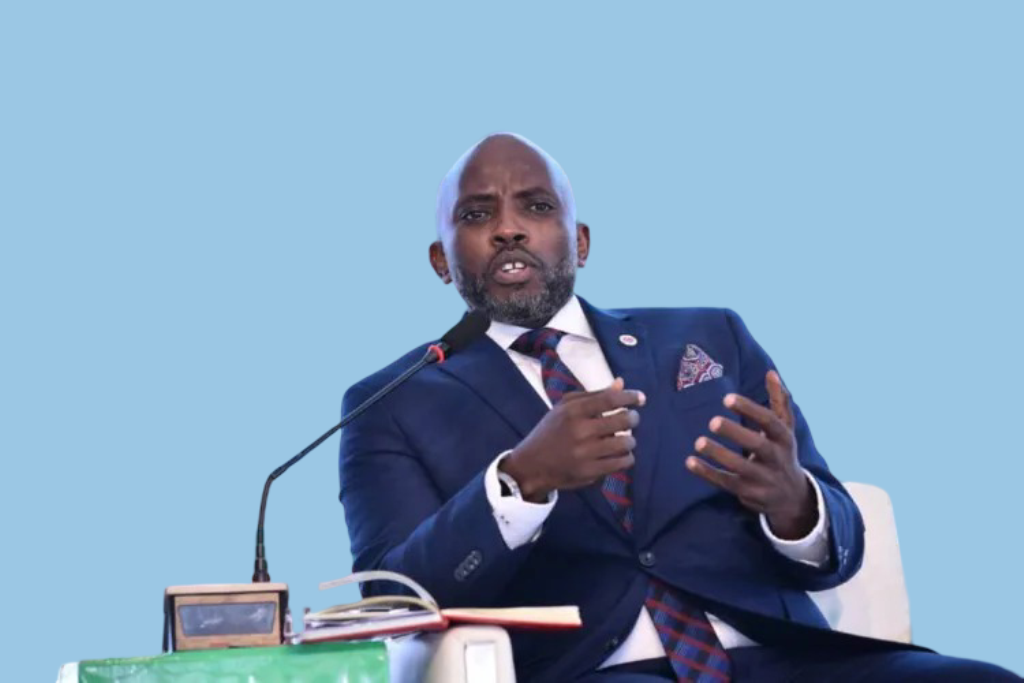
State Minister for Internal Affairs designate, Prof. Dr. Lawrence Muganga, is facing fresh legal and political scrutiny after a petition was filed before Parliament challenging his eligibility to hold ministerial office over alleged dual and multiple citizenship concerns.
The petition by Kampala lawyer and Democratic Front Deputy Secretary General Deric Fredric Namakajo, calls on Parliament to halt Muganga’s vetting and approval unless conclusive proof is provided showing he no longer holds foreign citizenship.
Namakajo argues that the Ministry of Internal Affairs is a highly sensitive docket responsible for immigration control, citizenship administration, national identification, and internal security, making questions surrounding the citizenship status of its ministerial leadership a matter of national importance.
“Credible and publicly available information indicates that Dr. Lawrence Muganga possesses dual citizenship of Uganda and Canada,” part of the petition, a copy of which this publication has seen, states.
The petition cites Section 19D of the Uganda Citizenship and Immigration Control (Amendment) Act, 2009, which bars holders of dual citizenship from occupying certain state offices, including Cabinet and ministerial positions.
Namakajo wants Parliament to first verify Muganga’s citizenship status before proceeding with approval hearings. He has demanded the production of passport records, citizenship declarations, renunciation certificates, and immigration records.
The controversy revives longstanding questions that have followed Muganga for years regarding nationality, identity, and immigration status.
Public records show that Muganga was born in Central Uganda and grew up largely in Masaka, although accounts differ regarding his exact birthplace. In previous interviews, Muganga said he was born in Butaleja to farming parents, Ronald and Immaculate Kayonga.
Other biographical records describe him as having been born in Mukono District before spending much of his childhood in Masaka, where he attended Mende Kalema Secondary School and later St. Charles Lwanga Kasasa.
Widely known as an academic, author, and education reform advocate, Muganga rose to prominence after working in Rwanda and Canada before returning to Uganda to become Vice Chancellor of Victoria University.
After graduating from Makerere University, he worked with the Rwanda Revenue Authority before relocating to Canada, where he served as a policy advisor with the Government of Alberta and worked with multicultural development organisations.
Muganga’s academic profile identifies him as a Ugandan-Canadian scholar who holds both Ugandan and Canadian citizenship.
However, the citizenship debate extends beyond Canada.
In recent years, Muganga has emerged as one of the most vocal public figures advocating for the recognition and protection of Banyarwanda communities in Uganda.
In 2024, he publicly engaged President Museveni on citizenship concerns affecting Banyarwanda communities, particularly issues surrounding documentation and national identity.
Political observers note that Muganga has openly acknowledged deep family and cultural ties to Rwanda, with several public records and biographies identifying him as Ugandan-born but of Rwandan descent.
His appointment now places those historical citizenship debates directly under renewed scrutiny because the Internal Affairs ministry oversees immigration, citizenship verification, passports, and national identification systems.
Muganga’s citizenship troubles are not entirely new.
In September 2021, he was dramatically arrested by security operatives from his office at Victoria University over allegations linked to espionage and immigration status, but he was later released without charge.
At the time, the Directorate of Citizenship and Immigration Control publicly stated that Muganga had questions to answer regarding the acquisition of foreign citizenship and whether he had properly regularised his Ugandan nationality.
Then Immigration spokesperson Jacob Siminyu argued that Ugandans who acquire foreign citizenship without following prescribed legal procedures risk automatically losing their Ugandan citizenship.
The episode sparked national debate over citizenship law, identity, and the treatment of Ugandans living abroad.
From university boss to state minister
Despite the controversies, Muganga has steadily expanded his influence in public life.
Known for championing digital transformation in education, innovation, and youth empowerment, he became one of Uganda’s most visible university administrators after taking over leadership of Victoria University in 2020.
He authored several books on education reform, including You Can’t Make Fish Climb Trees, and gained international recognition for promoting modern learning systems and technology-driven education.
His surprise appointment to the Internal Affairs ministry this week was widely interpreted as President Museveni’s attempt to bring technocratic and diaspora-linked expertise into government.
However, the petition now threatens to turn his vetting into one of the most closely watched approval processes of the new Cabinet.
Neither Parliament nor Dr. Muganga had publicly responded to the petition by Friday.