








The judiciary has said that all is set tomorrow, Wednesday, for the ninth edition of the Ben Kiwanuka Memorial lecture.
Kiwanuka, the first Ugandan Chief Justice was abducted from his chambers by President Idi Amin’s chambers on September, 21, 1972 and has never been seen again.
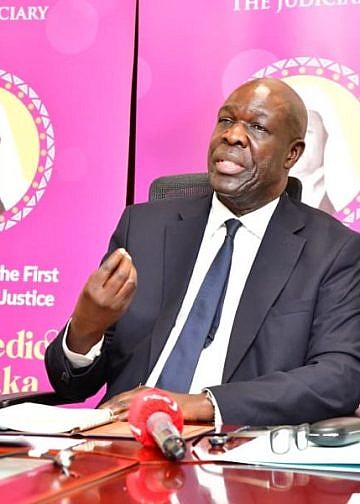
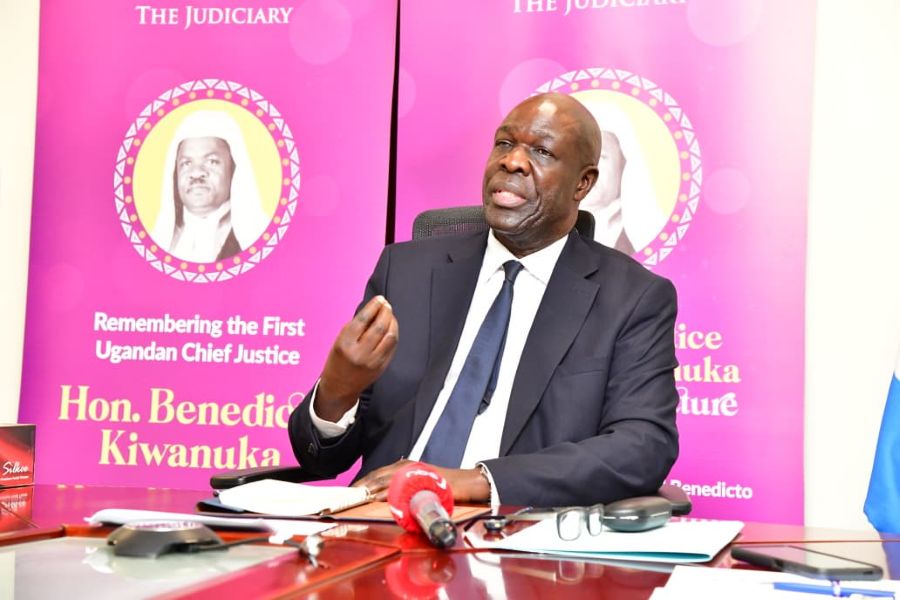
Addressing journalists on Tuesday, deputy chief justice, Moses Kawumi Kazibwe, who is also the chairperson of the organising committee said President Museveni will be the chief guest during the commemoration, while Margaret Sekajja, Executive Director of the Human Rights Centre Uganda, will deliver the keynote address
Deputy Chief Justice Moses Kawumi Kazibwe said the annual event is intended to be more than a remembrance of Kiwanuka, who was Uganda’s first Ugandan Chief Justice.
“The lecture is more than an act of remembrance. It is a national forum for reflection and dialogue on judicial independence, human rights, the rule of law, and the assertion of justice,” Kazibwe said.
He said Kiwanuka’s legacy remains relevant to the Judiciary because of his unwavering stand for judicial independence and the rule of law during a difficult period in Uganda’s history.
“He died for his conviction that court orders must be respected,” Kazibwe said.
He pointed to Kiwanuka’s decision to grant a writ of habeas corpus in the case of British businessman Daniel Stewart, who had been detained without trial, as an enduring illustration of the former Chief Justice’s commitment to justice.
“He paid the ultimate price, being dead, for his beliefs in the rule of law, for truth, for justice,” he said.
The theme for this year’s commemoration is “Justice for All: Carrying Forward Justice Ben Kiwanuka’s Vision.”
The chairperson of the organising committee said the theme seeks to highlight the need for a justice system that serves everyone regardless of their status, influence, political circumstances or background.
The deputy chief justice said justice should not merely exist in law but must be accessible and meaningful to ordinary citizens.
“Justice must not merely exist in law. It must be accessible, timely, impartial, and meaningful to the ordinary person,” he said.
He said the Judiciary’s efforts to improve access to justice include expanding its presence across the country, constructing courts, recruiting more judges and magistrates, embracing technology and conducting public awareness programmes on court processes.
Kazibwe, however, said more still needed to be done, particularly in reducing delays and ensuring that justice services are accessible to ordinary Ugandans within available resources.
He also called on all arms of government to respect lawful court decisions, saying the rule of law is a responsibility shared by all Ugandans and not the preserve of judges, lawyers or other justice-sector institutions.
“The rule of law is not a preserve of the judiciary, the police, the prisons or the CID. It is a duty of all of us Ugandans,” he said.
The Deputy Chief Justice further urged judicial officers and other justice actors to emulate Kiwanuka by acting independently, impartially and courageously, while calling on government institutions to respect judicial independence and lawful court processes.
He said the Judiciary would continue using the annual lecture as a reminder to its officers and the wider public that justice must be accessible, timely, impartial and meaningful.
As part of the commemoration, participants will also retrace Kiwanuka’s final known steps from his chambers to the High Court parking area, where he was last seen alive.
The Deputy Chief Justice also urged the media to help preserve Kiwanuka’s history and ensure that younger generations understand why judicial independence, individual liberties and equal justice matter.
He said Kiwanuka’s legacy should ultimately be measured not by the annual remembrance of his name, but by whether Uganda’s institutions continue to uphold the values for which he stood.
“The greatest tribute we can pay him is not simply to remember his name once again. It is to ensure that the values he represented continue to shape our institutions and the administration of justice,” Kazibwe said.
He said the public should embrace the same principles in their workplaces, homes and communities, arguing that respect for the law and for the rights of others is essential to building a stable and prosperous country.