









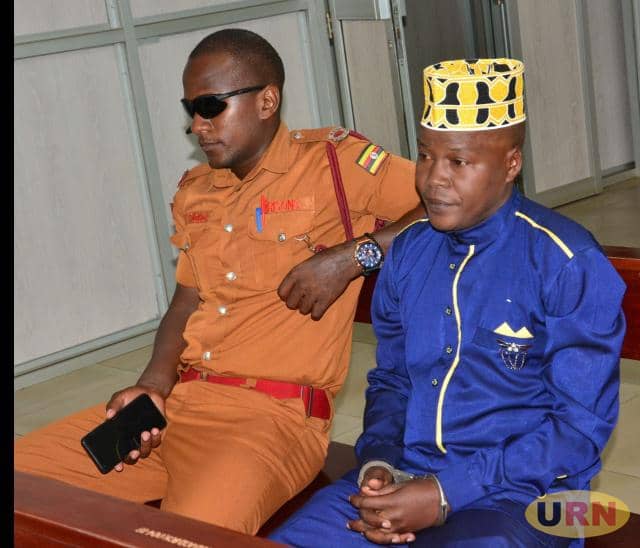
The High Court has convicted Sheikh Umar Muwonge Kamoga of aggravated trafficking in children after finding that he exploited the vulnerability and dependence of his 13-year-old niece, but subsequently discharged him after sentencing him to the two years, three months and 22 days he had already spent on remand.
Justice Alice Komuhangi found that Kamoga exercised power over the girl because of her dependence on him for education and other basic needs, after her parents struggled to meet her school expenses.
The girl had initially been taken from her parents by Kamoga and stayed with him, his wife and daughter at their home in Nsubi Zone, Nansana Municipality, Wakiso District.
Court heard that Kamoga began paying her school fees, partly because she was around the same age as his daughter.
The girl later moved between relatives. In 2018, Kamoga was imprisoned after being charged with rape and, upon his return, took the girl to stay with another uncle, promising to return for her.
He did not return, prompting the girl’s mother to take her back. The two subsequently lived in a rented one-room house in Kyebando, Nansana.
In 2021, Kamoga again took the girl into his care and enrolled her at Victoria Education Services, where his daughter was also a student.
It was during this period, according to the girl’s testimony, that she began experiencing sexual advances from Kamoga.
She told court that in 2022, while in Primary Six, she woke up during the night to use the bathroom and Kamoga came out of his bedroom and touched her breasts.
The girl said she was frightened because she regarded Kamoga as a father figure and had depended on him for her education and upkeep.
She further testified that Kamoga later made sexual demands and told her that she had to repay the money he had spent on her education. He allegedly reminded her that her parents were poor and could not afford her school fees.
The situation became more difficult after Kamoga stopped paying her fees, leaving an outstanding balance of Shs1.38 million.
The girl’s concerns eventually reached Irene Byanjeru, a school chaplain who testified for the prosecution.
Byanjeru told court that the girl approached her when pupils with outstanding fees were being sent home. She pleaded not to be sent home, saying she was unsafe because Kamoga was making sexual advances towards her.
On November 16, 2023, the chaplain said, the girl called her again and asked for rescue, claiming that Kamoga had threatened to enter her bedroom and sexually assault her.
Byanjeru then went to the girl’s home at about 8pm accompanied by detectives from Nansana Police Station, where the girl was rescued.
During the trial, Kamoga denied the allegations and attributed them to disagreements over his strict approach to parenting. He told court that the girl had objected to restrictions he imposed, including refusing to allow her to stay with friends.
Justice Komuhangi, however, rejected the explanation.
The judge said Kamoga’s relationship with the girl had placed him in a position of authority, particularly because her parents were unable to provide for her education.
She questioned why he did not return the girl to her parents when he could no longer meet her financial needs and also raised concern over restrictions that had allegedly prevented the girl’s mother from accessing her.
The court concluded that the prosecution had established the required elements of aggravated trafficking in children, including the girl’s age, her transportation and harbouring, and the abuse of Kamoga’s position of power for sexual exploitation.
“I find the accused guilty of aggravated trafficking in children,” Justice Komuhangi ruled.
Prosecution seeks life sentence
After the conviction, the prosecution asked the court to impose a life sentence, describing the offence as serious and noting that it occurred within a domestic setting where Kamoga had control over the victim.
The defence instead urged the court to be lenient, pointing to Kamoga’s seven-year involvement in the girl’s upbringing and his payment of her school fees.
Senior State Attorney Samuel Ejok, who led the defence, told court that Kamoga was remorseful and continued to regard the girl as his daughter. He also said Kamoga wanted to support her education until she became a family lawyer.
The defence asked the judge to take into account the period Kamoga had already spent on remand.
Justice Komuhangi ultimately sentenced him to the two years, three months and 22 days he had already spent in custody, holding that the period was sufficient for him to reform.
The judge also considered his remorse, including his decision to kneel before the victim and seek her forgiveness.
As the sentence was fully covered by his time on remand, Kamoga was released. The court further ordered that a smartphone he had bought for the girl, which had been presented as an exhibit, be returned to him.
Sheikh Umar broke down in tears of joy and knelt before Justice Komuhangi to thank her after he was released.