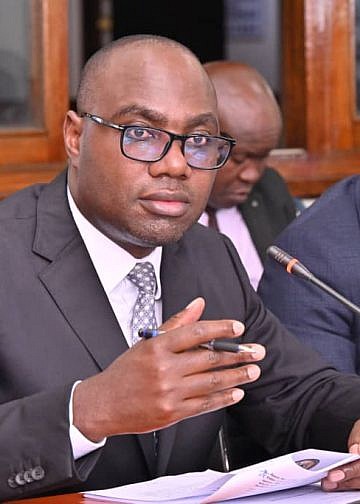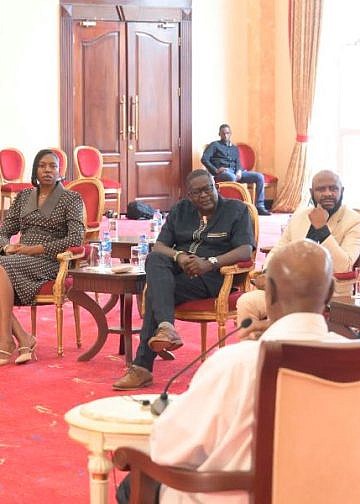










The High Court in Kampala has found Stanbic Bank Uganda Limited guilty of contempt of court after blocking a customer’s bank account despite an existing court order prohibiting it from denying him access to his money.
The Commercial Court, presided over by Justice Dr Ginaria Melody Ngwatu, ordered the bank to pay Dr James Rutanga Akampumuza Shs50 million in general damages and a Shs40 million fine for violating a court order issued in 2012.
In a ruling delivered on November 8, 2026, Justice Ngwatu found that the bank knowingly disobeyed a temporary injunction issued on June 27, 2012, which allowed Rutanga to operate his account and restrained the bank from blocking it pending determination of the main suit.
The dispute arose on July 16, 2025, when Rutanga reportedly visited Stanbic Bank’s Kabale branch to withdraw money but was informed that his account had been blocked by the bank’s headquarters.
According to Rutanga, his account had sufficient funds to meet his financial needs, but bank officials allegedly told him that he needed to open a new account before accessing his money.
He told court that the denial of access to his funds disrupted his political campaigns and contributed to his eventual defeat in the elections.
However, Stanbic Bank denied blocking the account, arguing that Rutanga had been asked to update his Know Your Customer (KYC) information after his national identity card was reportedly flagged as invalid during verification.
The bank maintained that it had allowed him to withdraw Shs10 million on July 1, 2025, and another Shs12 million on July 12, 2025. It further argued that when he returned on July 16, he declined to complete the required KYC documentation.
According to the bank, its officials had not denied him access to his money, but he chose to leave the branch after refusing to update his account information.
Court rejects bank’s affidavit
However, Justice Ngwatu declined to rely on the bank’s response after finding that an affidavit filed by its legal officer, Sarah Rukundo, was defective.
The judge observed that Rukundo had not provided identification documents, an appointment letter or any authorisation demonstrating her capacity to swear an affidavit on behalf of the bank.
“Ms. Rukundo further deposed that she swore the affidavit in reply in which what she stated was true and correct to the best of her knowledge; however, she does not state anywhere that she personally interacted with the applicant at any point,” Justice Ngwatu ruled.
She further noted that most of the statements contained in the affidavit were based on documents in the court file rather than matters within the deponent’s personal knowledge, making them hearsay and contrary to the requirements of the Civil Procedure Rules.
“In light of the foregoing, the affidavit in the present application is fatally defective and cannot be relied on by this court in determination of this application,” she ruled.
On the contempt allegations, Justice Ngwatu noted that the existence of the 2012 injunction was not disputed, as both parties had participated in the consent under which the order was issued.
“Having considered the evidence on record and the submissions of both parties, this court finds that whereas the applicant only relied on averments made by himself and other four deponents, that the respondent had blocked his account, there is no evidence of the respondent disproving the applicant’s averment,” she held.
The judge added that the evidence before court established that the bank had blocked Rutanga’s account and prevented him from accessing his money despite the subsisting injunction.
“Thus, court is convinced that the respondent blocked the applicant’s account and prevented him from accessing money on his account held with the respondent. The respondent knowingly violated the court order,” she ruled.
Justice Ngwatu further observed that the bank had failed to provide a justifiable explanation for denying Rutanga access to his funds despite the existing court order.
“The court is convinced that the respondent is in contempt of court order granted by this court in Miscellaneous Application No. 244 of 2012 arising from Civil Suit No. 181 of 2012,” she ruled.
Rutanga had asked court to award him Shs1 billion in compensation, Shs200 million as a contempt fine, Shs300 million in general damages, Shs2 billion in punitive and aggravated damages, and an additional Shs200 million in general damages.
He had also sought orders compelling the bank to unblock his account, pay damages and have officials responsible for implementing the bank’s decisions committed to civil prison.
However, Justice Ngwatu declined to grant the requested orders of certiorari and mandamus, explaining that these are judicial review remedies that could not be granted in the circumstances of the contempt proceedings.
The judge also rejected the request to have the bank officials arrested and imprisoned, noting that detention should only be considered as a last resort.
“The applicant has established that he suffered losses which can be compensated by general damages. However, upon assessment of the circumstance, the amount prayed for is excessive and exaggerated,” she ruled.
The court consequently awarded Rutanga Shs50 million in general damages and imposed a Shs40 million fine against Stanbic Bank.
Justice Ngwatu also awarded interest at eight per cent per annum on the damages and fine, running from the date of the application until full payment. The costs of the application were ordered to be in the cause.