








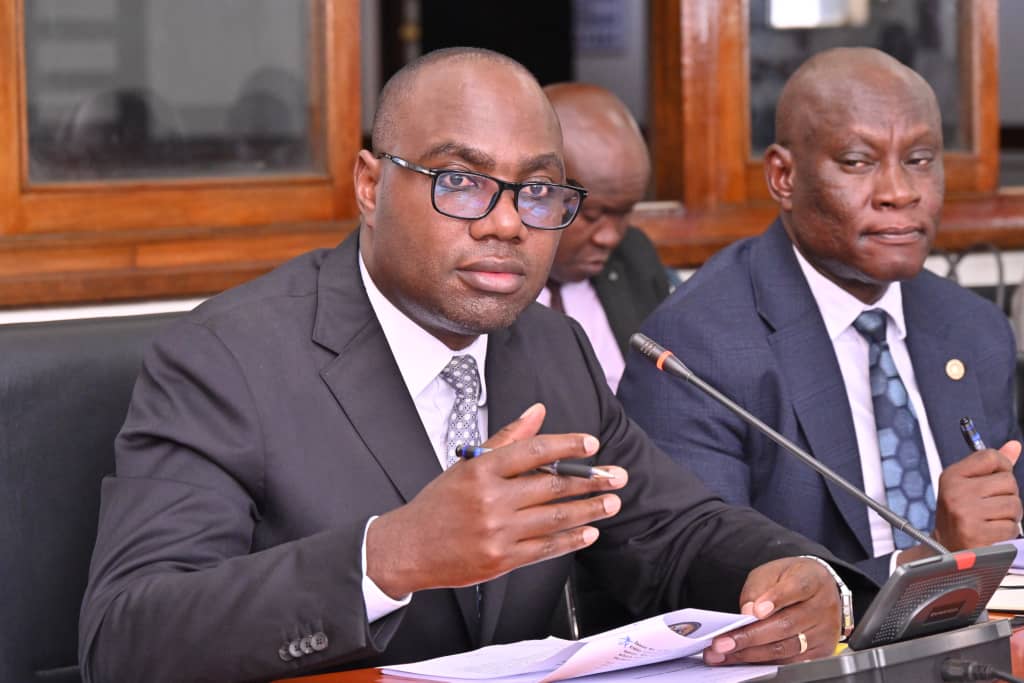
Government has warned licensed moneylenders charging borrowers interest above the legal ceiling of 2.8 per cent per month that they risk losing their operating licences, amid growing concerns over the high cost of borrowing and the loss of borrowers’ property over unpaid loans.
Finance Minister Henry Musasizi said moneylenders found exploiting borrowers through excessive interest rates could have their licences revoked. He urged Ugandans facing such practices to report the lenders to the relevant authorities and seek legal redress.
“We can revoke this licence if the money lender is overcharging his clients,” Musasizi warned.
He made the remarks on Thursday while responding to concerns in Parliament about the high cost of borrowing and the interest rates charged by moneylenders.
Under Legal Notice No. 21 of 2024, licensed moneylenders are prohibited from charging more than 2.8 per cent interest per month, equivalent to 33.6 per cent annually.
This means that a borrower who takes out a loan of Shs100,000 should pay a maximum of Shs2,800 in interest for one month, calculated on the amount actually advanced, subject to the applicable rules on interest calculation and charges.
However, concerns have emerged that some moneylenders charge interest rates exceeding 5 per cent per month, making it increasingly difficult for borrowers to repay their loans and exposing property pledged as collateral to the risk of recovery proceedings.
Musasizi said the law provides safeguards against excessive interest rates and encouraged borrowers to report moneylenders who violate the prescribed limits.
Lenders who breach the applicable regulations risk penalties, including fines of up to Shs1 million, cancellation of their operating licences and orders to refund excess interest charged to borrowers.
The minister also pledged to investigate complaints about how some moneylenders recover loans from guarantors, following concerns raised by legislators about possible collusion between lenders and borrowers.
Musasizi said he understood the complaints to suggest that some moneylenders could be working with borrowers to target guarantors for repayment, even in circumstances that raise questions about the fairness and legality of the recovery process.
He acknowledged that guarantors can be held liable when borrowers default, depending on the terms of the guarantee, but said the conduct of some lenders in pursuing them required scrutiny.
“I will task the officers in the Ministry of Finance to investigate and report back to me,” he said.
He added: “If it is a matter of misbehaviour, we shall address it.”
The minister did not specify when the investigations would be completed.
The 2.8 per cent monthly interest ceiling applies specifically to licensed moneylenders and does not automatically extend to other Tier 4 institutions, including savings and credit cooperative organisations (SACCOs), non-deposit-taking microfinance institutions and self-help groups, which operate under different regulatory frameworks.