







Ugandan designers and entrepreneurs have earned recognition at the 12th Africa Sourcing and Fashion Week (ASFW) and the 15th All Africa Leather Fair (AALF), showcasing the country’s growing capacity in footwear manufacturing, leather production and sustainable fashion.
The four-day exhibition, held from November 12 to 15, 2026, at the Addis International Convention Center in Ethiopia, brought together manufacturers, designers, exporters and industry stakeholders from across the world, providing Ugandan businesses with an opportunity to present locally manufactured products to international buyers.
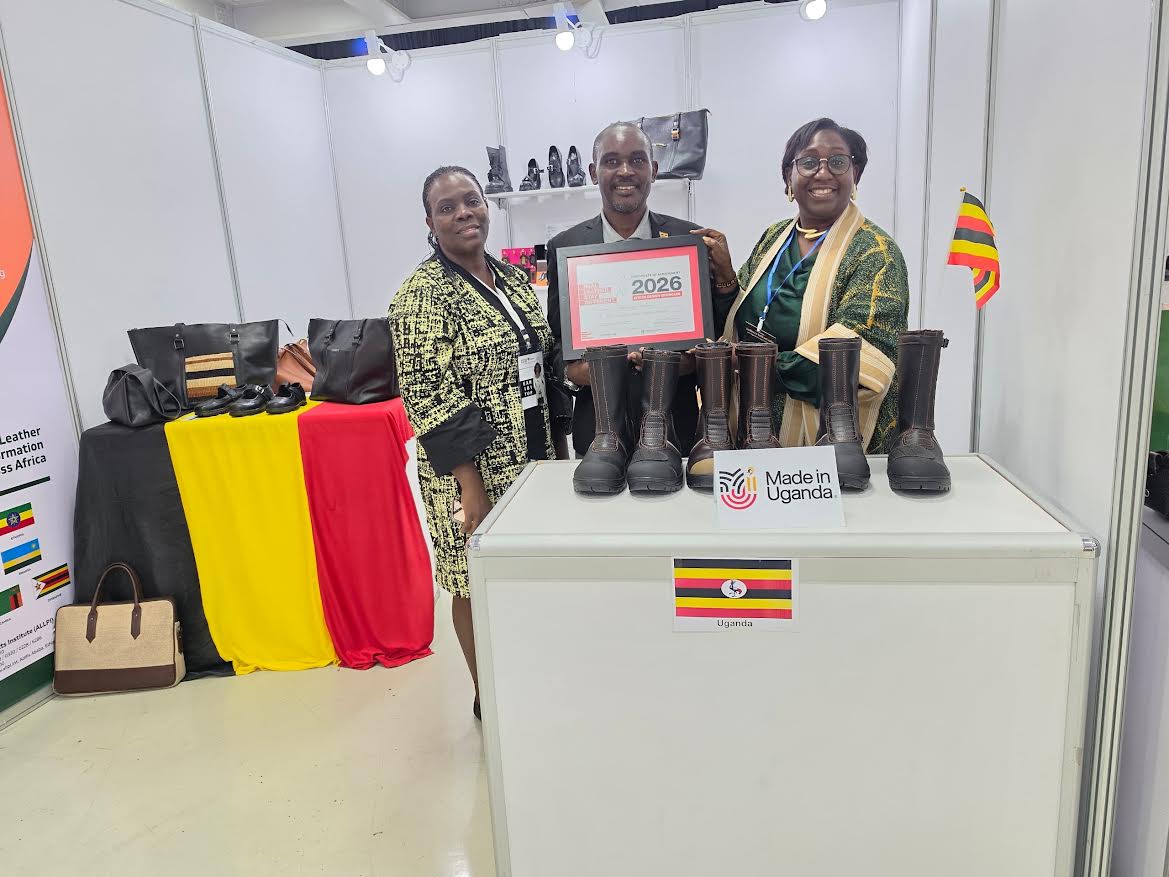
Uganda’s participation was highlighted by the recognition of Yoram Atuhamize, founder and Chief Executive Officer of Jora Shoes Co. Ltd., who was named among the Top 15 Leather Exhibitors out of more than 90 participants at the continental exhibition.
His recognition followed the presentation of a reinforced leather boot designed to improve protection and durability for Uganda’s boda-boda motorcycle taxi riders. The footwear was manufactured using locally sourced materials, demonstrating how domestic innovation can address practical market needs while adding value to local resources.
Uganda’s participation was facilitated by the Embassy of the Republic of Uganda in Addis Ababa as part of its Economic and Commercial Diplomacy (ECD) agenda, which seeks to promote Ugandan businesses and strengthen the country’s trade relations with international markets.
Through the initiative, the Embassy supported local entrepreneurs in accessing the exhibition, engaging potential buyers and exploring opportunities for business partnerships and exports.
Margaret Kafeero, Minister Counsellor for Bilateral Affairs at the Ugandan Embassy in Addis Ababa, said the exhibition was an important platform for advancing Uganda’s commercial interests.
“Platforms like the All Africa Leather Fair and Africa Sourcing and Fashion Week are critical to our Economic and Commercial Diplomacy agenda here in Addis Ababa. By pairing institutional representation with transaction-ready private sector vendors, we would like to see that Ugandan craftsmanship is not only part of continental policy discussions, but is actively securing trade agreements and competing on the global stage,” Kafeero said.
Atuhamize’s recognition was one of the highlights of Uganda’s participation, particularly given the practical application of his product to the local market.
The reinforced boot was designed with the needs of boda-boda riders in mind, addressing the demand for durable footwear that offers additional protection during daily motorcycle operations.
Atuhamize said the recognition was an important achievement for his company and Uganda’s manufacturing sector.
“Being named among the Top 15 Leather Exhibitors on a continental stage like this is a tremendous milestone for Jora Shoes and for Ugandan manufacturing. Our reinforced boot was designed to solve a real-world safety and durability need for Uganda’s boda-boda riders using 100 percent Ugandan materials. With the backing of the Uganda Embassy in Addis Ababa, we have been able to put homegrown innovation directly in front of international buyers and prove that Ugandan footwear can compete anywhere in the world,” he said.
Uganda was also represented by Irene Namalwa Kajumba of Mother’s Love Crafts and Rowena Kamasai Kagaba of Good Fibre, who showcased products highlighting the country’s traditional craftsmanship and potential in sustainable fashion.
Kajumba, who comes from Zana and represented the Kampala Leather Cluster, exhibited handcrafted leather products reflecting local skills and creativity.
She was nominated by the Ministry of Trade, Industry and Cooperatives (MTIC) and sponsored by the Africa Leather and Leather Products Institute (ALLPI). Her participation also provided an opportunity to engage in industry discussions, technical sessions and professional networking with other stakeholders in the leather sector.
Kagaba showcased a collection of natural fibre clothing under her Good Fibre brand, incorporating locally available materials such as barkcloth, sisal, cotton and silk.
Her collection highlighted the potential of Uganda’s indigenous materials in contemporary fashion while promoting sustainable production practices and the involvement of local communities in textile value chains.
Kagaba also called for increased government support to help Ugandan designers access international platforms and expand their businesses into global markets.
The Africa Sourcing and Fashion Week and the All Africa Leather Fair provide a platform for businesses and industry stakeholders involved in textiles, apparel, footwear and leather manufacturing to exchange ideas, establish partnerships and explore commercial opportunities.
The 2026 edition attracted delegates from more than 70 countries, with exhibitors from over 30 countries participating in the showcase.
The closing awards ceremony was held in partnership with the Real Leather. Stay Different. showcase, the United States Department of Agriculture (USDA) and the Leather and Hide Council of America.
Throughout the exhibition, discussions focused on strengthening trade and industrial cooperation among African countries, including Uganda, Ethiopia, Kenya, Zambia and South Africa, with particular attention to manufacturing, employment creation, investment and the development of local industries.
Uganda’s participation provided an opportunity to present its leather, footwear and textile industries to international audiences while exploring opportunities to increase exports and attract business partnerships.
The recognition of Ugandan entrepreneurs at the exhibition also highlighted the role of local manufacturers and designers in developing competitive products, creating employment and adding value to locally available resources.