








More than 47,000 children aged between zero and six in three refugee settlements and neighbouring host communities are expected to benefit from a new initiative aimed at improving early childhood development, learning and overall well-being.
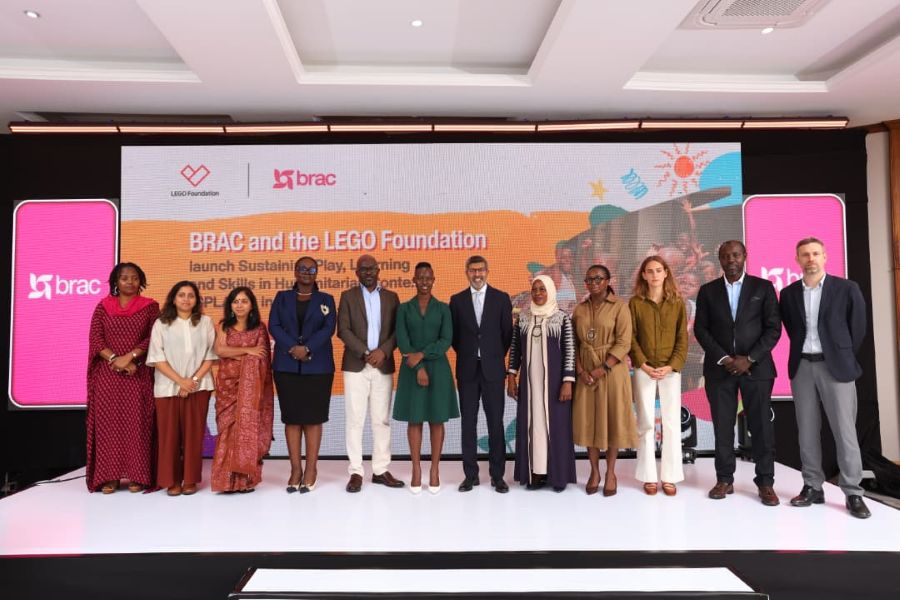
The five-year programme, known as Sustaining Play, Learning and Skills in Humanitarian Contexts (SPLASH), seeks to give children affected by displacement better opportunities to learn, build confidence, develop relationships and prepare for formal education.
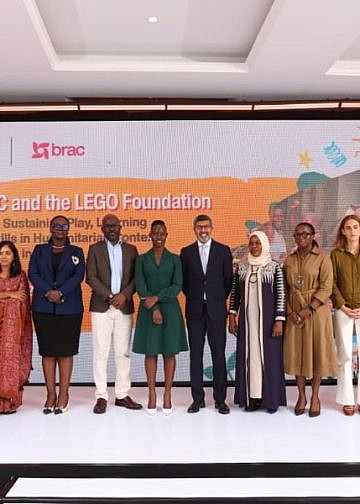
Launched by BRAC Uganda in partnership with the LEGO Foundation, the initiative will operate in Rhino, Imvepi and Bidibidi refugee settlements and their neighbouring host communities in Madi-Okollo, Terego and Yumbe districts.
Through play-based learning, responsive caregiving and safe learning spaces, the programme aims to help young children develop age-appropriate skills, improve their well-being and prepare for school.
SPLASH is expected to directly reach 92,406 people, including 47,000 children aged zero to six, 44,500 caregivers and 906 educators and play leaders.
BRAC Uganda Programmes Manager Joseph Kabanda said the project builds on the organisation’s previous interventions in refugee settlements, where more than 5,000 children benefited from its Humanitarian Play Lab model.
“Our reach initially was 5,000 and now we are moving to a much bigger number,” Kabanda said.
Under the programme, BRAC will strengthen 150 Humanitarian Play Labs to provide children with safe and stimulating environments where they can learn through play.
The centres will primarily support children aged three to six, helping them develop communication, language, social and emotional skills, confidence, creativity and problem-solving abilities. They will also introduce foundational literacy and numeracy skills to ease their transition into primary education.
The first 100 play labs will be renovated and equipped in Rhino and Imvepi in 2027, while an additional 50 will be added in Bidibidi in 2028.
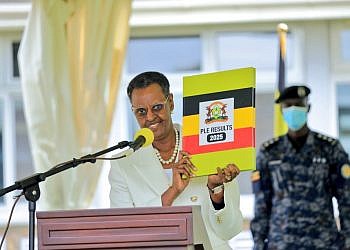
Dr Safina Mutumba, Assistant Commissioner for Early Childhood Development, who read remarks on behalf of the Ministry of Education and Sports Permanent Secretary, Kedrace Turyagyenda, said children need opportunities to develop essential skills during their early years.
“The early years are very critical. Children need opportunities to develop language, confidence, social skills, and a foundation of literacy and numeracy,” Mutumba said.
She noted that children in refugee settlements and host communities often miss out on these opportunities because of displacement, poverty, disrupted services and psychological distress.
“Quality early learning can restore routines, strengthen relationships, and provide a sense of safety and belonging,” she said.
The programme will also pilot a responsive caregiving intervention targeting 5,000 children aged zero to three. Delivered through Village Health Teams (VHTs), it will equip parents and caregivers with skills to identify developmental delays, understand children’s needs and support their growth through everyday interactions.
The intervention will include developmental screening, parent education, early stimulation, health and nutrition guidance, psychosocial support, referrals and follow-up for children requiring additional services.
LEGO Foundation Head of Children’s Learning and Development Tarek Alami said the earliest years of life shape children’s future skills, confidence and relationships, making it important to provide supportive environments for their development.
“Through play children explore, discover, build relationships and develop skills that they will carry throughout the rest of their lives,” Alami said.
He explained that supporting children’s development requires more than establishing learning centres, noting that parents and caregivers also play an equally important role.
“Talking with a baby, responding to a child’s curiosity, sharing a story or simply taking the time to play together. These moments may seem small but they can make an enormous difference to a child’s development,” he said.
Alami added that efforts to support children should continue even during humanitarian emergencies.
“A child’s development does not wait until a crisis is over and neither should our efforts to support them,” he said.
Minister of State for Youth and Children Affairs Mercy Lakisa said play provides children with opportunities to develop mentally, physically and emotionally.
“Play is not simply recreation. For young children, it’s an important means through which they explore their environment, develop social and emotional skills, communicate, build confidence at an early age, and learn,” Lakisa said.
She said the project was important because children affected by displacement often experience interrupted learning, psychosocial distress, protection risks and limited access to essential services, challenges that can affect their development long after an immediate crisis.
Beyond early learning, the programme will support 1,000 ultra-poor caregiver households through a two-generation approach that combines children’s development with household economic empowerment.
The selected households will receive livelihood and enterprise development support, financial literacy training, links to Village Savings and Loan Associations, health subsidies, home coaching and six-month consumption stipends.
Kabanda said improving children’s development also required creating supportive home environments and addressing the economic challenges faced by their families.
“You cannot support a child and leave the mother. It is not enough if a child goes back home and they sleep hungry,” he said.
Lakisa said addressing household poverty and economic instability was necessary to achieve lasting improvements in children’s well-being.
“We cannot sustainably improve children’s well-being without addressing the circumstances of their families,” she said.
By the end of the programme, BRAC expects 70 per cent of participating children aged zero to six, including children with disabilities, to demonstrate improvements in developmental milestones, school readiness and overall well-being.
The project also targets 70 per cent of participating caregivers and 80 per cent of educators becoming better equipped and more confident to provide nurturing, stimulating and inclusive environments for children.
BRAC International Executive Director Abed Shameran said children in humanitarian settings deserved opportunities to learn and thrive regardless of the circumstances in which they grow up.
“Childhood cannot wait for a crisis to end,” Shameran said.
The SPLASH project forms part of a $50 million, five-year partnership between BRAC and the LEGO Foundation targeting 400,000 children and adolescents in humanitarian settings in Uganda and Bangladesh.
In Uganda, implementation will involve government institutions, the Office of the Prime Minister and the United Nations High Commissioner for Refugees (UNHCR).