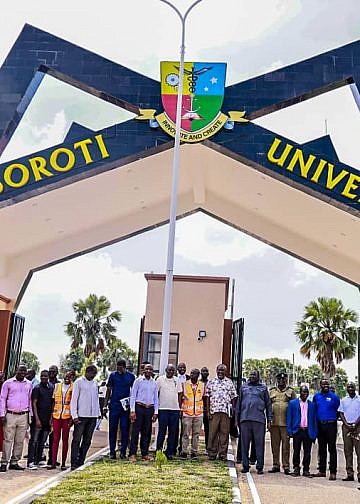










A school gardening initiative supported by the Sasakawa Africa Association is helping improve nutrition for children rescued from the streets of Kampala and resettled in schools across the Karamoja sub-region, while equipping them with practical agricultural skills.
The programme enables participating schools to grow vegetables and mushrooms to supplement learners’ meals, improve food security and introduce children to farming practices that could benefit their families and communities.
At Nakiceleet Primary School in Lukopo Sub-county, Bokora County, Napak District, produce from the school gardens is helping diversify meals for 132 children rescued from the streets of Kampala by Kampala Capital City Authority (KCCA) and resettled through Napak District Local Government in 2025.
The school says many of the children were malnourished when they arrived, prompting the administration to use locally grown produce to improve their feeding arrangements.
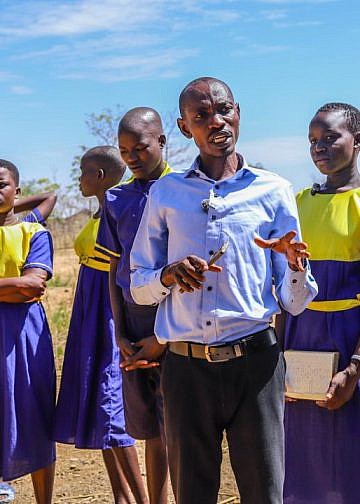
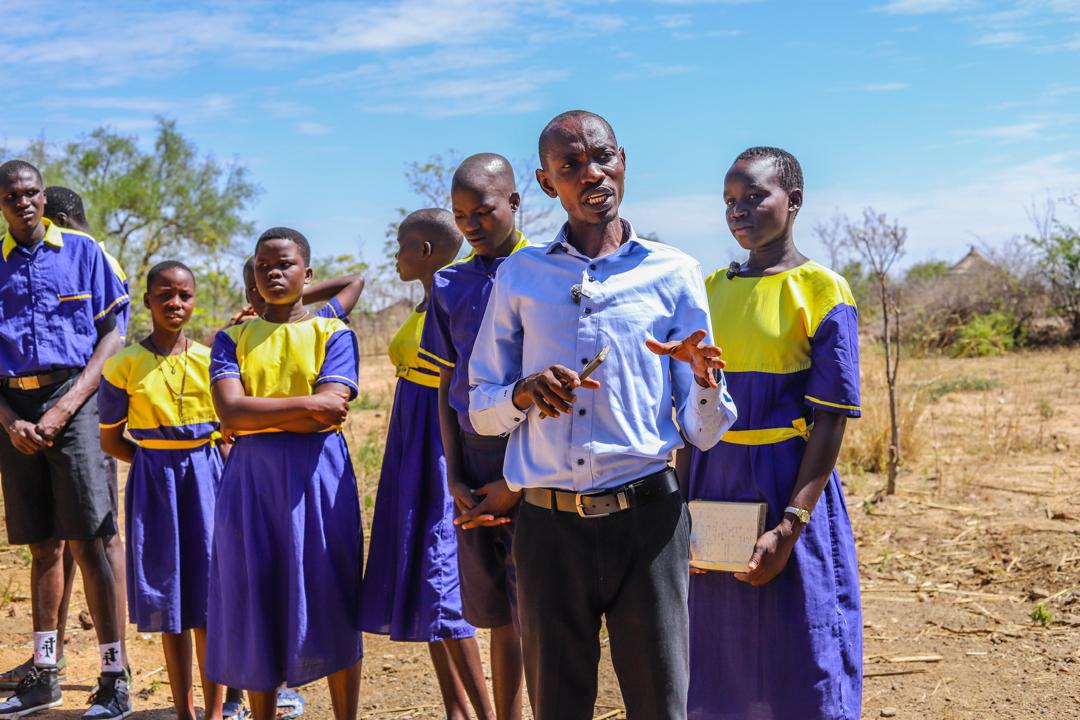
Speaking to journalists at the school, head teacher Adyei Josephine Omara said mushrooms harvested from the gardens had been used to supplement the children’s meals over the past three months rather than being sold.
“In the last three months, we have not been selling the mushrooms we have been harvesting from our gardens. We have been using them to feed the resettled children, the majority of whom were malnourished by the time they arrived here. In 2025, we received a total of 132 children from KCCA,” Omara said.
She said the improved feeding arrangements had contributed to better health among the learners, adding that the children had embraced gardening and continued to perform well in class.
“On behalf of the school administration, we are really grateful to Sasakawa because it has supported us in addressing malnutrition within our school and community,” she said.
Beyond improving school meals, the programme is teaching learners how to raise seedlings in nursery beds, transplant crops, mulch, weed and harvest produce.
Omara said these skills could help children improve household food production and nutrition while potentially creating opportunities for income generation in the future.
The school has also benefited from the renovation of its borehole and the installation of a motorised water system to support irrigation, according to Omara.
She said the improvements had enabled the school to grow vegetables despite the dry conditions that characterise much of Karamoja.
“Although Karamoja is a desert, through irrigation we are able to grow vegetables throughout the year,” she said.
However, Omara appealed to KCCA to assess schools’ capacity before assigning children for resettlement, noting that Nakiceleet Primary School faces accommodation constraints, particularly in the boys’ dormitory.
She said prior assessments would help authorities determine whether schools have adequate facilities to accommodate additional learners and ensure children are placed in suitable environments.
Leo Odeke, the school’s agriculture teacher and gardens supervisor, said Nakiceleet grows mushrooms, tomatoes and cabbages to supplement the meals served to learners.
He said mushrooms had become particularly popular among the children because of their taste, while tomatoes and cabbages were used to improve the variety of meals.
“The mushroom tastes like meat, and this has made it the children’s favourite sauce. During lunchtime, we serve mushrooms and cabbages mixed with beans, while tomatoes are used as ingredients in the sauce,” Odeke said.
He explained that the school previously relied mainly on posho and beans, with limited ingredients to enrich the meals.
The gardening project is organised to allow learners to participate in farming without compromising their classroom studies. Each garden is managed by a group of 10 learners who tend to crops at designated times during the school day.
Mushroom gardens are irrigated early in the morning and at intervals during break time, lunch and games time.
Odeke said the school intended to sustain the initiative by selling surplus produce to generate income for maintaining and expanding the gardens.
“We, as a school, are ready to maintain the project for continuity. In case we produce in excess, we shall be able to sell it because it already has a ready market,” he said.
For some learners, returning to school has provided an opportunity to rebuild their lives after difficult experiences on the streets of Kampala.
Agnes Longok, a 13-year-old Primary Five pupil at Nakiceleet Primary School, said she ended up on the streets after her aunt took her from home in 2023, promising that someone would sponsor her education.
Longok recounted that after arriving in Kampala, she was initially given a meal before being directed to Kansanga to beg for money alongside other children.
“When we reached Kampala, it was a Saturday. I was given a delicious meal. The following day, I asked my aunt about the lady who was going to pay my school fees. My aunt told me to be patient because she was going to call her. The next day, she told me to go to Kansanga and start begging with other kids at home,” she said.
She said life on the streets was difficult, explaining that she struggled to obtain money, experienced abuse and punishment, and was later knocked down by a motor vehicle while begging.
KCCA subsequently picked her up alongside other children. She was taken to Masuliita before being transferred to a school in Napak District.
“I am so glad that KCCA brought me back to school in 2025. Since then, I have learnt a lot about vegetable growing,” Longok said.
Her experience highlights the role of resettlement and access to education in providing vulnerable children with opportunities to pursue their studies and acquire practical skills.
Joseph Pascal Bbemba, deputy country director of the Sasakawa Africa Association, said the gardening initiative was designed to improve nutrition while helping schools develop sustainable sources of income.
He explained that schools could sell surplus vegetables and mushrooms, employ casual labourers and reinvest proceeds in maintaining and expanding their gardens.
“By doing this at school, parents can also learn something and practise it in their homes,” Bbemba said.
He added that growing industrial activity in Karamoja could create additional demand for vegetables, particularly if schools maintained production throughout the year.
“Most of us know that so many industries are opening up in Karamoja. Their workers need these vegetables throughout the year, and it is these schools, like Nakiceleet Primary School, which can supply them throughout the year,” he said.
Bbemba said the school uses raised beds for tomato cultivation, mulching and drip irrigation to improve crop production and water efficiency.
The system pumps water from a storage tank into drums connected to irrigation lines, allowing it to be distributed to crops.
He added that Sasakawa planned to introduce solar dryers to help schools preserve surplus mushrooms and reduce post-harvest losses.
The technology would enable schools to dry and store mushrooms for consumption during subsequent school terms, particularly when harvests exceed immediate needs.
In June 2025, KCCA reportedly facilitated the reintegration of 684 children rescued from the streets of Kampala into schools across Napak District.
According to information provided by the school, all but 19 of the resettled children had remained in school and continued their studies. The 19 reportedly left their respective schools.
The school gardening initiative is helping participating institutions use agricultural production to improve learners’ diets while equipping children with practical skills that could benefit them beyond the classroom.
For schools in Karamoja, the approach also offers an opportunity to strengthen food security, diversify school meals and potentially generate income through the sale of surplus produce.