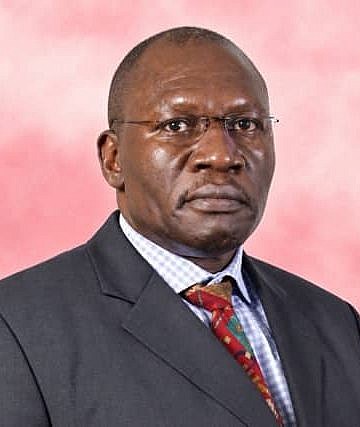











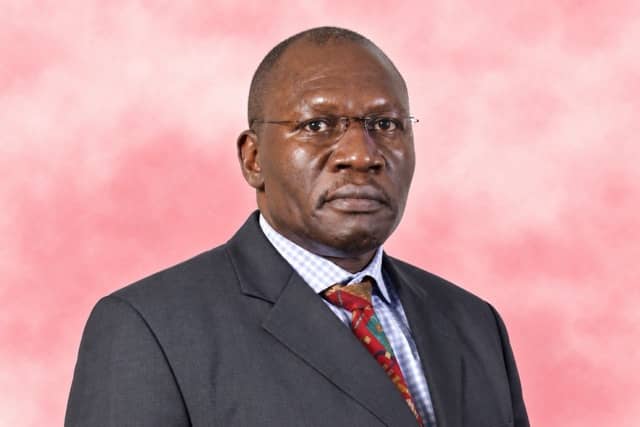
Geoffrey Alan Onegi-Obel, a prominent Ugandan investment banker and former chairman of the National Social Security Fund (NSSF) Board, has died at the age of 70.
Onegi-Obel died on Sunday, October 18, 2026, at MP Shah Hospital in Nairobi, Kenya, where he had been receiving medical treatment.
His death marks the loss of a key figure in the development of Uganda’s financial and capital markets, particularly during a period when the country was establishing institutions to connect local businesses and investors to broader financial markets.
Onegi-Obel served as chairman of the NSSF Board of Directors from 2001 to 2005, providing leadership to the national retirement savings institution at a time when Uganda’s financial sector was undergoing significant transformation.
He also played a pivotal role in the establishment of the Uganda Securities Exchange (USE), serving as its founding chairman. The exchange was established to provide a formal platform for trading securities and facilitate the growth of Uganda’s capital markets.
The USE officially opened for trading in January 1998, following years of efforts by Onegi-Obel and other stakeholders to establish a structured securities market in the country.
His contribution to the sector was later recognised when he received the USE Lifetime Achievement Award.
Before his involvement in the stock exchange, Onegi-Obel founded The Financial Times of Uganda, a publication dedicated to financial and economic affairs. The newspaper contributed to public discussions on investment, financial markets and economic management.
Born on October 20, 1955, Onegi-Obel came from a family with a strong public service background. He was the son of the late Angelo Onegi Obel, who served as Governor of the Bank of Uganda from 1973 to 1978.
He attended St. Mary’s College Kisubi before obtaining a law degree from Makerere University.
He later pursued specialised training in capital markets, including an Albert Parvin Fellowship at Princeton University and executive training at the New York Institute of Finance. In 1987, he was also awarded a Fulbright Scholarship.
Onegi-Obel will be remembered for his contribution to the development of Uganda’s financial sector, particularly the establishment of institutions that support investment, securities trading and retirement savings.
His legacy is closely associated with the growth of Uganda’s capital markets and the development of the financial institutions that continue to play a role in the country’s economy.