









The East African Crude Oil Pipeline (EACOP) is facing challenges in restoring wetlands and temporary access routes established during construction, as the project prepares to transition into its operational phase.
The challenges highlight the delicate balance between environmental protection and community needs as Uganda moves closer to commercial oil production.
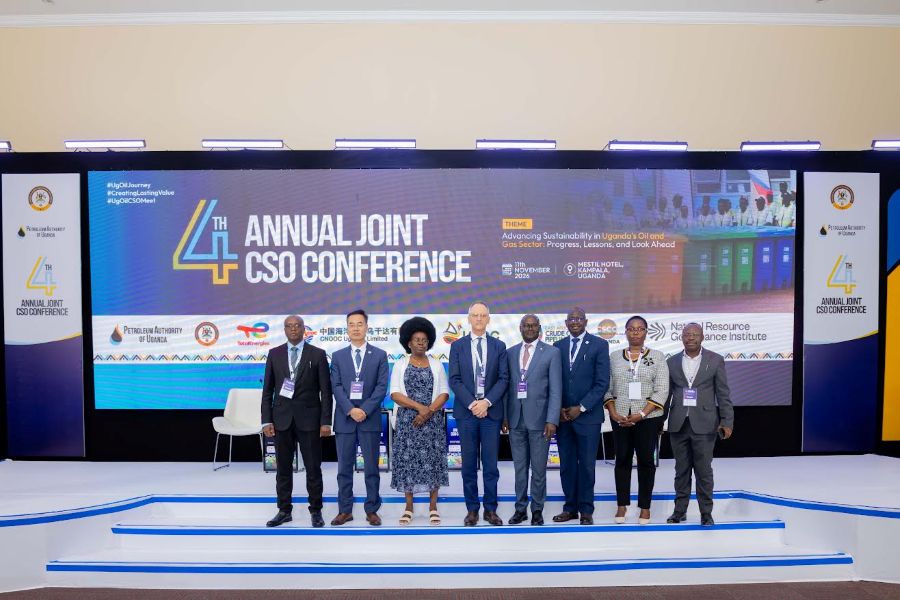
The concerns emerged during the fourth Annual Joint Civil Society Conference organised by the Petroleum Authority of Uganda (PAU) under the theme, “Advancing Sustainability in Uganda’s Oil and Gas Sector: Progress, Lessons and Looking Ahead.”
Speaking at the conference, EACOP Environmental Engineer Charity Tushemereirwe identified the restoration of the pipeline right-of-way and affected wetlands as some of the project’s outstanding environmental challenges.
She explained that temporary access routes created during construction had become useful to some communities, making their closure difficult despite the company’s commitment to restoring affected areas.
“Because we have created access for communities, they are also using these temporary access routes. It becomes very difficult sometimes when you’re dealing with communities to then go back and say we are going to close this route,” Tushemereirwe said.
She noted that some residents perceive the closure of the routes as the withdrawal of benefits they have enjoyed during the construction period.
“When we go back and tell communities that we have to close these temporary access routes because it is an environmental commitment for full reinstatement to happen, communities sometimes perceive that as cutting off access to a benefit they have been enjoying from the project,” she added.
Tushemereirwe said continued engagement with communities would be necessary to explain the environmental obligations associated with restoring areas affected by pipeline construction.
She also called for a broader approach to climate resilience, arguing that climate change should be viewed not only in terms of the risks it presents but also the opportunities it creates for sustainable development.
“Climate resilience, climate change, is not just about the risks, but the opportunities that are there as well,” she said.
Meanwhile, EACOP Deputy Managing Director John Bosco Habumugisha said the project’s sustainability agenda extends beyond infrastructure development to include community participation, skills development and long-term socio-economic benefits.
“True sustainable investment has to include a discussion about people. Investment in infrastructure is only meaningful when people are served,” Habumugisha said.
He said EACOP was working with the China University of Petroleum, the Petroleum Authority of Uganda and Mbarara University to provide practical training opportunities for Ugandans ahead of the pipeline’s operational phase.
The partnerships, he explained, are intended to bridge the gap between classroom learning and practical industry experience, particularly in engineering and other technical fields.
“Through these partnerships, we want to ensure that our universities are not limited to the theory part of education. How can we ensure that these projects are helping our universities to practically train our engineers?” he said.
Habumugisha also highlighted the project’s community development initiatives, including water access programmes, solar energy installations in schools, support for girls’ education, health and safety interventions, tree planting and school Green Clubs.
He cited the upgrading of a Health Centre II to Health Centre III in Bunyoro to improve maternal and child healthcare services, as well as collaboration with the Buganda Kingdom on youth skills development and a sports facility in Buddu.
“Our ambition has been to ensure that communities located along the pipeline corridor are active participants and beneficiaries of these developments,” he said.
He added that the company was implementing livelihood restoration initiatives, women’s empowerment programmes and interventions targeting vulnerable and underserved communities.
As Uganda approaches first oil, Habumugisha said EACOP would continue focusing on local participation, skills development and ensuring that communities benefit from the project beyond the construction period.
“We are developing a pipeline that serves not only the current generation, but the generation ahead of us, and to ensure that we coexist with the communities where we are working, with shared responsibilities,” he said.
The transition from construction to operations is expected to test the project’s ability to meet its environmental obligations while sustaining its community development commitments along the pipeline corridor.