










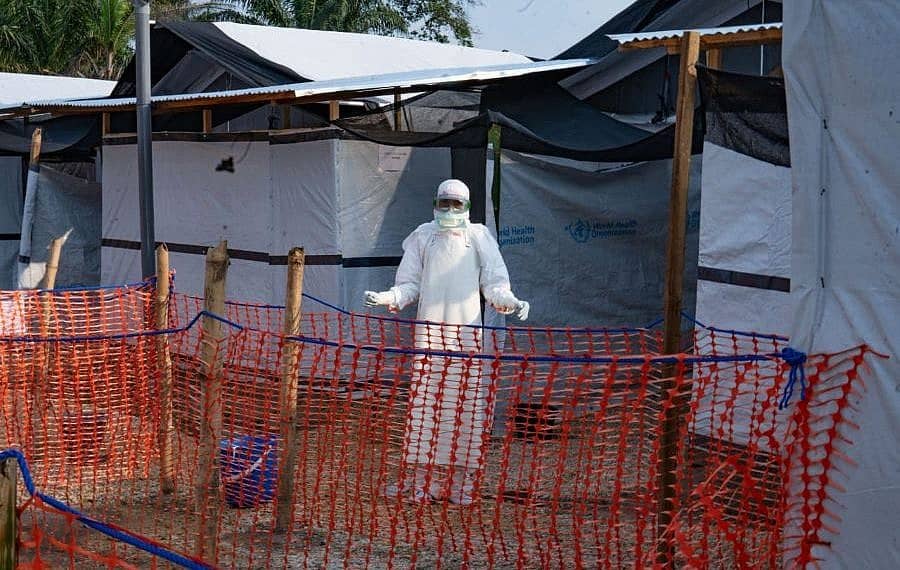
Uganda has introduced mandatory health risk assessments and a 21-day quarantine or monitored self-isolation for citizens returning from the Democratic Republic of Congo (DRC) as part of new measures to prevent the importation and spread of Ebola Virus Disease (EVD).
The Ministry of Health has also suspended concerts, festivals, rallies and other mass gatherings in designated high-risk border districts until further notice.
The Ministry’s Permanent Secretary, Dr Diana Atwine, said the measures were adopted by the National Task Force on Epidemic Preparedness and Response amid concerns over continued movement of people across the Uganda-DRC border, including through ungazetted crossing points.
“With the current heightened surveillance, the Ministry has observed continued movement of people across our borders, including through ungazetted crossing points, which has increased the risk of the disease entering Uganda and spreading to our communities and to other countries,” Atwine said.
She said concerts, festivals, rallies and similar events would not be permitted in the high-risk districts without written clearance from the Ministry of Health.
The Government has also warned that individuals who cross the border illegally, as well as those who facilitate unauthorised movements, will face prosecution or other penalties in accordance with the law.
Humanitarian workers travelling from the DRC must first obtain clearance from the Director General of Health Services. Similarly, the transfer of bodies of deceased persons into or out of Uganda will require prior authorisation from the relevant authorities.
The Ministry has also strengthened Ebola prevention measures at Entebbe International Airport, requiring all air passengers to complete passenger locator forms before boarding to facilitate contact tracing in the event of an outbreak.
Airlines and other transport operators found knowingly transporting unauthorised or improperly documented travellers risk sanctions.
In the education sector, the Government has prohibited the movement of day scholars between the DRC and Uganda in the 34 designated high-risk districts.
Boarding students suspected of having been exposed to Ebola will be required to undergo two days of quarantine in designated facilities before returning to school.
Atwine further directed hotels and other accommodation facilities to maintain accurate guest registers, verify visitors using valid identification documents and make the records available to health and security authorities upon request.
All new arrivals and individuals relocating to high-risk districts must also be reported immediately to their respective Local Council I (LCI) chairpersons.
Schools, health facilities, transport terminals, places of worship, hotels and other public spaces have been directed to provide handwashing facilities and strictly observe infection prevention and control measures.
Radio stations operating in border districts have also been instructed to dedicate at least two hours every month to public awareness campaigns on Ebola prevention.
The Ministry said the additional measures take immediate effect, while all previously announced resolutions and interventions remain in force.
Prevention measures
Ebola spreads through direct contact with the blood or other body fluids of an infected person, someone who has died from the disease, or infected animals.
Common symptoms include sudden fever, headache, muscle pain, weakness, vomiting, diarrhoea and unexplained bleeding.
The public has been urged to avoid direct contact with people displaying suspected Ebola symptoms and the bodies of individuals who have died from unexplained illnesses.
Ugandans have also been advised to wash their hands regularly with soap and clean water and promptly report suspected cases to the nearest health facility or call the Ministry of Health’s toll-free line on 0800 100 066.
Atwine thanked the Uganda Police Force, Uganda People’s Defence Forces (UPDF), other security agencies, local leaders, airlines, the media and members of the public for their continued cooperation in implementing Ebola prevention measures.