











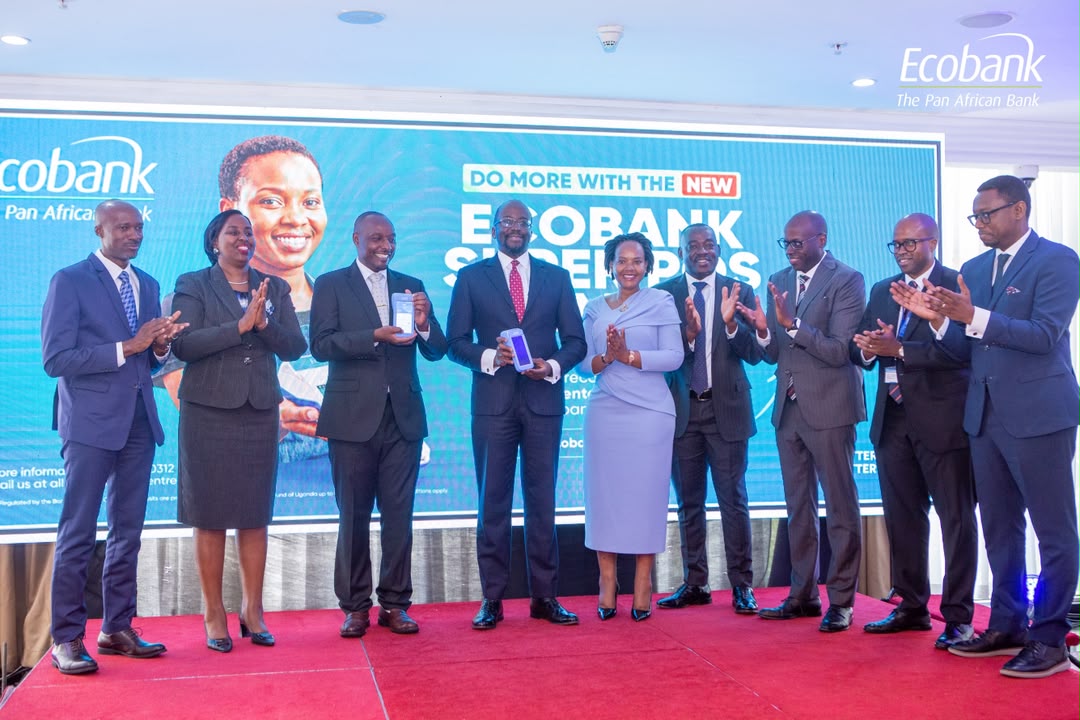
Ecobank Uganda has introduced a digital lending product that allows eligible merchants to access up to shs70 million in short-term working capital based on their digital payment collections.
The Electronic Merchant Cash Advance (eMCA) is available to businesses that collect payments through Ecobank’s Point-of-Sale (POS) terminals, web and Quick Response (QR) payment channels.
According to the bank, merchants become eligible to apply after building at least three months of transaction history. An automated credit system then assesses their collections and determines a borrowing limit of up to 50 per cent of their average monthly digital collections.
Approved funds are credited to the merchant’s account after digital acceptance and one-time-password verification. The advance is repaid through a single settlement within 30 days, with repayment automatically deducted from the merchant’s collection flows.
Ecobank said the facility does not require collateral, physical paperwork or a visit to a bank branch.
The bank said the product is intended to address short-term working capital challenges faced by businesses that may have regular sales but need financing to bridge the gap between making sales and receiving or settling funds.
The issue of access to working capital was also raised by business owners at Ecobank Uganda’s SME Breakfast, where participants discussed the challenges of financing stock purchases, supplier payments and other immediate business needs.
Uganda’s Tenfold Growth Strategy aims to expand the economy from about USD50 billion to USD500 billion by 2040. Small and medium-sized businesses are expected to play an important role in achieving that target, although many continue to face challenges accessing conventional credit because of collateral requirements.
Speaking at the launch, Grace Muliisa, Managing Director of Ecobank Uganda, said the new facility was intended to make it easier for businesses to access financing based on their trading activity.
“Uganda has set itself the ambition of growing its economy tenfold by 2040, and no economy grows tenfold on the back of large corporates alone,” Muliisa said.
She said eMCA would use transaction activity generated by businesses to support access to credit.
“It takes the everyday commerce Ugandan businesses already generate and turns it into credit, at speed and at scale,” she said.
Ecobank said eMCA builds on the growth of digital payments among merchants, including card, mobile money and QR-based transactions.
The bank said transaction records provide information about the volume and consistency of a merchant’s business activity, which can then be used in its automated credit assessment.
Emmanuel Kikoni, Head of Cash Management at Ecobank Uganda, said the product changes the information used in assessing merchants for short-term financing.
“For decades, the question a Ugandan business heard from its bank was what do you own. eMCA replaces that with a better question: what do you sell,” Kikoni said.
He said the automated system can assess transaction records and generate a credit decision without the lengthy processes associated with conventional lending.
The initial rollout will focus on businesses in retail, hospitality, food and beverage, fuel, healthcare and leisure, which the bank says typically have frequent transactions and regular cash flows.
Merchants that route more of their collections through Ecobank’s digital channels can build a longer transaction record, which the bank says may influence their access to the facility, subject to its credit assessment and eligibility requirements.
Evans Katwebaze, Head of SME and Value Chain at Ecobank Uganda, said the product was developed partly in response to concerns raised by business owners about short-term financing.
“At our SME Breakfast, business owners told us plainly that the difference between growing and standing still is often a few days and a few million shillings,” Katwebaze said.
He said the facility carries a three per cent access fee, provides financing of up to 50 per cent of a merchant’s average monthly collections and is repaid through the merchant’s settlement flows.
Ecobank said eMCA will initially target established merchants already using its payment collection channels. The bank plans to expand the facility to newly onboarded businesses in priority sectors as it increases its merchant acquiring network.
Businesses interested in the facility can contact their Ecobank relationship managers or visit an Ecobank Uganda branch to begin using the bank’s digital collection services.
The launch forms part of Ecobank Uganda’s broader effort to integrate payments, collections, cash management and lending within its digital banking services.