









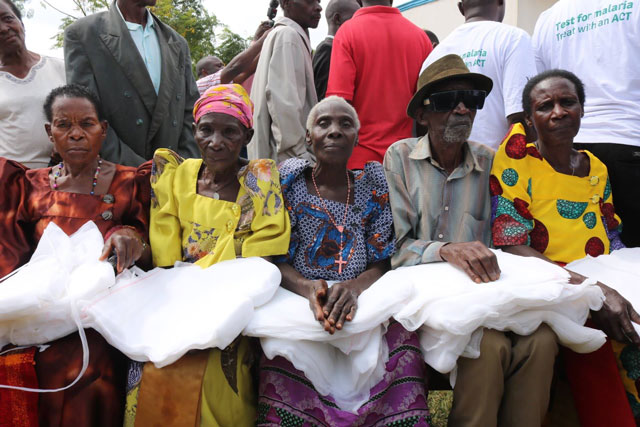
Government, through the Ministry of Health, is set to distribute more than 3.3 million free mosquito nets in Kampala and Wakiso in a three-day exercise targeting nearly six million residents as efforts to combat malaria intensify.
The distribution exercise, scheduled to run from November 20 to 22, will see Kampala receive 1,168,700 mosquito nets, while Wakiso has been allocated 2,216,300 nets.
Announcing the exercise on Monday, November 17, Dr Richard Kabanda, the Commissioner for Health Promotion, Education and Communication, said the campaign was intended to support urban households struggling to afford mosquito nets.
“Kampala and Wakiso have many poor urban people who are not able to buy nets on their own. The government, with support from partners, is back to provide this support,” Kabanda said.
The exercise will be conducted through 32 operational units, comprising five in Kampala and 27 in Wakiso. Village Health Teams (VHTs) are expected to notify residents about collection dates and distribution points in their respective villages.
Kabanda explained that Kampala and Wakiso had been scheduled for the final phase because of the logistical challenges involved in distributing mosquito nets in urban communities, as well as their relatively lower malaria burden compared to other regions.
However, he warned that malaria remained a major public health threat, with Uganda recording more than 11.7 million cases and 2,342 deaths in 2025. Children below the age of five accounted for 55 per cent of the reported deaths.
“This signifies the essence of the mosquito net distribution campaign,” he said, urging households to use the nets properly to protect themselves, particularly young children, against malaria.
The Kampala and Wakiso exercise marks the fifth wave of the 2026 national mosquito net distribution campaign.
The Ministry of Health has so far distributed 17.9 million mosquito nets in the previous four phases. These included 3.4 million nets in January, 4.8 million in April, 4.2 million in May and 5.5 million last month.
The latest distribution is expected to extend the government’s malaria prevention efforts to millions of residents in the two urban areas.