




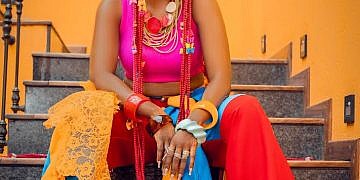




At first glance, the colourful crochet bags, scarves, table mats and home décor neatly displayed at Graca Iranga La Bella’s shop in Old Kampala are simply handcrafted products. But behind every stitch lies a story of displacement, resilience and determination.
At just 23, La Bella has transformed a childhood skill into a business that now helps support her family of nine after fleeing conflict in the Democratic Republic of Congo.
“I came to Uganda in 2013 after the conflict in Congo,” she recalls. “When we arrived in Kampala, we didn’t know anyone. We had nowhere to stay.”
Like many refugees arriving in a foreign country, her family faced uncertainty from the very beginning.
They spent several days at Kampala Central Police Station before members of the Matia Mulumba Catholic Church came to their rescue. Later, a Good Samaritan offered them accommodation, giving the family an opportunity to begin rebuilding their lives.
For Graca, however, survival would eventually become about much more than finding shelter.
Skill learned at home
Long before she thought of running a business, crochet had already become part of her life.
Growing up, she watched her mother carefully weave table mats, scarves, head socks and other handmade items.
“My mother used to make these things when we were young,” she says. “Watching her inspired me and I developed a passion for crochet.”
That passion remained a hobby for years.
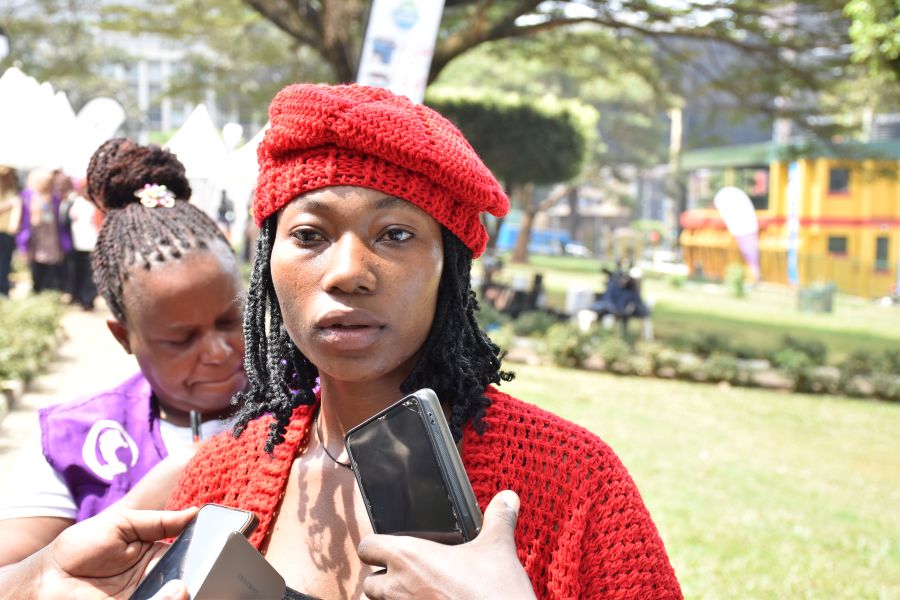
It wasn’t until after completing Senior Four that she began imagining crochet as more than just a pastime.
While shopping for yarn and other materials at Majestic Plaza in Kampala, she met a woman whose crochet business would change her perspective.
“She explained the different materials, what each one is used for and the kinds of products I could make. That conversation opened my eyes,” La Bella says.
Soon afterwards, Graca started experimenting with bags, outfits and accessories.
Initially, she made them for herself.
But the turning point came unexpectedly.
People admired the crochet pieces she wore and began asking whether they were for sale.
“I would sell one item and that customer would recommend another person. Slowly, more people started looking for my work.”
Without advertising or major capital, La Bella relied on referrals.
School became one of her earliest marketplaces.
She sold crochet items to classmates and teachers, while every satisfied customer introduced another.
Whenever she spotted someone interested in handmade crafts, she would strike up a conversation and introduce her products.
Those small interactions gradually built a loyal customer base.
After completing Senior Six in 2023, she and her mother opened a small shop in Bakuli, Old Kampala.
Today, the shop stocks a variety of handmade products, including crochet bags, children’s outfits, hats, scarves, necklaces, wall hangings, table mats and home décor.
Prices start at Shs15,000 for bags, while children’s outfit sets begin at Shs55,000. Larger outfits retail from Shs80,000, and home decorations start from Shs10,000.
Each product is handmade.
Each sale helps keep the family going.
La Bella is the fourth-born in a family of nine children.
Raised by a single mother, she understands the financial pressure that comes with supporting a large household.
“My mother has raised all of us alone,” she says. “The business has become an important source of income for our family.”
But like many small business owners, she faces rising operational costs.
Rent continues to increase, while the price of raw materials has also gone up significantly.
She believes designated market spaces for refugee entrepreneurs could ease some of those pressures.
“If refugees had a specific place where we could display and sell our products, it would reduce some of our costs and allow us to use that money for school fees and other family needs.”
Beyond the financial challenges, she says artisans also struggle with perceptions.
“Many people, especially in Africa, don’t fully understand the value of handmade crafts,” she explains.
Unlike factory-made products, crochet requires patience, creativity and hours of detailed work.
Yet many customers compare handcrafted items with cheaper mass-produced alternatives.
She hopes greater appreciation of handmade products will improve incomes for artisans.
While Uganda has provided her with safety and an opportunity to rebuild her life, La Bella believes international markets could unlock even greater opportunities for refugee entrepreneurs.
“My dream is to access international markets where more people can appreciate our work.”
She believes exhibitions and trade fairs have already shown the potential of handmade products by introducing artisans to new customers and business networks.
Expanding those opportunities beyond Uganda, she says, would enable more refugee entrepreneurs to grow sustainable businesses.
Another obstacle remains the high cost of production.
Crochet yarn and other materials continue to become more expensive, making it difficult for artisans to expand.
“I hope government can help make craft materials more affordable. If prices come down, many artisans will have a better chance of growing their businesses.”
For La Bella, crochet is more than a business.
It is proof that talent can survive displacement, hardship and uncertainty.
Every bag, scarf and handmade decoration represents not only creativity but resilience—a reminder that refugees are not defined by the conflicts they flee, but by the futures they build.
More than a decade after arriving in Uganda with nothing, Graca is slowly weaving together a different story—one stitch at a time.