









Government has connected Buhadyo Primary School and 25 households in Butaleja District to solar power and internet services under the Smart Village initiative, aimed at extending digital access to underserved communities.
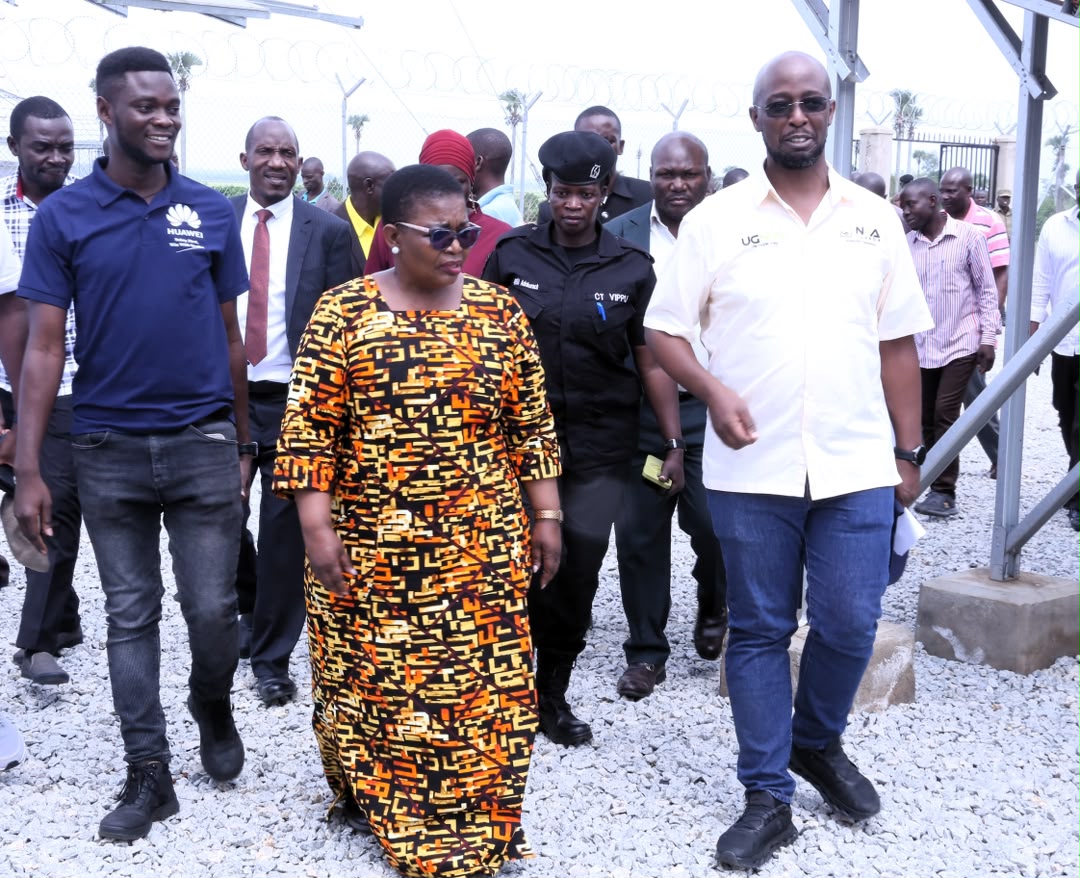
The Minister of ICT and National Guidance, Justine Kasule Lumumba, visited the project site in Buhadyo Village to assess its implementation and the use of technology in improving access to education and other essential services.
The Smart Village initiative is a partnership involving the Ministry of ICT and National Guidance, the National Information Technology Authority-Uganda (NITA-U), Huawei and Airtel. It seeks to integrate rural communities into the country’s digital infrastructure by connecting schools, health facilities and households to electricity and internet services.
Buhadhyo is serving as the pilot site, with the project initially focusing on the government-aided primary school and selected households.
With solar power infrastructure provided through the partnership, Buhadyo Primary School can now operate computers and smart classroom facilities, allowing pupils to access digital learning materials and participate in interactive lessons with learners from other schools.
During her visit, Lumumba said the project demonstrated how digital infrastructure could extend educational opportunities to communities previously limited by inadequate electricity and internet connectivity.
“Until recently, a school like this one could not keep a computer running, let alone connect to the internet. Today, the pupils here are learning on computers and sharing learning materials with schools in other parts of the country,” Lumumba said.
She said the government intended to extend the initiative to other parts of the country, with Buhadhyo providing a model for connecting underserved communities to digital services.
The programme is designed to use solar energy to power communities with limited access to electricity while linking them to the National Backbone Infrastructure (NBI), which provides internet connectivity across the country.
NITA-U Executive Director, Dr Hatwib Mugasa, said the National Backbone Infrastructure, managed by the authority, provides the foundation for connecting public and private institutions to the digital economy.
He explained that the Smart Village initiative extends this infrastructure to the last mile by connecting institutions and households in rural communities.
“The National Backbone Infrastructure already runs across the country. The Smart Village programme takes that connection to the last mile, to schools, health centres and homes. Once a school like Buhadhyo Primary School is on the network, it is no longer cut off from the rest of the world,” Mugasa said.
He added that Buhadyo Primary School had been connected to Nakasero Primary School in Kampala, enabling pupils from the two schools to participate in shared, interactive learning sessions through high-speed internet connectivity.
Mugasa said the project would eventually extend to other sectors, particularly healthcare, to improve access to services in underserved areas.
The initiative was welcomed by local leaders, who called for its expansion to more communities across Butaleja District.
Area Member of Parliament James Waluswaka said the project had provided pupils in Buhadhyo with access to digital learning resources that were previously more readily available to schools in urban areas.
He thanked the government for selecting the area as the pilot site and called for similar interventions in other schools and health facilities across the district.
“We are ready to work with the government and NITA-U to protect this investment and see it grow to every corner of Butaleja,” Waluswaka said.
The MP was accompanied by Butaleja District LC5 Chairperson Elvis Were, Nawanjofu LC3 Chairperson Douson Faga, other local leaders and residents during the minister’s visit to the school and some of the connected households.
The government says the broader Smart Village initiative is intended to reduce the digital divide by expanding access to electricity, internet connectivity and technology-enabled public services in rural communities.