








Uganda has named of its crude oil, Pearl Sweet , to give it a commercial identity ahead of its planned entry into the global market.
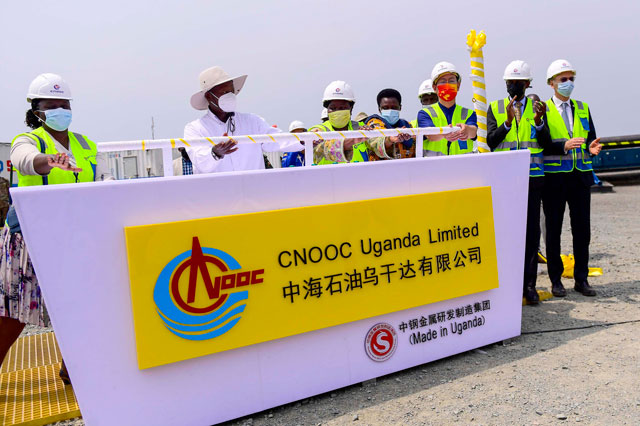
The crude oil was at a ceremony held at the Kingfisher production facility on the shores of Lake Albert by President Museveni on Wednesday afternoon.
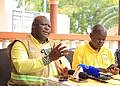
The Minister for Energy and Mineral Development, Dr. Monica Musenero said the name carried meaning: “sweet” reflects the crude’s very low sulphur content, which makes it cheaper to refine, while “Pearl” ties the oil to Uganda, long branded the Pearl of Africa.
The step of naming the oil is a giant leap in turning almost 20 years of discovery into a product the world’s refiners can identify, price and buy.
Crude is bought and sold by grade, and every grade carries a name and published identifiers setting out its density, sulphur content and refining yield. Brent comes from the North Sea, Ghana’s crude is Jubilee, named for the field that began producing in 2010, and Senegal’s Sangomar came onstream in 2024.
Until a grade is named, it cannot be quoted on a trading screen, marketed to refineries or written onto a cargo manifest.
Uganda’s crude is waxy and low in sulphur, heavy enough that its export route must be heated along its full length.
It will travel through the 1,443-kilometre East African Crude Oil Pipeline to Tanga on the Tanzanian coast — billed by its developers as the world’s longest heated crude line.
The Lake Albert basin holds an estimated 6.5 billion barrels of oil in place, of which between 1.4 and 1.7 billion are considered recoverable, according to UNOC. The Tilenga project, operated by TotalEnergies, and Kingfisher, operated by CNOOC, are together expected to produce about 230,000 barrels a day at peak. Kingfisher’s central processing facility is built to handle 40,000 barrels a day.
Commercial quantities were confirmed in the Albertine Graben in 2006, and the sector moved from exploration to development after the 2022 Final Investment Decision unlocked roughly $15 billion in investment. The production timetable has slipped more than once since. Officials say the pipeline is now more than 90% ready, and the Petroleum Authority of Uganda has said first oil remains targeted for later this year.