









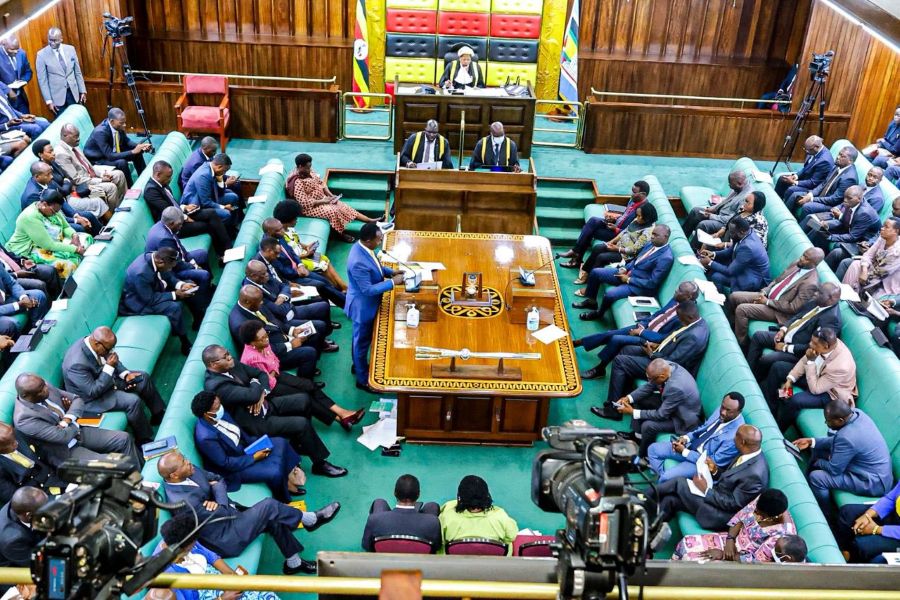
Parliament on Tuesday evening passed the controversial Protection of Sovereignty Bill, 2026 following a tense sitting marked by heavy security deployment and sharp exchanges between government and opposition lawmakers.
The bill was passed after Parliament adopted a report of the joint committee on Defence and Internal Affairs and Legal and Parliamentary Affairs.
Security had earlier been heightened around Parliament with several roads, including Parliamentary Avenue, closed off.
Some Members of Parliament reported difficulty accessing the premises, as authorities sought to prevent a repeat of past chaos witnessed during debates such as the 2017 age limit amendment.
The day began with parallel meetings, as Government Chief Whip Hamson Obua convened NRM and allied MPs to agree on a common position, while Leader of Opposition Joel Ssenyonyi also met opposition legislators.
Debate on the Bill followed the adoption of a report by the joint committees on Defence and Internal Affairs and Legal and Parliamentary Affairs.
The committees said they consulted 224 stakeholders grouped under 60 clusters, including the Bank of Uganda, Uganda Law Society, civil society organisations, and international bodies.
Parliament then proceeded with clause-by-clause scrutiny before passing the Bill at its third reading.
As passed, the law targets individuals and entities acting as “agents of foreigners,” especially those involved in political or economic activities on behalf of foreign interests. It introduces strict penalties, including up to 10 years in prison or fines of up to Shs1 billion for individuals and Shs2 billion for companies involved in what is termed “economic sabotage.”
The offence of economic sabotage covers acts such as knowingly spreading false information or engaging in activities intended to undermine Uganda’s economic system.
Lawmakers, however, amended several clauses to narrow the scope of the law and reduce penalties from the initially proposed 20-year jail terms. The Bill also exempts institutions regulated by the Central Bank, as well as recognised religious, medical, and educational institutions.
Despite the amendments, opposition MPs raised concerns about limited public participation and procedural fairness. Betty Nambooze argued that many stakeholder views were ignored, while Ssenyonyi questioned the handling of minority reports during debate.
There were also divisions within the opposition, with some MPs presenting separate positions during the proceedings.
Speaker Anita Among confirmed that the House had quorum, with over 350 MPs present, allowing business to proceed. She later presided over the final vote despite procedural objections raised on the floor.
After hours of debate and consideration, Parliament passed the Bill and adjourned sine die.
The legislation now awaits assent by the President to become law.