










The Road Safety Advocacy Coalition Uganda (ROSACU) and the Uganda Professional Drivers Network (UPDN) have called on the government to introduce a special licensing and certification regime for drivers transporting school children following a rise in fatal road crashes involving pupils.
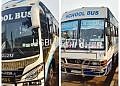
The call follows a series of deadly road accidents involving school buses, including the recent King David Junior School, Ndejje crash in Kapchorwa, which left several pupils dead and many others injured.
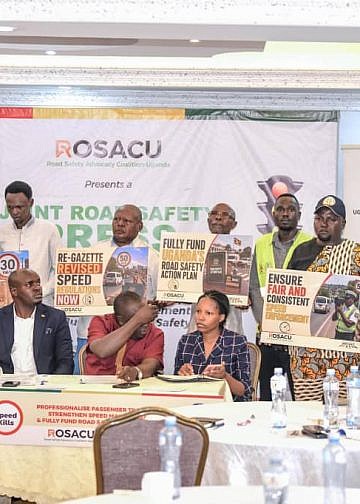
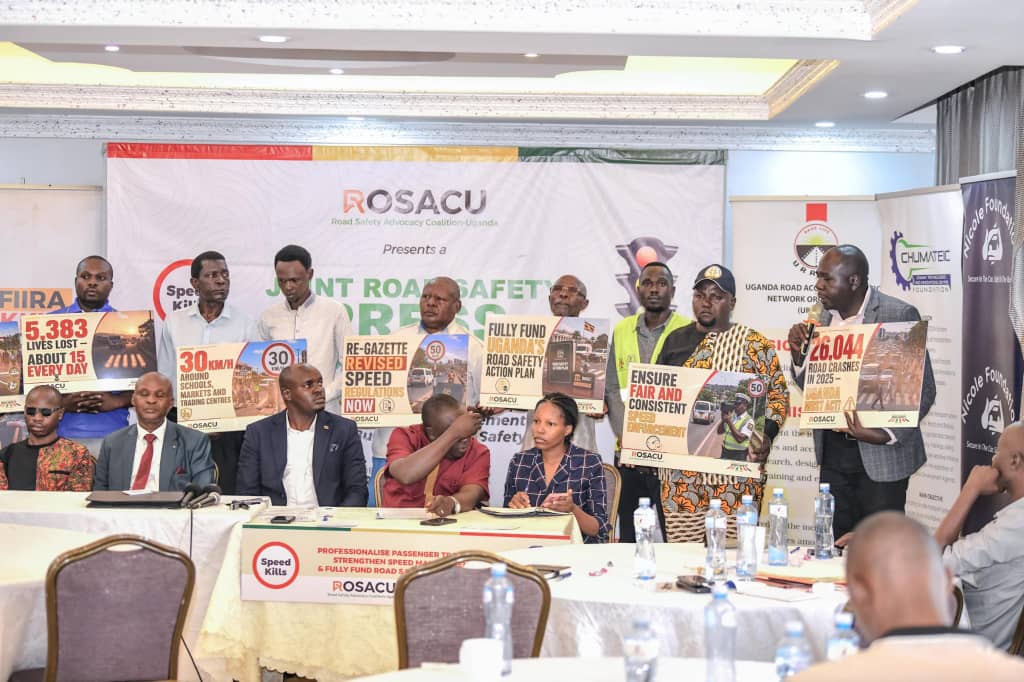
Speaking during a joint press conference at Eliana Hotel in Ntinda on Friday, ROSACU Chairperson Fred Tumwiine said Uganda must urgently professionalise passenger transport to improve road safety and protect children.
“Commercial drivers carry people’s lives in their hands every day. A driving permit remains essential, but safe passenger transport also requires practical competence, discipline, medical fitness, continuous learning and professional responsibility,” Tumwiine said.
He urged the Ministry of Works and Transport, in collaboration with the Uganda Police Force, transport operators, driver associations and recognised training institutions, to establish a national Continuous Professional Development (CPD) programme for commercial passenger drivers.
Tumwiine said the programme should provide practical and competency-based training in defensive driving, speed management, safe overtaking, fatigue management, vehicle inspection, first aid, passenger care and protection of children and other vulnerable road users.
He further called for mandatory post-licensing training and periodic certification for drivers operating passenger service vehicles, particularly those transporting school children.
“Building on the Ministry of Works and Transport’s bus-driver badge system, continued authorisation to practice should be tied to approved continuous professional development and competency reassessment, with certification renewed annually where feasible,” he said.
Tumwiine also proposed that vehicles used to transport learners undergo a specialised licensing and certification process covering roadworthiness, passenger capacity, safety equipment, adult supervision and emergency preparedness.
He urged schools that hire buses to verify drivers’ qualifications, confirm vehicle roadworthiness and ensure proper emergency response arrangements before allowing children to travel.
He emphasised that improving passenger transport safety should not be the responsibility of drivers alone, but should involve transport operators, regulators, vehicle owners and institutions.
Beyond driver certification, ROSACU called for improved speed management through stronger enforcement, public awareness and better road engineering.
Tumwiine said speeding remains one of the leading causes of fatal crashes and urged the Ministry of Works and Transport to finalise the revised Speed Limits Regulations.
“Effective speed management requires three elements working together—enforcement, education and engineering,” he said.
He called for increased resources for police speed enforcement and urged road authorities to improve road signs, pedestrian crossings, lighting and traffic calming measures in high-risk areas.
ROSACU also appealed to government and Parliament to increase funding for road safety interventions, including driver training, traffic enforcement, public awareness campaigns, vehicle inspections, road safety audits, crash data systems, emergency response services, trauma care, rehabilitation and local government road safety programmes.
Presenting Uganda’s road safety situation, Tumwiine said road fatalities continue to rise, increasing from 4,534 deaths in 2022 to 4,806 in 2023, 5,144 in 2024 and 5,383 deaths recorded in 2025.
He said the figures translate into an average of about 15 deaths every day.
According to Tumwiine, 44.5 percent of crashes are linked to careless overtaking and speeding, while road crashes cost Uganda an estimated five percent of its Gross Domestic Product annually through lost productivity, medical expenses, disability and property damage.
He added that public health facilities spend an estimated Shs315.72 billion annually treating road crash victims in regional referral hospitals.
“We have not convened this press conference to assign blame or criticise any institution or individual. We have come together because road safety is a shared responsibility, and every serious crash should encourage us to reflect, learn and act together,” Tumwiine said.
ROSACU commended government agencies, the Uganda Police Force, health workers, ambulance teams, local governments, security agencies and communities for responding to recent road crashes, including government support to families affected by the Omoro District crash.
The coalition called for a multisectoral road safety coordination mechanism under the Office of the Prime Minister to bring together the Ministries of Works and Transport, Education, Health, Internal Affairs, Finance, Local Government, Gender and the Uganda Police Force.
The mechanism, they said, would help coordinate policy, enforcement, education, emergency response and funding aimed at reducing road deaths.
Speaking at the event, Uganda Professional Drivers Network Executive Director Ndugu Omongo dismissed the perception that poor roads are the main cause of crashes.
“Roads do not cause crashes. Vehicles do not make decisions. It is people who plan journeys, operate vehicles, manage fleets and respond to risks,” Omongo said.
He called for the professionalisation of commercial driving, arguing that driving should no longer be viewed as an informal occupation but as a career requiring formal training, continuous skills development and ethical conduct.
“Commercial drivers transport thousands of passengers, goods and essential services every day. They deserve the same commitment to professional development that society expects of teachers, nurses, engineers and other skilled professions,” he said.
Omongo said professionalising drivers would help reduce crashes, strengthen businesses, protect families and improve public confidence in Uganda’s transport system.
“When we professionalise drivers, we do more than reduce road crashes. We strengthen businesses, protect families, improve public confidence and build transport systems Uganda can be proud of,” he added.
Meanwhile, Timothy Chemonges, Executive Director of the Centre for Policy Analysis (CEPA), mourned the deaths of innocent children and called on all stakeholders to join efforts to make roads safer.
“Public transport is a health concern and we need to ensure our roads are safe. All players should come on board because it hurts when people leave home in the morning to go to work and they don’t return home,” Chemonges said.