






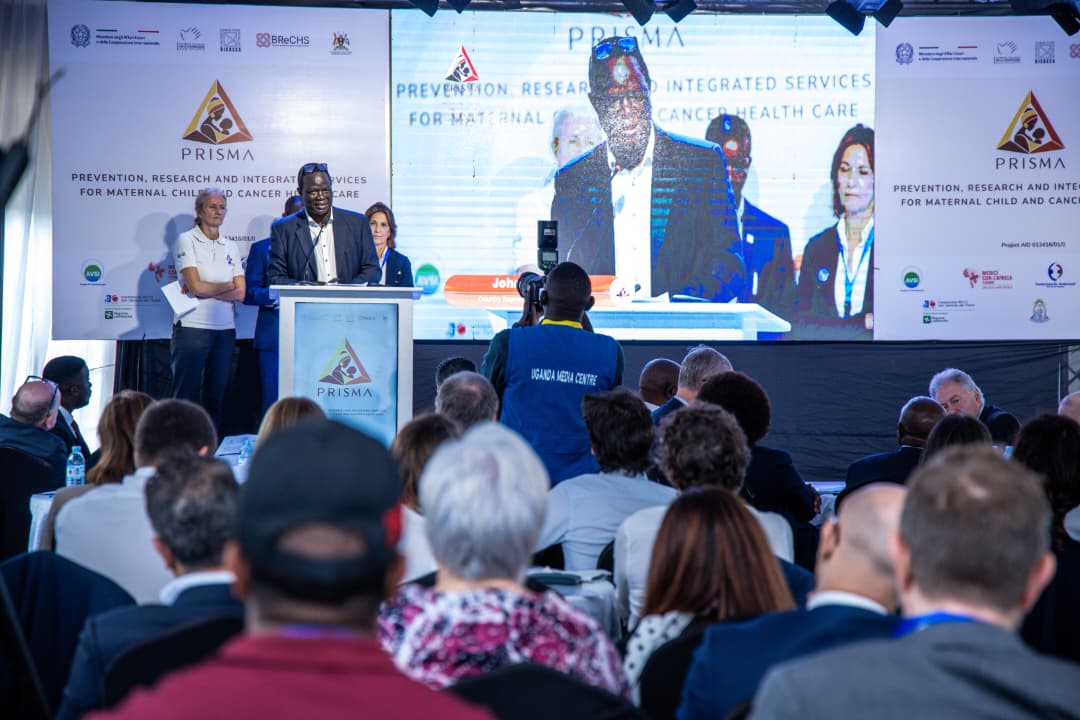
More than 581,000 people in northern Uganda are expected to benefit from expanded cancer screening, improved maternal and child healthcare and better access to specialist treatment under a €12.8 million (approximately Shs58 billion) Italian-funded health project.
The three-year initiative, known as the Prevention, Research and Integrated Services for Maternal, Child and Cancer Healthcare (PRISMA) Project, will run from 2026 to 2029, targeting vulnerable communities in the Acholi, Lango and Karamoja sub-regions.
Funded by the Italian Ministry of Foreign Affairs and International Cooperation through the Italian Agency for Development Cooperation (AICS), the project will strengthen preventive and clinical healthcare services, train health workers, introduce new technologies and support research to improve disease detection and treatment.
The initiative will particularly focus on women of reproductive age, pregnant women, newborns and children under five, who continue to face challenges accessing quality healthcare and specialist services.
A key component will involve expanding cancer screening and early diagnosis through regional health facilities while strengthening referral systems to ensure patients identified with cancer can access appropriate treatment.
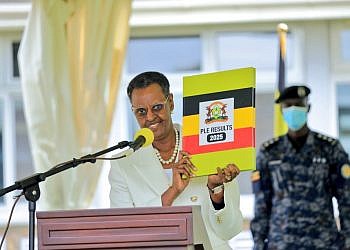
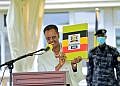
Speaking at the launch, Health Minister Dr Chris Baryomunsi said the project addresses critical health challenges facing Uganda, where communicable diseases remain prevalent even as non-communicable diseases, including cancer, diabetes and hypertension, continue to increase.
“Up to 75% of the diseases which affect our people are preventable and therefore as the government, as the Ministry of Health, we focus on disease prevention and control as well as health promotion as a key priority so that we can prevent most of these diseases,” Baryomunsi said.
He noted that the intervention was particularly important for northern Uganda, which experienced more than two decades of civil war and social disruption, leaving the region behind in several development indicators.
“Those of you who are from northern Uganda know that we had civil war and social disruption in northern Uganda for over 20 years. This resulted in northern Uganda lagging a little bit behind in terms of development,” he said.
Baryomunsi welcomed the project’s emphasis on maternal and child healthcare, noting that Uganda had made progress in reducing maternal mortality from approximately 700 to 189 deaths per 100,000 live births, while infant mortality had declined from 122 to 36 deaths per 1,000 live births.
He said further interventions were necessary to accelerate progress, adding that the government would work with project partners to strengthen healthcare delivery.
The Uganda Cancer Institute (UCI) will lead efforts to improve cancer prevention, screening, diagnosis and referral services in the participating regions.
Dr Nixon Niyonzima, the institute’s Head of Research and Training, said the project would work with Gulu Regional Cancer Centre and other health facilities to bring cancer screening services closer to communities.
“We want to improve access to cancer screening services. We want to ensure that all these hospitals have a cancer screening programme that works,” Niyonzima said.
He observed that some hospitals already have diagnostic equipment, including GeneXpert and polymerase chain reaction (PCR) machines, but that the equipment is not always fully utilised because of operational challenges and the absence of appropriate screening guidelines.
The institute will work with participating facilities to improve equipment utilisation, develop screening guidelines and strengthen laboratory and pathology services.
Niyonzima said the project would also establish stronger referral arrangements to ensure patients diagnosed with cancer can access specialised treatment, particularly through the Uganda Cancer Institute’s regional centre in Gulu.
The initiative will further incorporate research, artificial intelligence and data science to develop healthcare solutions suited to Uganda’s local needs.
“We want to ensure that the AI is trained on Ugandan data. The AI is usable in the local context,” he said, noting that technology could help address the shortage of specialist healthcare personnel in regional facilities.
32 health facilities to benefit
AVSI Foundation Uganda Country Representative John Makoha said the organisation would work with 32 health facilities across 11 administrative areas to implement the project.
The areas include Agago, Amuru, Gulu City, Gulu District, Nwoya, Moroto, Napak, Oyam, Lira City, Lira District and Nebbi.
He said the programme would focus on improving the quality and continuity of maternal and child healthcare, strengthening the capacity of health workers and involving communities in disease prevention and early identification of health concerns.
Through Village Health Teams (VHTs) and other community structures, the project will promote health awareness, encourage timely healthcare-seeking and strengthen links between households and health facilities.
“A health system is strongest when quality care is not determined by where a person lives, by their circumstances, or their ability to navigate the system, but by their right to receiving appropriate and timely healthcare,” Makoha said.
He added that the project would operate through existing government health structures and local institutions to promote sustainability beyond the three-year funding period.
Italian Ambassador to Uganda Mauro Massoni said PRISMA builds on more than 60 years of cooperation between Italian doctors, missionaries, universities, civil society organisations and Ugandan health institutions.
He cited Lacor Hospital in Gulu, Kalongo Hospital, Matany Hospital, Aber Hospital and St Luke’s Hospital in Angal as examples of the longstanding partnership between the two countries in healthcare delivery.
“By bringing together healthcare, professional training and scientific research, PRISMA opens new opportunities for cooperation between the Italian and Ugandan institutions, universities and health professionals,” Massoni said.
Marco Riccardo Ruscobi, Director of the Italian Agency for Development Cooperation, said the initiative would support Uganda in addressing key healthcare priorities, particularly maternal, child and neonatal health, while strengthening specialised medical services such as oncology.
He noted that the intervention was important given Uganda’s high birth rate and the continuing need to improve access to quality maternal and child healthcare.
Second Deputy Prime Minister Dr Chrispus Kiyonga said healthcare interventions must take into account the unique challenges facing rural communities, particularly in Karamoja, where populations are widely dispersed and frequently move in search of water and pasture.
He explained that population movements make it difficult for health workers to track children for immunisation and ensure continuity of healthcare services.
Kiyonga welcomed the PRISMA initiative, saying Uganda still had considerable work to do to reduce maternal deaths.
“Nobody should die when they are giving birth. We would come from 700 to around 200, but even that 200 is bad news. So PRISMA is most welcome. Let’s work on that and see how far down we can go towards zero,” he said.
The PRISMA Project is promoted by the BReCHS Research Centre at the University of Milano-Bicocca and brings together seven partner institutions: the IRCCS San Gerardo dei Tintori Foundation, Doctors with Africa CUAMM, AVSI Foundation, Dr Ambrosoli Memorial Hospital Foundation, Piero and Lucille Corti Foundation, Gulu University and the Uganda Cancer Institute.
Through the partnership, Uganda and Italy aim to strengthen healthcare delivery, improve access to specialised treatment and build local capacity in research, medical training and disease prevention.