









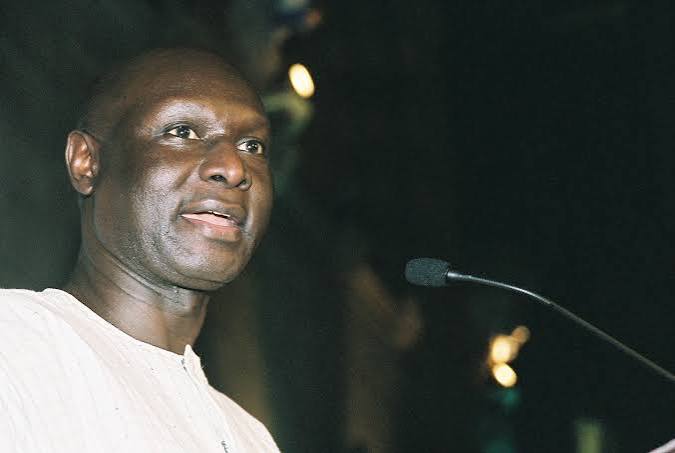
Uganda has officially entered the race to lead the United Nations after nominating veteran diplomat Ambassador Olara Otunnu as its candidate for Secretary-General, with his candidature now formally communicated to all 193 member states.
The Ministry of Foreign Affairs confirmed that Uganda had submitted Otunnu’s name for consideration as the United Nations begins the process of selecting a successor to current Secretary-General António Guterres, whose tenure ends on December 31, 2026.
In a statement issued on July 26, 2026, Permanent Secretary in the Ministry of Foreign Affairs Vincent Waiswa Bagiire said Otunnu’s decades of experience in international diplomacy, government service, academia and peacebuilding make him a strong candidate to lead the global organisation.
“Ambassador Olara Otunnu brings over four decades of distinguished service at the highest levels of international diplomacy, having served both within the United Nations system and in senior leadership roles across government, academia and civil society,” the statement said.
The government said Otunnu’s extensive knowledge of the UN system, including his previous engagement with the Security Council and his work on conflict-related issues, places him in a unique position to guide the organisation amid growing global challenges.
Uganda has appealed to UN member states to support Otunnu’s candidature, describing him as a leader with broad international experience and a strong record in promoting peace and human rights.
A long career at the United Nations
Otunnu, 75, is one of Uganda’s most experienced diplomats, having served in several high-level international roles.
Between 1998 and 2005, he served as the UN Under-Secretary-General and the first Special Representative of the Secretary-General for Children and Armed Conflict.
During his tenure, Otunnu helped establish the protection of children affected by war as a major issue on the UN agenda, including strengthening mechanisms to monitor violations against children in conflict situations.
He also played a key role in developing the compliance and monitoring framework adopted through UN Security Council Resolution 1612 in 2005, a system that continues to track abuses against children in armed conflicts worldwide.
Before joining the UN leadership, Otunnu served as Uganda’s Ambassador and Permanent Representative to the United Nations from 1980 to 1985.
During that period, he served as President of the UN Security Council in December 1981, where he introduced a voting procedure for selecting the Secretary-General. The approach later became known as the “Otunnu Formula” and has influenced subsequent selection processes for the UN’s top office.
Otunnu has also held several national and international leadership positions.
He served as Uganda’s Minister of Foreign Affairs from 1985 to 1986 and participated in the Uganda National Consultative Council during the country’s political transition following the fall of Idi Amin’s government.
From 1990 to 1998, he was President of the International Peace Academy, now known as the International Peace Institute.
His academic career includes appointments at Albany Law School, the American University in Paris and the Institut Français des Relations Internationales.
Otunnu has received several international awards recognising his contribution to peace, diplomacy and human rights, including the Sydney Peace Prize in 2005, the German Africa Prize in 2002 and the Harvard Law School Alumni Association Award in 2007.
In recent years, he has focused on community peacebuilding through Roco Paco, an initiative he co-leads with Chief Justice Emeritus Alfonse Chigamoy Owiny-Dollo to support reconciliation and recovery efforts in northern Uganda.
UN selection process begins
The nomination comes as the UN formally begins consultations to identify the next Secretary-General.
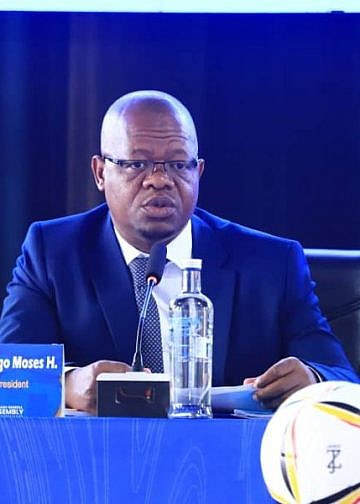
In a joint communication dated July 25, 2026, UN General Assembly President Annalena Baerbock and Security Council President Zenon Ngay Mukongo informed member states and observers that Uganda had presented Otunnu as its candidate.
The communication confirmed that Uganda’s Permanent Mission to the UN had submitted the nomination and supporting documents on July 24.
Under the UN Charter, the Secretary-General is appointed by the General Assembly following a recommendation from the Security Council after consultations among member states.
If successful, Otunnu would become the first Ugandan and one of the few Africans to serve as Secretary-General of the United Nations.