










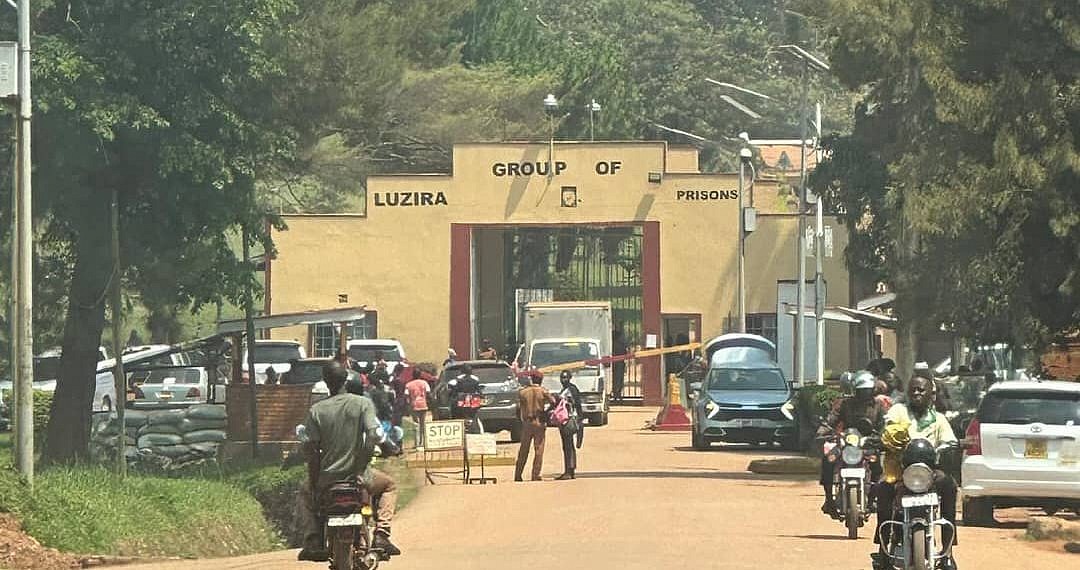
Uganda Prisons Service has asked Parliament for an additional Shs75 billion to expand prison infrastructure, citing alarming congestion levels in detention facilities across the country.
The request was presented by Undersecretary Samuel Emigu while appearing before Parliament’s Defence and Internal Affairs Committee during scrutiny of the 2026/27 Ministerial Policy Statement.
Emigu revealed that Uganda’s prisons are currently holding far more inmates than they were designed for.
“This increased population is against the holding capacity that we have of 23,184 prisoners, we have a population of 79,269. We have excess capacity of 56,085. This means we at times have holding up to seven times above the approved capacity,” Emigu said.
He warned that the situation could worsen if urgent action is not taken.
“The projected increase in prisoner population is 111,822 prisoners by year 2030. And therefore, that calls for urgent attention in the planning and management of the matter of congestion,” he added.
To address the crisis, Uganda Prisons plans to construct 50 prison wards, three local security prisons, and regional minimax prisons, but faces a funding shortfall.
“We will require to construct 50 prison wards, three local security prisons, and regional minimax prisons. We have a shortfall of Shs75.099Bn,” Emigu told MPs.
Deputy Commissioner General Samuel Akena said congestion remains the biggest challenge for the institution, driven largely by the high number of inmates on remand.
“As of 30th March 2026, Uganda Prisons had in custody 80,110 inmates, we have only a holding capacity of 23,104. In other words, the occupancy rate therefore stood at 345%,” Akena explained.
He added that overcrowding is stretching resources.
“For every one single space, it is being occupied by four people, this is the biggest challenge we have and it is the biggest cost driver for our budget,” he said.
Akena noted that the introduction of a parole system, expected in the 2026/27 financial year, could help ease congestion.
“We believe that to some extent it will be a game changer, once the finalisation of the regulations is put in place, the next financial year, we are starting off on the implementation,” he said.
However, Internal Affairs Minister Kahinda Otafiire expressed doubts about relying on parole alone, instead calling for more prisons and faster case handling.
“We have people who are convicted to serve six months, but they have been in prison for three years because we don’t have enough resources to listen to these cases,” Otafiire said.
He pointed out the dilemma inmates face.
“When you plea bargain, you are still convicted, it is a catch-22, but if you don’t plea bargain, you don’t get out,” he added.
Minister of State for Internal Affairs David Muhoozi emphasized the need for a combined approach to solve the crisis.
“We need more than one intervention, you would also need to look at the remand side, there are many people who spend a lot of time before trial,” Muhoozi said.
Otafiire also highlighted the outdated nature of prison infrastructure in Uganda.
“The prison capacity we have was put in place by the colonialists in 1922 we have not increased the space since then. The population has increased, therefore, we must construct prisons,” he said.
He further noted that implementing parole would require additional funding.
“We need money to supervise those on parole which money is not available,” he added.
Uganda’s prison population is growing at an annual rate of 7%, largely due to prolonged remand periods, further worsening congestion in already overstretched facilities.