










Ugandan air quality initiative AirQo has been named among the 15 finalists for the 2026 Earthshot Prize in recognition of its efforts to address air pollution across African cities.
AirQo was selected under the Clean Our Air category for its work using low-cost air quality monitors, open data platforms and artificial intelligence to generate reliable, locally relevant pollution data.
Founded at Makerere University in 2015, AirQo was established to address the shortage of reliable air quality information needed by African cities to understand and respond to pollution.
The initiative was founded by Prof. Engineer Bainomugisha, Professor of Computer Science at Makerere University, who became concerned about worsening air quality after moving from rural Uganda to Kampala.
At the time, conventional air quality monitoring stations were considered too expensive and difficult to maintain at the scale required by many African cities. AirQo subsequently developed monitoring technologies designed to operate under African conditions, including environments affected by dust, power interruptions and limited internet connectivity.
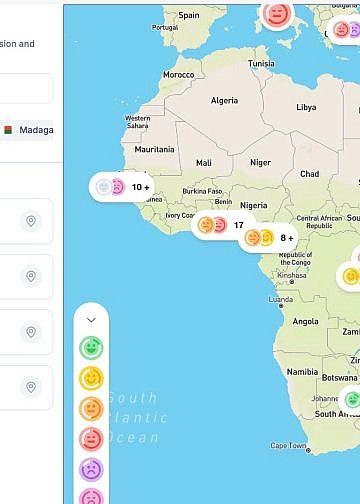
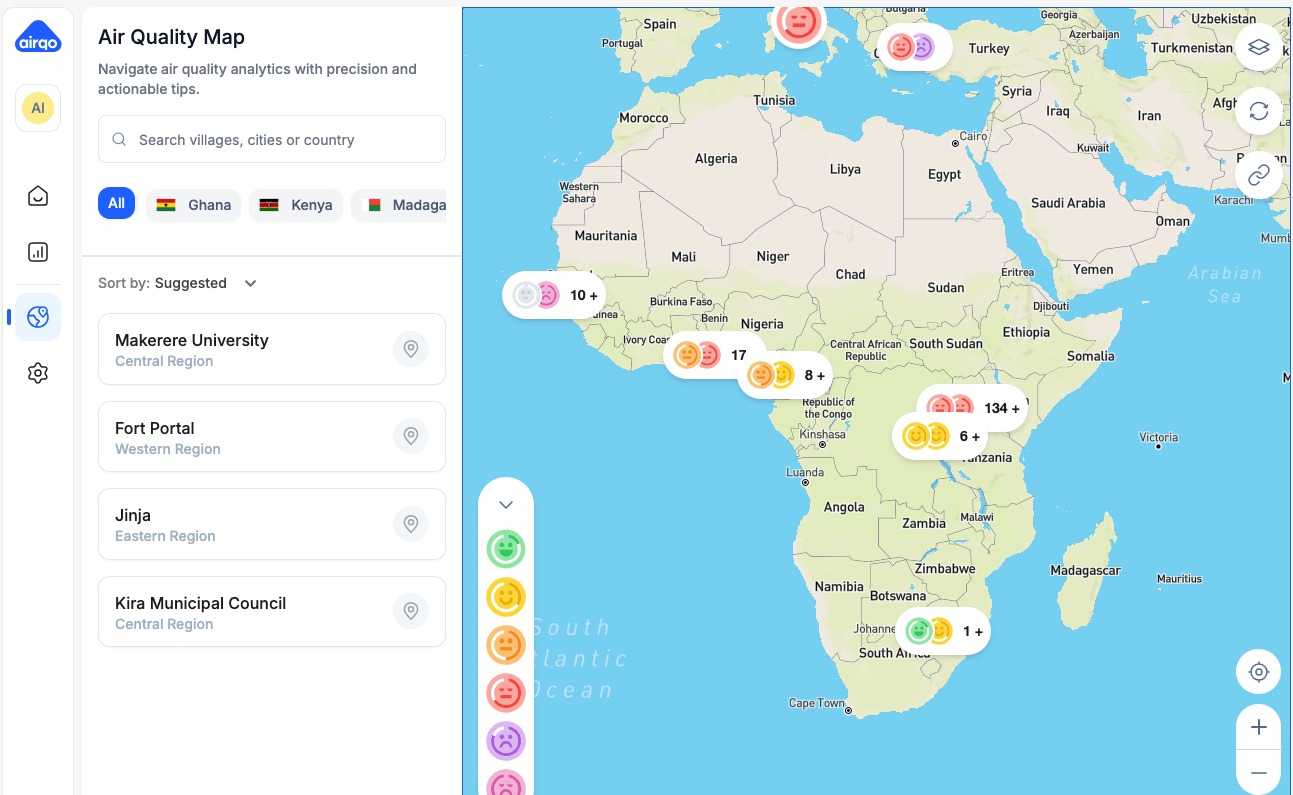
The initiative now operates more than 500 air quality monitors across more than 16 cities in nine African countries: Uganda, Kenya, Nigeria, Ghana, Senegal, Cameroon, Zambia, Mozambique and South Africa.
AirQo also uses mobile monitoring devices mounted on motorcycles, commonly known as boda bodas, to collect pollution data at street level.
The information is made available through open data platforms, dashboards, mobile tools and application programming interfaces (APIs). Artificial intelligence and machine-learning systems are used to calibrate sensors, assess data quality, forecast pollution levels and identify areas where pollution is concentrated.
AirQo’s monitoring network complements traditional reference-grade stations used by governments and provides data that can support public health planning, traffic management, waste services and urban development.
In Uganda, the organisation’s research and technical expertise contributed to the development of the country’s first national air quality regulations and has informed traffic-management measures in Kampala.
Bainomugisha said the initiative was created to ensure that air pollution, which is often difficult to see, is supported by reliable data that can inform public decisions.
“Air pollution has remained invisible across too many African cities because the data needed to understand it has been scarce,” Bainomugisha said.
“AirQo was built in Africa for the realities of African cities, bringing together locally designed monitors, open data and artificial intelligence so that evidence can move from the street into public decisions.”
He said the Earthshot Prize recognition would help AirQo expand its monitoring infrastructure, train more African technologists and strengthen partnerships with city leaders and institutions working on clean-air solutions.
As a 2026 finalist, AirQo will work with the Earthshot Prize to expand its reach across African cities and strengthen partnerships with governments, funders, technology companies and urban leaders.
The initiative plans to extend its monitoring networks to 10 additional African cities, with the longer-term goal of reaching more than 50 cities by 2030.
It also plans to launch an open-source air quality platform with a conversational artificial intelligence interface that will allow city leaders to ask practical questions about pollution exposure and possible responses.
AirQo is further expanding technical training through its Makerere University DevCon programme. Two cohorts have already trained more than 50 students in software and hardware skills, including sensor assembly, diagnostics, maintenance and repair.
The organisation is also developing the Africa Clean Air Network, a community of practice bringing together 30 cities to share knowledge and connect policy, science and financing.
AirQo has secured US$6 million in funding and support from partners including Google.org, the World Bank and the Clean Air Fund, alongside support from the U.S. Department of State, Arm, Enable and other institutions.
The organisation says additional support through the Earthshot Prize would help diversify its funding, strengthen partnerships with city governments and development institutions, and support investment in clean-air initiatives.
The Earthshot Prize was founded by Prince William in 2020 to recognise environmental solutions addressing major global challenges.
The 2026 finalists were selected from nearly 7,000 nominations across 169 countries, supported by a global network of more than 363 nominators and an Expert Advisory Panel of more than 150 specialists.
The finalists are competing across five Earthshots: Protect and Restore Nature, Clean Our Air, Revive Our Oceans, Build a Waste-Free World, and Fix Our Climate.
Five winners will be announced at the 2026 Earthshot Prize Awards in Mumbai, India, in November.
Prince William, President and Founder of the Earthshot Prize, said the finalists demonstrate that practical environmental solutions are already making progress around the world.
“Every year, our Finalists give me renewed optimism,” he said, adding that their work demonstrates that progress is possible despite the urgency of environmental challenges.
AirQo joins a community of 75 finalists supported by the Earthshot Prize since 2020.