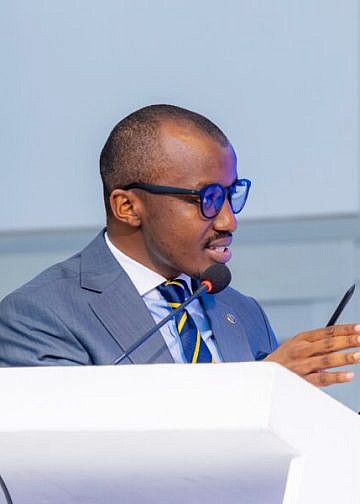






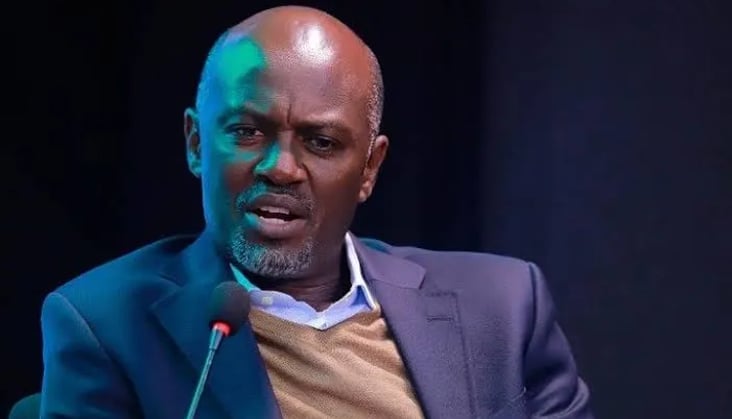
Ugandans on social media have roasted veteran journalist and political commentator Andrew Mwenda over his critic of European ambassadors in Uganda.
In a post on his social media, Mwenda accused EU Ambassadors of perpetuating neocolonial attitudes under the guise of promoting human rights.
In the wake of a tense meeting held in Gulu this week between European diplomats and Gen Salim Saleh, President Museveni’s brother , the EU ambassadors raised several concerns, including the controversial online conduct of the Chief of Defence Forces (CDF), who recently issued a warning on X (formerly Twitter) directed at one of the diplomats.
Responding to the comments by the EU ambassadors, Mwenda penned a statement in which he condemned what he termed as the hypocrisy of European governments funding war and oppression abroad while simultaneously lecturing African states on human rights.
“European ambassadors in Uganda, whose governments are funding a genocide in Gaza, somehow find the moral authority to condemn torture here,” Mwenda wrote. “This is not about human rights. It is about power.”
According to Mwenda, Western involvement in African governance is not motivated by altruism but by a deep-rooted racial superiority complex and a persistent belief that Africans are incapable of self-determination.
“They do not see us as active participants in the struggle for our rights,” he said. “They see us as passive spectators… mere beneficiaries of international charity handed to us by benevolent Europeans.”
Drawing parallels with colonial rhetoric, Mwenda argued that today’s diplomatic pressure and governance models mirror the colonial mission of the “three Cs” — Christianity, Commerce, and Civilization — now repackaged as democracy, trade and investment, and bureaucratic reforms.
“Christianity has become democracy; commerce is now trade and investment… and civilization, the imposition of European bureaucratic systems on our societies,” he stated.
Mwenda also pointed out the double standards of Western diplomacy: “There are gross human rights abuses in Europe and North America but our ambassadors in their capitals are not lecturing and hectoring their leaders over this.”
He praised countries like China, India, Japan, and South Korea for their approach to development cooperation, noting that they provide support without political interference: “China funds our government but does not insist we become Chinese in our governance.”
Calling for African agency and dignity, Mwenda urged both citizens and foreign partners to reject paternalism.
“Africans do not need help from Europe. We need collaboration,” he said, adding that Ugandans must lead their own fight for justice: “Ugandans deserve the right not to be tortured. But that is our domestic issue. It’s a war for us Ugandans to fight and win.”
“While I acknowledge the importance of international solidarity in our struggle, I reject the means you use. Issuing lectures, summons and threats to our governments… discredits local agency.”
Netizens respond
In response to Mwenda’s comments, Ugandans on social media took on Mwenda bare knuckle.
“This is obvious deflection from the elephant in the room. You don’t torture your people and start preaching to them how foreigners don’t like them. This pretentious pan Africanism that keeps a blind eye on Africans torturing fellow Africans while lecturing against colonialism has passed its sale date. PanAfricanism should not be used as a trope for replacing white oppression with black oppression. Stop assuming that we are too stupid to know our oppressors. First write the same essay length condemning kidnaps and torture, then return to preach pan African virtues,” cartoonist, Jimmy Spire Ssentongo wrote.
One Moses Kalyx accused Mwenda of being verbose.
“You are being too verbose yet its as simple as being civilized and treating citizens with respect and respecting the constitution. Short of this you are uncivilized and barbaric and hence justify this very undermining. Behave civilized and level up simple.”
Others accused Mwenda of deflecting issues affecting Ugandans.
“This isn’t Pan-Africanism. It’s cowardice dressed in intellectual arrogance. You never speak truth to power—you speak for power. You don’t expose abusers—you defend them,” one Patrick Ssekabira said.
However, a section of other Ugandans rose up in defence of Mwenda’s comments, accusing the West of double standards.