








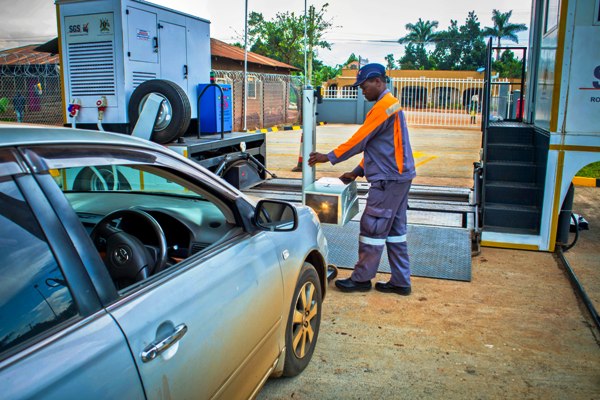
Government through the Ministry of Works and Transport has announced that mandatory vehicle inpsecti inspection will resume in two weeks across the country .
The re-launch of mandatory inspections is part of a broader effort to improve road safety and ensure vehicles on Uganda’s roads meet minimum safety standards.
“The Ministry of Works and Transport is set to commence mandatory vehicle inspections in a fort-night, as the government suspends the Automated Express Penalty Scheme (Auto EPS) for one month and prepares to introduce revised inspection fees from next month,” the ministry said in a statement.
Officials at the Ministry of Works and Transport have underscored the importance of the inspections in promoting roadworthiness and saving lives.
The inspections will now be directly managed by the government following the conclusion of a contract with private firm SGS, which previously ran the service.
The transition followed the government’s settlement of outstanding payments to SGS, paving the way for state-managed operations aimed at making inspection services more accessible and affordable.
Mandatory vehicle inspection has for many years been in the offing but it was previously supposed to be done by a private company.
The inspection will be done at the government facilities at Nabbingo along Kampala -Masaka Road, Namanve( Kampala-Jinja Higway), Kawanda(Kampala- Gulu Highway) and Namulanda along Entebbe road.
The development comes at a time when government suspended the implementation of the automatic express penalty scheme after complaints by motorists.
The Auto EPS system designed to automatically fine traffic offenders using road cameras has faced intense criticism from motorists and car dealers.
Many cited technical errors such as duplicate fines and poor system synchronization, alongside harsh penalties and unrealistic payment timelines.
Car dealers, in particular, voiced concerns over being penalized for violations committed by clients who purchased vehicles on hire purchase. Several reported that their accounts were frozen due to accumulated fines they had no control over.
President Yoweri Museveni, speaking during the national budget reading last week, expressed his dissatisfaction with the implementation of the traffic enforcement technologies, especially the excessive focus on fines.
He bluntly concluded: “Rubbish,” referring to how the system was being handled.
The government’s latest move is aligned with the National Road Safety Action Plan 2021–2026, which aims to halve road crash fatalities and serious injuries by 2030.