








President Museveni has said the government has deliberately delayed the implementation of a national minimum wage, arguing that Uganda must first complete key economic “assignments” to avoid discouraging investors.
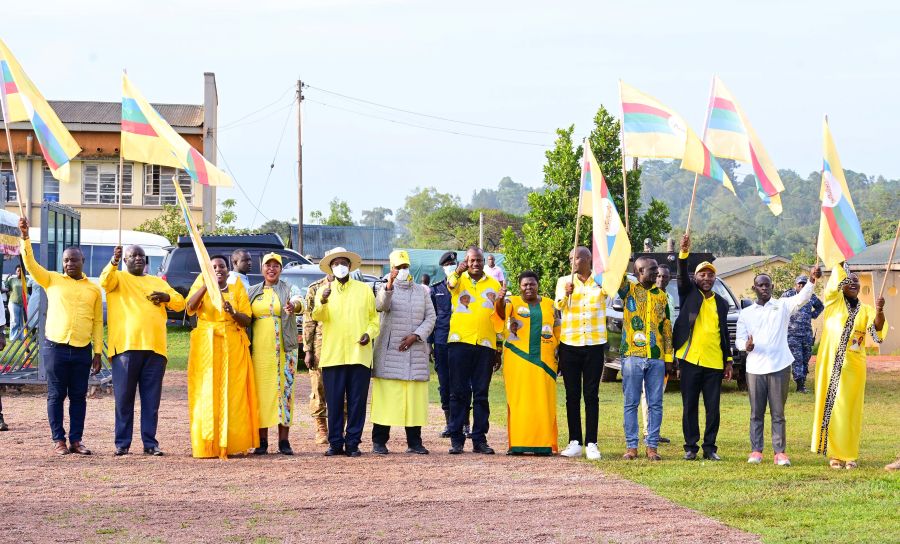
Addressing supporters while campaigning in Buikwe District on Saturday, Museveni said calls for the immediate introduction of a minimum wage are often made from what he described as an “uninformed point of view.”
“You hear people talk about minimum wage. We are planning for it, but we have not yet implemented it because we still have assignments on our side as government,” Museveni said.
He explained that while investors are responsible for injecting capital, setting up factories, transferring technology and creating jobs, government must first ensure a conducive business environment.
“Their assignment is to bring money, put up factories and create jobs. Our job is to ensure peace—and that assignment is done. That is why many investors are coming here,” he said.
Museveni added that government must further lower electricity tariffs, reduce transport costs and ensure access to affordable credit before introducing a minimum wage.
“We still have to work on low electricity costs, the cost of transport from Mombasa to here or from here to Dar es Salaam, and the interest rates at which businesses borrow from banks,” he said, noting that the planned railway line would significantly cut transport costs.
The President warned that introducing a minimum wage prematurely could hurt businesses and lead to job losses.
“If we implement it when we have not finished our part, investors will make losses, their businesses will collapse and they will run away, yet we need them,” Museveni said.
“Not because we don’t want a minimum wage, but because we want to implement it when we are ready.”
He likened the government’s cautious approach to a “guerrilla war tactic,” saying reforms should only be undertaken when conditions are right.
“We don’t rush to do things. We make sure we act when we are ready,” he said.
Museveni also urged Ugandans, especially the youth, to focus on wealth creation rather than treating politics as a career.
“Don’t see politics as a job. Those who see leadership positions as jobs are going to fail,” he said.
He cited examples of individuals who prospered after shifting their focus to production, including a former political aspirant who ventured into commercial farming and now employs hundreds of workers.
The NRM candidate encouraged citizens to embrace government wealth-creation programmes such as Emyooga and the Parish Development Model (PDM), saying they are key tools in the fight against poverty.
“Focus on wealth creation. See government programmes as vehicles to wealth,” Museveni said.
He pledged increased funding for organised groups, including fishermen, mechanics, youth and informal sector associations, and highlighted the role of industrial parks, commercial agriculture, manufacturing, hostels and ICT companies in job creation across the country.
Museveni acknowledged that concerns over salaries remain but said government is still laying the foundation for long-term economic transformation.